Roughness meter
Surface finish has a direct impact on sealing performance, wear behavior, coating adhesion, friction, and the overall quality of machined or treated parts. When manufacturers need to verify Ra, Rz, Rt, profile characteristics, or surface profile consistency, a roughness meter becomes an essential tool in quality control, incoming inspection, and process validation.
This category brings together portable and benchtop-style instruments used to evaluate surface texture on metal, coated, and precision-machined components. Depending on the application, users may need a simple handheld device for routine checks or a more advanced system capable of analyzing a broader set of roughness, waviness, and profile parameters.
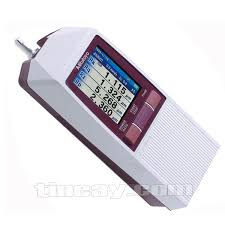
Where roughness measurement fits in industrial inspection
In many production environments, dimensional accuracy alone is not enough. A part can be within size tolerance and still fail in service because the surface condition is too rough, too smooth, or inconsistent with the intended function. That is why roughness evaluation is commonly used alongside tools such as callipers, micrometers, and other mechanical measuring instruments.
Typical use cases include machined shafts, bearing seats, sealing surfaces, coated substrates, ground parts, and finishing processes where repeatability matters. For broader inspection routines, roughness testing may also complement checks made with a thickness meter when both surface profile and coating or material thickness need to be controlled.
Common types of roughness meters in this category
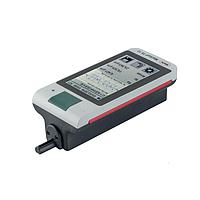
The products shown here cover several practical measurement approaches. Many are portable roughness testers designed for shop-floor use, allowing operators to verify finish directly on the workpiece. These instruments are useful when measurements must be taken near the machine, on large parts, or across multiple inspection points during production.
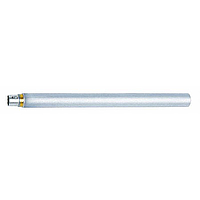
There are also devices focused on surface profile measurement, especially where the peak-to-valley structure of blasted or prepared surfaces is relevant. In that context, products such as the ELCOMETER T224C500UX Surface Profile Gauge Probe or the TQCSheen SP1562 Surface Profile Gauge fit applications where profile height is the key concern rather than full profile analysis.
For users who need more advanced evaluation, higher-capability instruments can provide multiple cutoff settings, longer traverse lengths, memory functions, graphical display, and support for a large number of roughness and waviness parameters. This is especially relevant in controlled production, laboratory verification, or applications with tighter documentation requirements.
Representative instruments and what they are suited for
Within this category, SM Metrology is represented by several portable systems with different measurement ranges and analysis depth. The SM Metrology WARPsurf Portable roughness tester supports a wide range of parameters and profile-processing functions, making it suitable for users who need more than a basic Ra reading. Models such as the RTP80 + TL90, RTP80 + TS7, RT10G, and LITEsurf provide options for different portability, display, connectivity, and parameter requirements.
For more routine roughness checks, the MOORE & WRIGHT MWT-1100 Surface Roughness Tester offers a more focused set of common parameters such as Ra, Rq, Rz, and Rt. This type of instrument is often chosen when simplicity, portability, and straightforward operator use are more important than extended profile analysis.
The PCE RT 2000BT-ICA Roughness Tester is another example of a compact tester intended for practical industrial measurement, with support for commonly used roughness parameters and connectivity features. In the surface preparation segment, TQCSheen models such as the SP1560 Combined Roughness and Thickness Gauge and SP1562 Surface Profile Gauge are relevant when users need profile-related measurement in coating and substrate preparation workflows.
How to choose the right roughness meter
The first step is to define what needs to be measured. Some applications only require a few common roughness values, while others need extended parameter sets, waviness evaluation, bearing ratio curves, or stored profiles for traceability. If your specification calls for multiple standards or detailed profile interpretation, an advanced instrument with broader parameter support will be more appropriate than a basic handheld gauge.
Next, consider the geometry and accessibility of the part. Probe orientation, lateral measurement capability, traverse length, and clearance can affect whether the instrument can actually reach the surface to be tested. This is particularly important for grooves, shoulders, cylindrical parts, and large workpieces that are difficult to bring to a fixed measuring setup.
Data handling is another practical factor. Some users only need an on-screen value for acceptance decisions, while others require memory, USB or Bluetooth connectivity, printer support, or export for reporting. If inspection results must be documented for audits or customer records, these workflow features can save significant time.
Key parameters and functions that matter in practice
Many buyers start with Ra because it is one of the most frequently specified surface roughness values. However, production and quality teams often need more context than a single number can provide. Parameters such as Rz, Rt, Rq, Rp, and Rv can help describe surface peaks, valleys, and total profile behavior more clearly for the application.
On more capable instruments, users may also work with waviness, primary profiles, material ratio or bearing curves, and a larger family of roughness parameters. These functions are useful when the functional behavior of the surface matters, for example in sliding contact, lubrication retention, sealing, or wear-sensitive assemblies. Where form evaluation is also part of the inspection chain, a roundness measuring machine may be used separately for shape-related analysis beyond surface texture.
Portable inspection, production support, and maintenance use
A major advantage of modern roughness meters is their ability to support measurement directly where decisions are made. Operators can check finished parts on the shop floor, maintenance teams can assess wear-related surface changes, and incoming inspection can verify whether supplied parts meet finish requirements before they enter production.
Portable designs are especially helpful for large components, installed equipment, or low-volume, high-mix manufacturing where moving the part to a dedicated measuring room is inefficient. At the same time, instruments with better displays, expanded memory, and richer analysis functions can bridge the gap between quick production checks and more formal quality documentation.
Working with trusted manufacturers
This category includes instruments and related products from recognized names in surface and mechanical measurement, including PCE, ELCOMETER, MOORE & WRIGHT, TQCSheen, and SM Metrology. The broader manufacturer range also includes brands such as Mahr, MITUTOYO, DEFELSKO, and Taylor Hobson, giving buyers a useful starting point when comparing measurement approach, usability, and reporting capability.
In practice, the right choice depends less on brand recognition alone and more on the fit between the instrument and the inspection task. Measurement range, parameter coverage, probe design, portability, and data output should all be aligned with the technical requirement and the day-to-day workflow of the user.
Find a roughness meter that matches your inspection process
Choosing a roughness meter is ultimately about balancing measurement depth, ease of use, and the realities of your production environment. A compact handheld gauge may be ideal for routine acceptance checks, while a more advanced portable tester may be necessary for broader parameter analysis, profile visualization, and report generation.
If you are comparing options in this category, focus on the surface specification you need to verify, the part geometry, and how the data will be used after measurement. That approach makes it easier to narrow down the most suitable instrument for reliable and repeatable surface finish control.
Get exclusive volume discounts, bulk pricing updates, and new product alerts delivered directly to your inbox.
By subscribing, you agree to our Terms of Service and Privacy Policy.
Direct access to our certified experts