Steel Ruler
In workshops, fabrication lines, maintenance teams, and inspection benches, quick dimensional checks still depend on simple tools that are easy to read and easy to trust. A Steel Ruler remains one of the most practical choices for marking out, checking lengths, and verifying straight-line measurements in daily industrial work.
Compared with more advanced measuring devices, a steel ruler is valued for speed, durability, and straightforward use. It fits naturally into mechanical measurement tasks where operators need a rigid reference edge, clear graduations, and a compact tool that can move from machine setup to bench work without adding complexity.
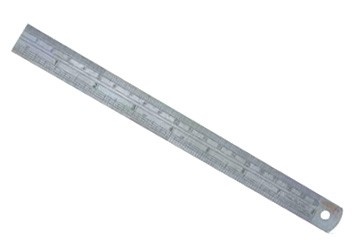
Where steel rulers are used in industrial environments
Steel rulers are commonly used for basic dimensional measurement, scribing support, alignment checks, and quick comparisons on parts, fixtures, and raw materials. They are especially useful when a full precision instrument is not necessary, or when the first step is simply to confirm whether a part is within an expected size range before moving to more detailed inspection.
In machine shops and maintenance applications, they are often used alongside other tools rather than replacing them. For example, after checking an overall dimension with a ruler, users may continue with callipers for tighter tolerance work or use dial indicators when movement, runout, or deflection needs to be evaluated.
What to look for when choosing a steel ruler
The right selection usually depends on the job rather than the tool alone. Length is one of the first considerations: a shorter ruler is easier to carry and handle in confined spaces, while a longer model is more suitable for layout work, larger workpieces, or checking broader surfaces.
Users should also consider width, thickness, and readability of graduations. A narrower ruler may be easier to position in restricted areas, while a wider and more rigid format can feel more stable on flat surfaces. In routine engineering use, clear marking and consistent edge quality matter just as much as nominal size.
Material construction also influences usability. Steel rulers are generally chosen for their rigid body and resistance to everyday workshop handling. For teams that frequently perform repetitive manual measurements, a durable ruler can support consistent work practices over time without requiring a complex setup or power source.
Typical product formats in this category
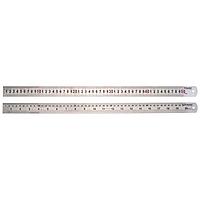
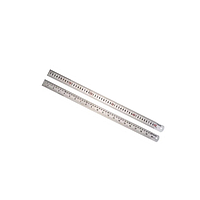
This category includes straightforward engineering rules and straight scale rulers suitable for general measurement tasks. A good example is the MOORE & WRIGHT ER212 Traditional Engineers’ Rules (300mm), which represents the kind of compact format often used for bench work, machine setup, and everyday shop-floor checks.
For users who need a broader measuring edge or a larger physical format, models such as the MOORE & WRIGHT ER112 Traditional Engineers’ Rules (300mm) and MOORE & WRIGHT ER424 Traditional Engineers’ Rules (600mm) illustrate how ruler dimensions can be matched to application needs. A smaller alternative like the Shinwa 13005 Straight Scale Ruler (150mm) may suit portable toolkits, assembly work, or quick verification tasks where handling speed matters.
When brand preference is important, buyers often compare options from MOORE & WRIGHT, Shinwa, and other established manufacturers in mechanical measurement. The best fit usually depends on the working environment, required size, and how often the ruler will be used for layout versus inspection support.
Steel rulers in a broader measurement workflow
Although a ruler is one of the simplest measuring tools in a workshop, it plays an important role in the overall inspection process. It is often used for initial checks, workpiece positioning, marking reference distances, or confirming dimensions before switching to instruments designed for finer resolution.
That is why steel rulers are commonly found in the same working environment as micrometers, callipers, and gauges. Where sheet thickness or coating thickness becomes the next concern, teams may also move to a thickness meter for a more application-specific measurement approach.
When a steel ruler is the right tool—and when it is not
A steel ruler is ideal for quick checks, layout work, and practical measurements where ease of use is more important than high-resolution precision. It is particularly useful for measuring overall length, checking spacing, and supporting workshop marking operations on flat or accessible surfaces.
However, it is not intended for every inspection task. If the application involves very small dimensional differences, internal features, or close tolerances, a ruler should be viewed as a first-pass tool rather than the final authority. In those cases, operators typically move to more specialized instruments depending on the tolerance and geometry involved.
This distinction is important in industrial purchasing as well. Buyers looking for a steel ruler are often solving a practical handling problem: they need a robust, readable measuring tool that supports fast work on the shop floor. Buyers looking for precision verification may need to consider a different measuring category altogether.
Common buying considerations for B2B users
For procurement teams, maintenance departments, and industrial distributors, selection usually goes beyond nominal length. It is helpful to consider where the ruler will be used, who will use it, and whether the tool needs to fit a standardized toolkit, machine maintenance set, or inspection station.
Some buyers prioritize compact rulers for field service and daily carry, while others need longer formats for fabrication benches or drafting-related tasks. In design or drawing interpretation workflows, scale-reading tools from manufacturers such as Niigata Seiki may also be relevant, especially when measurement support extends into layout and drawing-based reference tasks.
Brand consistency can matter too, especially in facilities that standardize by supplier for quality control, purchasing efficiency, or user familiarity. This category includes options associated with recognized names in industrial tools and measuring equipment, helping buyers compare practical formats without unnecessary complexity.
Simple tool, lasting value
A steel ruler remains an essential part of mechanical measurement because it solves everyday tasks efficiently. It supports quick checking, marking, and setup work across production, maintenance, and inspection environments, making it a useful tool even in facilities equipped with more advanced instruments.
When choosing from this category, the most effective approach is to match ruler size and format to the real working task. For routine workshop measurement, layout support, and general-purpose dimensional checks, a well-chosen steel ruler can be a reliable and practical addition to the measuring toolkit.
Get exclusive volume discounts, bulk pricing updates, and new product alerts delivered directly to your inbox.
By subscribing, you agree to our Terms of Service and Privacy Policy.
Direct access to our certified experts