For full functionality of this site it is necessary to enable JavaScript.
EMIN.COM.MM
0

More economical when treating waste with ultrasonic tank

03/10/2025 15:33:41

Is it difficult to clean stubborn deposits? Oxidation, rust or salt deposits often cause unsightly stains. If conventional methods are not effective enough, you should consider learning about ultrasonic cleaning tanks - cleaning equipment trusted in many industrial manufacturing fields.

The advent of ultrasonic cleaning tanks has opened up a new direction in cleaning technology, meeting increasingly stringent requirements for quality, hygiene and safety in production. Ultrasonic cleaning tanks help remove stubborn deposits easily, contributing to prolonging the life of equipment, minimizing repair and replacement costs, especially in today's constantly developing industrial environment.

What is scale and why is it so difficult to deal with?
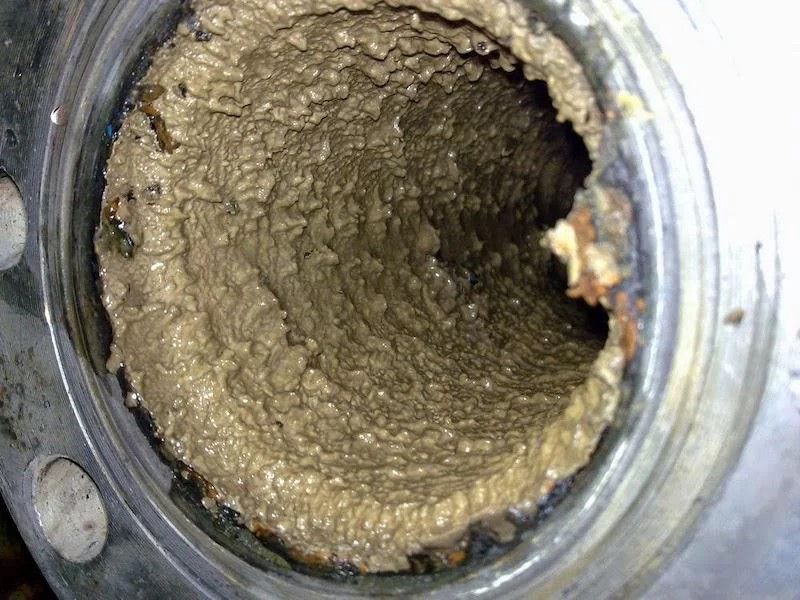
Have you ever heard of scale? Scale is formed from the precipitation of calcium and magnesium ions combined with hydrocarbons in water. Over time, they accumulate and form hard, adherent deposits on the surface of equipment. This process only occurs when four factors converge: water reaches a supersaturated state (exceeding the solubility threshold of the compounds), nucleation (scale molecules initially appear as small particles), contact time is long enough for the crystals to grow, and finally the solubility threshold is exceeded, causing the scale layers to begin to adhere densely.

In addition, many other factors also contribute to the formation of scale such as water pH, corrosion, high ambient temperature, flow obstruction, hydrodynamic factors and microbial activity. In particular, the presence of dissolved gases such as oxygen and CO₂ in water not only oxidizes metals, reducing their durability, but also accelerates the corrosion process, making equipment susceptible to damage if not handled promptly.

Consequences of not treating scale

If the scale is not treated promptly, the consequences will be very serious, causing great economic damage and directly affecting the performance of the system.
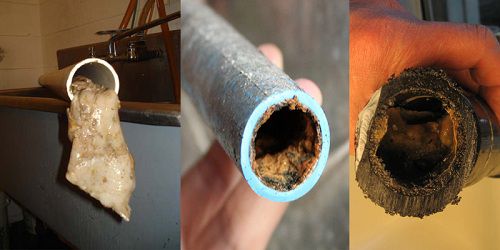
When the scale accumulates too much, it will hinder the heat exchange process, easily leading to blockage in the pipeline and causing the equipment to quickly deteriorate or malfunction. The heat dissipation capacity of the equipment is reduced, even completely lost, causing a significant reduction in cooling capacity.

In addition, leaving scale to accumulate for a long time also leads to increased operating, maintenance and repair costs, causing energy loss. Users also face high costs for spare parts replacement and reduced equipment life. In some serious cases, scale can cause sudden failures, forcing the system to stop working unexpectedly. 

In particular, if this situation persists without being handled properly, operational risks such as equipment explosions can completely occur, endangering people and property.

See more articles about ultrasonic cleaning tanks: Save money with ultrasonic cleaning tanks

Why is ultrasonic cleaning an effective solution for removing scale? 

When faced with stubborn deposits, manual cleaning is not only time-consuming but also laborious. That is why ultrasonic cleaning tanks become the optimal choice. Simply place the sample in the tank, set the appropriate temperature and time, and the device will automatically perform the descaling and cleaning process quickly and effectively without much intervention.  
Related News

Which Vacuum Pump Should You Choose for a Microbiology Lab to Avoid Affecting Samples?
07/15/2026 14:45:07

Vacuum pumps are utilized in a wide range of microbiology laboratory procedures, from membrane filtration and the aspiration of supernatants following centrifugation to sample concentration and the support of negative-pressure systems. Selecting the appropriate pump not only ensures more stable operational processes but also minimizes the risk of sample contamination, reduces maintenance costs, and extends the equipment's lifespan

QCVN 25:2025/BKHCN Takes Effect: Do Businesses Need to Prepare Electrical Safety Testing Equipment?
07/15/2026 09:15:04

Electrical safety is consistently one of the primary criteria evaluated before electrical or electronic equipment—or industrial components—are released to the market. A product may operate reliably yet still fail to meet requirements if its insulation lacks sufficient durability, its grounding resistance exceeds permissible limits, or leakage current occurs during operation.

Why Is Associated Research Considered an Icon of Hipot Technology?
07/14/2026 09:05:30

When it comes to electrical safety testing equipment specifically Hipot testers—many QA/QC and testing engineers are familiar with the globally renowned brand Associated Research. A subsidiary of the parent company IKONIX, Associated Research (ARI) invented the world's first commercial Hipot tester.

What Is the Standard 3-Phase Voltage? How to Read Cabinet-Mounted Meters Without Errors
07/13/2026 15:09:18

Voltmeters are almost invariably found on the panels of electrical cabinets in factories, power stations, or generator systems. A glance lasting just a few seconds allows an operator to determine whether the power supply is stable or showing signs of abnormality. However, not everyone understands the significance of the displayed readings, particularly regarding three-phase electrical systems.

Distinguishing between ARI’s Hypot, HypotUltra, and HypotMax: Which device is right for your factory?
07/13/2026 09:48:30

Few people realize that the concept of the "Hipot Test"—or electrical safety testing—has long existed within the electrical equipment manufacturing industry. Driven by the growing need to verify the voltage withstand capabilities of conductors, motors, and electrical devices, the industry required a robust and virtually fail-safe method to detect insulation weaknesses before products reached the market.

Stay Updated with Offers

Get exclusive volume discounts, bulk pricing updates, and new product alerts delivered directly to your inbox.

By subscribing, you agree to our Terms of Service and Privacy Policy.

Quick Support

Direct access to our certified experts