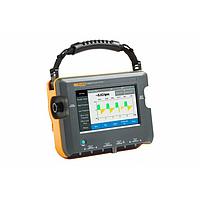
Gas Flow Meters
Accurate gas flow data is essential when you need to control consumption, stabilize a process, verify compressed air performance, or monitor gas delivery in production and laboratory systems. Choosing the right Gas Flow Meters depends not only on flow range, but also on the gas type, pressure conditions, installation layout, communication requirements, and whether you need measurement only or active flow control.
This category brings together instruments used for measuring air and gases across industrial plants, HVAC applications, compressed air networks, and precision process environments. From inline meters for permanent installation to mass flow controllers for tightly regulated gas dosing, the goal is the same: obtain reliable flow information that supports better process decisions and more stable operation.
Where gas flow meters are commonly used
Gas flow measurement appears in a wide range of B2B applications. In manufacturing, it helps track compressed air consumption, detect inefficiencies, and allocate usage by line or machine. In process systems, it supports dosing, mixing, purging, and gas supply monitoring where repeatability matters.
These instruments are also relevant in ventilation studies, air handling systems, and technical service work. Devices such as the PCE WS US2 Airflow meter or Sauermann DEBIMO airflow blades are more aligned with air velocity and airflow verification tasks, while models like the Dwyer DMF-41406 or Brooks Instrument mass flow devices are aimed at controlled gas measurement in process lines.
Main product types in this category
Not every gas application needs the same measuring principle. Some systems require a simple inline meter for continuous monitoring, while others need a controller that can regulate flow automatically based on a setpoint. Understanding this distinction helps narrow the selection much faster.
Mass flow meters are typically chosen when the actual amount of gas matters more than volumetric flow alone. They are often used in gas delivery, analytical equipment, and process control. For example, the Brooks Instrument SLA5863 series is designed for gas mass flow measurement over higher slpm ranges, while the Dwyer DMF-41406 is a digital mass flow controller for lower-flow applications.
Mass flow controllers combine measurement with a control valve, allowing the instrument to maintain a target flow. This is useful in automated systems where consistency is critical. Examples in this category include the Brooks Instrument GP200 and GF080 product lines, which are intended for gas control and measurement with different communication and connection options.
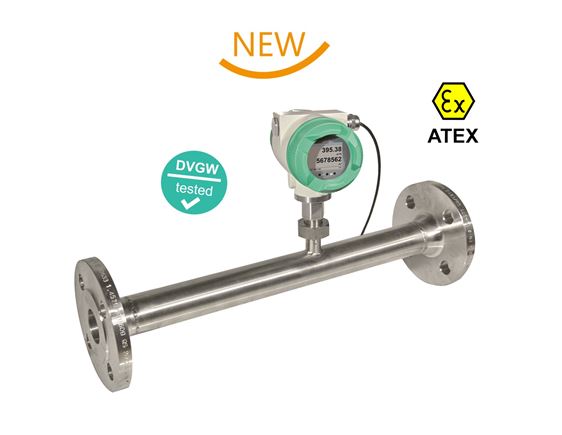
Inline and compressed air flow meters are more common in plant utilities and energy monitoring. The CS Instruments VA 520 inline flow meter and CS Instruments CMM 500 Compressor Master Meter fit this role, especially in compressed air systems where trend visibility and efficiency monitoring are important.
How to choose the right gas flow meter
A practical starting point is the flow range. The meter should operate comfortably within the expected minimum and maximum flow, not only at one nominal point. Wide turndown can be useful when demand changes significantly during operation.
The second factor is the process condition. Consider gas composition, pressure, temperature, and whether the gas is clean and dry or part of a harsher industrial environment. Connection type also matters, especially in systems using VCR fittings, flanged piping, or tube compression. In permanent installations, communication output such as RS485, 4-20 mA, pulse, or industrial fieldbus may be just as important as the sensing principle itself.
If your application includes regulation rather than monitoring only, a controller is usually the better fit than a passive meter. In these cases, the relationship between upstream pressure, pressure drop, and control response should be reviewed carefully. Where installation and supporting components influence performance, related items in flow measurement accessories can also be relevant.
Measurement principles and what they mean in practice
Thermal mass flow technology is widely used for gases because it measures flow based on heat transfer and can provide direct mass flow information. This makes it attractive in process control, gas dosing, and analytical systems. Products such as the Brooks Instrument GF080 series represent this kind of approach for gases, with options for analog and digital communication.
Differential pressure methods remain important in industrial gas and compressed air monitoring. The CS Instruments CMM 500, described with a Venturi-based differential pressure principle, is a good example of a solution intended for robust plant-level monitoring where response time, pressure capability, and installation conditions are key considerations.
For airflow checks, service work, or duct measurements, velocity-based instruments can be more appropriate than fixed inline process meters. The PCE WS US2 uses an ultrasonic sensing principle for airflow-related measurement, while Sauermann DEBIMO blades are suited to air flow assessment in technical environments. The right principle depends on whether you are measuring process gas in a closed line or air movement in a larger system.
Typical industries and applications
In compressed air systems, gas flow meters help identify base load, peak demand, and avoidable losses. A device like the CS Instruments VA 520 or CMM 500 can support long-term monitoring in utility networks where efficiency and operating cost are under constant review.
In semiconductor, laboratory, and controlled process applications, compact mass flow controllers and meters are often preferred because they combine accuracy with signal integration. Brooks Instrument models in this category illustrate the type of equipment commonly used where stable gas delivery, repeatable setpoints, and system connectivity are required.
Building services and HVAC professionals may focus more on airflow measurement during balancing, validation, or maintenance. In those cases, PCE and Sauermann products can be more relevant than permanent inline process meters. If the application instead involves liquid media, a different technology family such as electromagnetic flow meters may be more appropriate.
Examples from leading manufacturers
This category includes products from recognized instrumentation suppliers, with Brooks Instrument standing out for gas mass flow meters and controllers used in demanding process environments. The GF080, GP200, and SLA5863 series illustrate different configurations for flow control, digital communication, and varying flow capacities.
CS Instruments is particularly relevant for compressed air and industrial utility monitoring, with products such as the VA 520 inline flow meter and CMM 500 Compressor Master Meter. Dwyer also appears in this category through the DMF-41406 digital mass flow controller, while PCE and Sauermann provide useful solutions for airflow measurement and field verification tasks.
When system design includes regulation hardware in addition to measurement, it may also be helpful to review compatible flow valves for broader control architecture planning.
Installation and maintenance considerations
Even a high-quality meter can underperform if it is installed in the wrong location. Straight pipe requirements, flow disturbances, mounting orientation, and pressure conditions all affect measurement quality. For gas mass flow controllers, the stability of the gas supply and available differential pressure are especially important.
Routine maintenance depends on the application. Clean gas lines generally require less intervention, while industrial environments may need periodic inspection of fittings, sensor condition, signal wiring, and communication integrity. In compressed air systems, regular verification can also help reveal leaks, abnormal demand, or drift in system performance over time.
Finding a suitable solution for your system
The most suitable gas flow meter is the one that matches the actual operating conditions of your process, not just the nominal line size or a single accuracy figure. It is usually worth comparing the measurement principle, usable flow range, output options, and whether the application calls for monitoring, totalizing, or active control.
Within this category, you can explore solutions ranging from airflow instruments for field measurements to inline industrial meters and advanced gas mass flow controllers. A careful selection based on process needs will lead to more dependable data, better system control, and a flow measurement setup that remains useful as your operation evolves.
Get exclusive volume discounts, bulk pricing updates, and new product alerts delivered directly to your inbox.
By subscribing, you agree to our Terms of Service and Privacy Policy.
Direct access to our certified experts