Flow Measurement Accessories
Reliable flow systems depend on more than the meter itself. In many industrial and laboratory installations, the supporting hardware around the measurement point has a direct impact on sealing integrity, maintenance effort, and long-term measurement stability. Choosing the right Flow Measurement Accessories helps reduce leakage risk, simplify installation, and support safer operation across gas, liquid, and utility lines.
Within this category, accessories are especially relevant where tubing connections, process transitions, and media compatibility need to be managed carefully. For engineers, buyers, and maintenance teams, the goal is not only to complete the assembly, but to build a flow setup that remains dependable under pressure, temperature, and repeated service cycles.
Why accessories matter in flow measurement systems
Even a well-selected flow meter can underperform if the surrounding connection components are poorly matched. Accessories influence how smoothly fluid or gas moves through the line, how securely the process connection seals, and how easily the system can be assembled or serviced. In practical terms, they help bridge the gap between instrument specifications and real installation conditions.
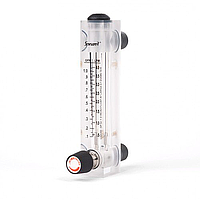
This is especially important in applications involving compressed gases, water, steam, oils, or solvents, where connection quality affects both system reliability and operator confidence. In broader flow systems, accessories are often used alongside devices such as indicating flow meters or specialized inline technologies, making compatibility a key part of system planning.
Common roles of flow measurement accessories
Accessories in this category may serve several functions depending on the installation. Some are used to connect tubing to threaded process ports, while others support transitions through panels, isolate sections of a line, or reinforce leak-free compression sealing. Their role is often less visible than the meter, but just as important in day-to-day operation.
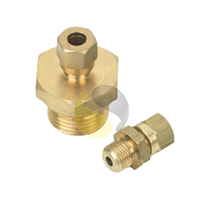
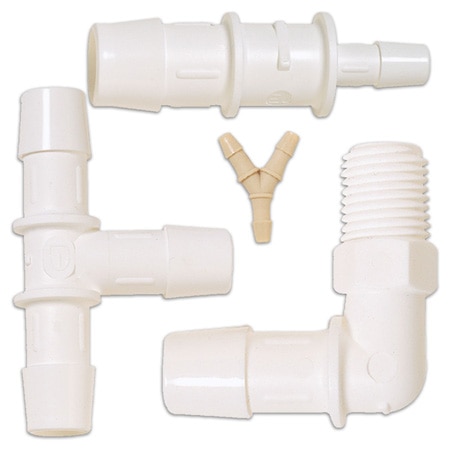
Examples from this category include female connector fittings, male connector fittings, bulkhead union fittings, and front ferrule components. These parts are not standalone measuring instruments; instead, they support the mechanical and sealing interface within the flow assembly. That makes them particularly relevant in systems where line integrity must be maintained under elevated pressure or temperature.
Representative Dwyer fitting options in this category
A number of featured products in this range come from Dwyer, with several configurations designed for leak-free tubing connections. Models such as the Dwyer A-1011-12, A-1011-13, and A-1011-14 illustrate how the same fitting family can support different process connection sizes while maintaining a similar installation concept. This helps users standardize around a familiar connection style without forcing the same exact size across every line.
Other examples, including the Dwyer A-1002-27, A-1002-28, and A-1002-35, show the role of male connector fittings in linking tubing to NPT male process interfaces. For panel or enclosure transitions, the Dwyer A-1010-10 bulkhead union fitting provides a different function, while the Dwyer A-1006-14 front ferrule fitting represents a key compression-sealing component within the overall fitting assembly. Together, these products reflect the fact that accessory selection often depends on connection geometry as much as on the medium being measured.
Key selection factors before ordering
When evaluating accessories, start with the basic connection requirements: tubing outer diameter, wall thickness, and process connection size or thread type. A mismatch in any one of these can create installation delays or sealing problems, even if the rest of the system is correctly specified. For compression-style fittings, these dimensional details are essential because they affect both assembly fit and sealing performance.
Material compatibility is another critical point. Several featured products here use 316 stainless steel wetted materials, a common choice for handling compatible gases, water, steam, oils, and some solvents in demanding environments. Pressure and temperature requirements also matter; in higher-duty applications, selecting accessories that align with the expected operating envelope helps protect both the instrument and the process connection.
How accessories support system reliability
In industrial flow applications, leaks rarely remain a small issue. They can lead to unstable readings, pressure loss, contamination concerns, or unnecessary maintenance work. Well-matched accessories help create a more stable tubing path and reduce the likelihood of problems caused by vibration, repeated thermal cycling, or incorrect assembly of connection points.
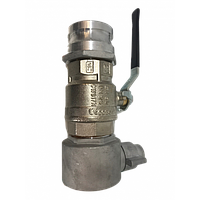
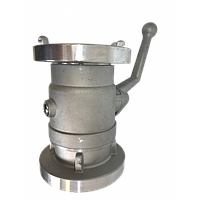
This is particularly relevant where the flow system includes other supporting components such as flow valves for control or shutoff. A reliable setup depends on the entire line working together, not only on the measurement device. In that sense, accessories are part of the broader system integration strategy rather than just add-on hardware.
Typical application environments
Flow measurement accessories are commonly used in OEM skids, pilot plants, utility panels, process lines, test benches, and general industrial tubing systems. They are especially useful where installers need secure transitions between tubing and threaded ports, or where instrumentation must be mounted through a panel or mechanical barrier without compromising line continuity.
Because many of the featured fittings are suited for compatible gases and liquids, these accessories can support a wide range of service environments. Depending on the measurement method in use, they may appear in systems built around technologies such as electromagnetic flow meters or other inline flow instruments where proper upstream and downstream connections remain essential.
What buyers and maintenance teams should check
For procurement teams, accessory selection should go beyond part naming alone. It helps to confirm fitting type, thread form, tubing dimensions, pressure class, and media suitability before purchase. This reduces the risk of receiving a part that looks similar on paper but does not fit the installation or maintenance requirement in practice.
For maintenance personnel, consistency across fitting families can also simplify spare part planning. Using compatible connection styles across multiple lines can make service work faster and reduce confusion during replacement. Where the application calls for related supporting hardware, it may also be useful to review other flow measurement accessories that complement the main flow assembly.
Choosing the right accessory for your flow setup
The right accessory depends on how the connection will actually be used: straight connection, panel pass-through, ferrule-based sealing, or transition to a threaded process interface. Looking at the tubing size, media, installation layout, and service conditions together usually leads to a more reliable choice than selecting by part type alone.
This category is intended to support complete and practical flow installations, not just the measurement device at the center of the system. By choosing accessories that match the mechanical and process demands of the application, users can build flow assemblies that are easier to install, easier to maintain, and better suited to long-term operation.
Get exclusive volume discounts, bulk pricing updates, and new product alerts delivered directly to your inbox.
By subscribing, you agree to our Terms of Service and Privacy Policy.
Direct access to our certified experts