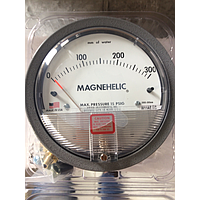
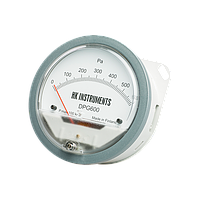
Differential Pressure Analog Gauge
When technicians need a fast visual indication of pressure difference across filters, ducts, cleanrooms, or process lines, an analog dial still offers a practical and reliable solution. A Differential Pressure Analog Gauge is widely used where operators want an immediate reading without depending on power, software, or signal conditioning.
On this page, you can explore analog differential pressure gauges for low-pressure air and compatible gases as well as higher-pressure differential applications. These instruments are commonly selected for HVAC monitoring, filter status checks, fan performance observation, and general industrial pressure drop measurement.
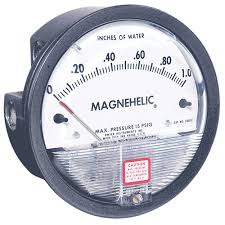
Where differential pressure analog gauges are used
A differential pressure gauge measures the difference between two pressure points instead of showing only one reference pressure. That makes it especially useful in systems where performance is judged by pressure drop, such as air filters, ventilation ducts, isolation rooms, and other low-pressure air handling environments.
In many facilities, an analog gauge is preferred because it is simple to read at a glance and easy to integrate into local panels or wall-mounted installations. For users comparing technologies, this category focuses on dial-based devices, while applications requiring electronic output or display may be better served by a digital differential pressure gauge.
Typical measurement ranges in this category
The selection shown here covers a broad span of differential pressure ranges, from very low values such as -30 to 30 Pa, -50 to 50 Pa, and -60 to 60 Pa, up to positive ranges like 0 to 300 Pa, 0 to 500 Pa, 0 to 750 Pa, 0 to 1 kPa, 0 to 1.5 kPa, and imperial ranges such as 0 to 3 in H2O or 0 to 10 in H2O. This variety helps match the gauge sensitivity to the actual process condition.
Lower ranges are typically chosen when small pressure differences matter, for example in room pressurization or fine filter monitoring. Wider ranges are more suitable when higher differential values are expected or when the process may experience stronger pressure variation during startup, loading, or changing flow conditions.
Representative products and design characteristics
Several featured models in this category come from Dwyer, a well-known manufacturer in pressure instrumentation. Examples include the Dwyer 2300-60PA, Dwyer 2300-100PA, and Dwyer 2300-120PA for bidirectional low-pressure measurement, along with models such as the Dwyer 2000-300PA, Dwyer 2000-500PA, Dwyer 2000-750PA, Dwyer 2000-1KPA, and Dwyer 2000-1.5KPA for positive differential ranges.
Across these examples, common characteristics include analog dial indication, differential pressure measurement, and process connections such as 1/8" NPT Female on many low-pressure models. The listed products also show a familiar 4" dial format in many cases, which supports easy local reading in plant and building service environments.
How to choose the right gauge
The first step is selecting the correct pressure range. A gauge that is too wide may reduce resolution for normal operating conditions, while a gauge that is too narrow can be vulnerable to overrange events or become less practical if the system pressure fluctuates. In most cases, the best choice is a range that keeps normal operation within the central portion of the dial.
You should also check connection type, media compatibility, mounting orientation, and expected operating temperature. For low-pressure HVAC and air handling work, compact diaphragm-based differential gauges are common. For more demanding liquid or pump-related service, a model such as the Dwyer PTGD-SC12A is more relevant because it is intended for filter drop and pump performance applications with a much higher pressure capability than typical low-pressure air gauges.
Analog vs. digital in pressure monitoring
Analog differential gauges remain attractive because they are straightforward, visible from a distance, and do not require a power supply for basic local indication. In maintenance routines, this can simplify inspection rounds and support quick go/no-go decisions based on pointer position.
That said, digital devices can be a better fit when users need alarm outputs, data logging, tighter integration with controllers, or more detailed readout functions. If your application is moving toward automation, it may be worth reviewing a digital pressure switch or related digital gauge options alongside this analog category.
Selection considerations for HVAC and industrial systems
For ventilation and clean air systems, focus on the expected differential across filters, dampers, or fans. Very low Pa or in H2O ranges are often preferred because they provide better visibility of small changes. Models such as the Dwyer 2000-60PA or Dwyer 2003 can be relevant where fine low-pressure indication is required.
For general industrial service, the media and pressure conditions become more important. Some applications only need air and non-combustible compatible gases, while others involve liquids, oils, or pump circuits. In those cases, users should review whether a differential analog gauge in this category is the right fit, or whether a single pressure analog gauge or a more specialized pressure instrument would be more appropriate for the task.
Manufacturers commonly considered
This category prominently features Dwyer products, with multiple range options suitable for building services and industrial measurement. Depending on project requirements, buyers may also compare broader instrumentation portfolios from manufacturers such as OMEGA and HK Instruments when evaluating gauge style, display format, and installation preference.
The most practical way to compare options is to start with the required differential range, then narrow by connection, accuracy, dial size, and service conditions. That approach is usually more effective than selecting only by brand name, especially in B2B purchasing where installation fit and measurement relevance matter most.
FAQ
What does a differential pressure analog gauge measure?
It measures the pressure difference between two points, usually labeled high and low, and displays that difference on a mechanical dial.
When is an analog model a good choice?
An analog model is a good fit when you need simple local indication, easy visual monitoring, and operation without electrical power.
How do I choose between Pa, kPa, and in H2O ranges?
Choose the unit and range that best match your system specification and normal operating differential. The ideal gauge should provide clear resolution without spending most of its time at either extreme of the scale.
Choosing the right differential pressure analog gauge comes down to understanding your operating range, media, and installation needs. Whether you are monitoring low-pressure airflow, checking filter loading, or tracking process pressure drop, a properly matched analog gauge can provide dependable and immediate visual feedback for daily operation and maintenance.
Get exclusive volume discounts, bulk pricing updates, and new product alerts delivered directly to your inbox.
By subscribing, you agree to our Terms of Service and Privacy Policy.
Direct access to our certified experts