Pressure testing equipment
When pressure integrity needs to be verified before commissioning, maintenance, or quality release, the right test setup becomes critical for both safety and repeatability. Pressure testing equipment supports leak testing, proof testing, and functional verification across valves, pressure-retaining parts, and sealed assemblies where controlled media and stable pressure application are essential.
In industrial environments, these systems are used to confirm whether a component can hold pressure, reseat correctly, or remain leak-tight under defined conditions. The category typically covers compact pressure units, water pressurization systems, and dedicated test benches designed for practical workshop use as well as more demanding test procedures.
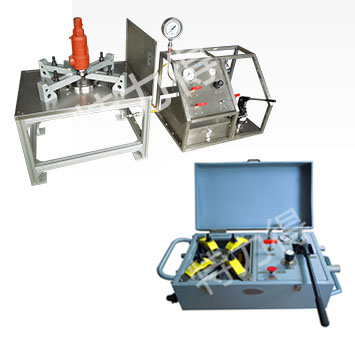
Where pressure testing equipment is used
Pressure testing is relevant in many stages of the product and maintenance lifecycle. It may be required during incoming inspection, production quality control, overhaul of safety valves, or final verification before a system is returned to service. Depending on the task, the test may involve water, compressed air, gas, or a combination of pressure generation and visual leak observation.
Compared with standard manometers used mainly for pressure indication, pressure testing equipment is built around a complete test process. That can include pressure generation, clamping, safety interlocks, media handling, hose and piping arrangements, and connections for gauges or registration systems.
Main equipment types in this category
A practical way to evaluate this category is by function. Some systems are designed to generate and control pressure for flexible field or workshop use, while others are purpose-built to hold and test a specific component type under repeatable conditions.
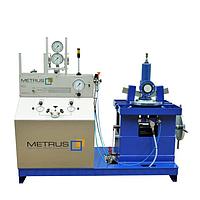
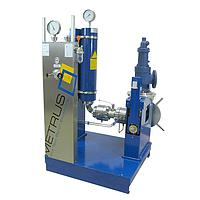
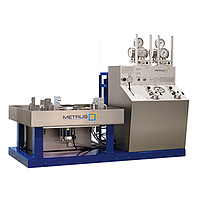
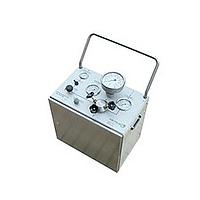
For example, the Roxer AQUAVAC PV15 is a water pressurization machine intended for controlled testing in a compact format, while the METRUS MPU 600 Mobile Pressure Unit illustrates the role of a mobile high-pressure source for water, air, or gas applications. In a different part of the workflow, METRUS safety valve test benches such as the SV 20/200, SV 20/400, and SV 50/400 are focused on secure clamping and repeatable verification of valve behavior across different size ranges and test pressures.
Choosing equipment by test method and pressure range
The first selection criterion is usually the test medium. Water-based testing is often preferred where compressibility must be minimized, while air or gas testing can be useful for specific leak checks or functional procedures. The available pressure source, target pressure, and safety requirements all influence which system is appropriate.
Pressure range is equally important. A compact machine suitable for moderate pressure verification is not the same as a mobile unit intended for several hundred bar, and neither replaces a dedicated valve bench with controlled clamping and test piping. If your work involves high-pressure circuits, it can also be useful to compare related instruments such as a hydraulic meter when reviewing the broader pressure measurement and verification setup around the test station.
What matters in safety valve testing
For safety valve applications, the test bench is more than a pressure source. It must support secure positioning of the valve, stable clamping, controlled pressure increase, and observation of opening, leakage, or reseating behavior. Features such as quick gauge connection, stainless steel pressure piping, bubble counting, and safety interlocks are therefore highly relevant in day-to-day use.
The METRUS range in this category shows how different configurations support different workloads. The SV 20/200 PA is oriented toward safety valve testing with pop action considerations, while the SV 20/200 and SV 20/400 provide broader size and pressure coverage. For larger components and heavier-duty clamping requirements, the SV 50/400 offers a higher clamping force and an extended valve range. These differences matter because test repeatability often depends as much on fixture stability as on the pressure source itself.
Mobility, workflow, and installation considerations
Not every testing task needs a large fixed installation. In service workshops, maintenance teams may prefer a mobile pressure unit that can be positioned where needed and connected to an external supply. This approach is practical when testing varies from job to job or when space is limited.
On the other hand, routine valve verification often benefits from a dedicated bench that reduces setup time and improves consistency between tests. If the application includes vacuum-related checks or low-pressure diagnostics alongside pressure testing, complementary tools such as portable vacuum pressure instruments may help support troubleshooting around the main test process.
Representative manufacturers and product examples
Roxer and METRUS are the main manufacturers represented in this category context. Roxer is illustrated here by the AQUAVAC PV15, a water pressurization machine suited to controlled pressure testing where a compact chamber-based setup is needed. METRUS contributes both mobile pressure generation equipment and specialized test benches for safety valves, covering a wider range of workshop and bench-test scenarios.
These examples are useful because they show that pressure testing equipment is not a single product type. Some users need a general pressure source, some need a water-based test arrangement, and others need a dedicated bench with clamping and safety functions built into the process. Reviewing the intended component type, pressure level, and test medium will usually narrow the shortlist quickly.
How to narrow down the right solution
A structured selection process usually starts with a few practical questions: what component is being tested, what pressure level must be reached, which medium is required, and whether the setup must be mobile or bench-mounted. It is also worth checking whether the process needs simple pressure holding, leak observation, or a more specific functional test such as valve reseating behavior.
Connection method, gauge handling, control layout, and safety provisions should not be treated as secondary details. In real operation, these factors affect operator confidence, throughput, and repeatability just as much as the nominal pressure rating. For B2B buyers, that means evaluating the complete testing workflow rather than selecting purely on maximum bar value.
Conclusion
The most suitable pressure testing setup depends on how pressure is generated, how the test piece is secured, and what result needs to be verified. From water pressurization machines to mobile high-pressure units and dedicated safety valve benches, this category supports a wide range of industrial testing tasks with different technical priorities.
If you are comparing options, focus on the real application: test medium, pressure range, component size, mobility needs, and the level of control required during the procedure. That approach makes it easier to choose pressure testing equipment that fits the process reliably instead of simply matching a headline specification.
Get exclusive volume discounts, bulk pricing updates, and new product alerts delivered directly to your inbox.
By subscribing, you agree to our Terms of Service and Privacy Policy.
Direct access to our certified experts