Network Switches & Fronthaul Switches
Modern transport networks have to move more data with tighter latency targets, cleaner synchronization, and better scalability from the edge to the core. In that environment, choosing the right switching platform is not only about port count or headline speed. It also involves fronthaul architecture, timing distribution, deployment conditions, and how well the hardware fits into a larger telecom or data infrastructure.
This category brings together Network Switches & Fronthaul Switches for use in carrier, edge, and high-capacity network environments. Whether the priority is packet transport, mobile fronthaul, or synchronization support for 5G infrastructure, the goal is to help buyers compare the right hardware for operational requirements rather than browse a flat list of products.
Where network switches and fronthaul switches fit
In telecom and advanced IP networks, switches do more than aggregate traffic. They form the transport layer between radio access equipment, distributed sites, edge compute nodes, and higher-capacity backbone resources. For fronthaul in particular, the switch often has to support precise traffic handling, stable timing, and high-bandwidth optical connectivity in a compact and serviceable form factor.
That is why this category is especially relevant for teams building or expanding 5G transport networks, disaggregated infrastructure, and dense edge deployments. Buyers comparing platforms here may also evaluate adjacent technologies such as AI networking infrastructure or switching platforms used in cloud and data center environments, depending on where traffic converges and how workloads are distributed.
What to look for when selecting a platform
A suitable switch should match both the network design and the operating environment. In practical procurement, the most important factors usually include interface density, supported link speeds, synchronization options, environmental range, power architecture, and physical format. These criteria matter even more in telecom deployments, where equipment may be installed in edge cabinets, central offices, or mixed indoor infrastructure.
For fronthaul use cases, timing interfaces can be a major differentiator. Features such as GNSS input, 1PPS, 10MHz, BITS, or ToD connectivity help support synchronization strategies required in mobile networks. Buyers should also consider redundancy, serviceability, and whether the platform is intended as a compact timing-related component or a full 1RU transport element handling larger traffic volumes.
Example solutions from Ufispace
Ufispace is one of the manufacturers represented in this category, with products that align well with open and scalable telecom transport designs. Rather than treating every device as interchangeable, it is useful to understand the role each model plays within the broader switching and fronthaul ecosystem.
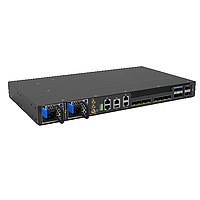
The Ufispace M3000-14XC Fronthaul Multiplexer is a good example of a higher-capacity fronthaul platform, built around a 14-port 25/100G architecture in a 1RU chassis. Based on the available context, it also includes multiple timing-related interfaces and redundant hot-swappable power units, which makes it relevant for deployments where transport density and operational resilience both matter.
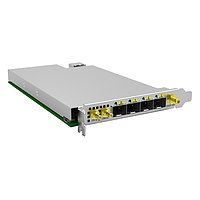
By contrast, the Ufispace N3100-4C 5G Timing Adapter illustrates the supporting side of the ecosystem. It is not simply another generic switch option; it serves a more specialized role around network timing and synchronization, with interfaces such as GNSS, 1PPS, and 10MHz. In real deployments, components like this can be important when the transport layer must maintain accurate timing behavior across 5G infrastructure.
Why timing matters in fronthaul networks
As mobile networks evolve, synchronization is no longer a background detail. Many 5G and packet-based transport environments depend on stable timing references for coordination between network elements. That makes timing-capable switching and related adapter hardware especially relevant in fronthaul design, where packet transport and synchronization requirements often intersect.
When evaluating platforms in this category, it helps to think beyond raw throughput. A device with suitable timing I/O may be a better fit than a higher-density alternative if the deployment requires coordination with external references or synchronization distribution across edge nodes. Teams that need to validate signal quality, timing behavior, or network performance may also work alongside tools in telecom and TV measurement environments.
Common deployment scenarios
Products in this category can support several network architectures. In mobile transport, fronthaul switches are commonly positioned between radio-related infrastructure and aggregation layers, where they handle high-speed optical traffic and timing-sensitive services. In edge deployments, they may also support compact network footprints that combine transport, synchronization, and service flexibility.
There is also overlap with broader switching requirements in converged IP environments. Some organizations evaluate fronthaul-capable systems alongside mainstream network switching platforms when designing infrastructure that spans telecom transport, edge compute, and service delivery. The right choice depends on whether the application is purely packet aggregation or includes stricter fronthaul and synchronization demands.
How to compare products in this category more effectively
A useful comparison process starts with the application, not the model name. Buyers should define whether the need is for high-speed fronthaul aggregation, timing distribution, compact deployment at the edge, or a combination of those requirements. From there, it becomes easier to assess whether a platform’s port profile, chassis design, timing interfaces, and power arrangement are appropriate.
It is also important to separate core transport functions from supporting infrastructure roles. A fronthaul multiplexer and a timing adapter may both belong in the same project, but they solve different problems. Understanding that distinction helps avoid under-specifying the transport layer or overcomplicating the timing architecture.
Choosing with the wider network architecture in mind
Network procurement is rarely isolated to a single box. Switching decisions often connect to optical design, synchronization strategy, site conditions, management preferences, and future scaling plans. For that reason, this category is most useful when viewed as part of a broader telecom networking stack rather than a simple hardware shortlist.
If you are comparing options for 5G transport, edge aggregation, or synchronization-aware packet infrastructure, this selection of Network Switches & Fronthaul Switches provides a practical starting point. Focus on the actual role the device must play in the network, and it becomes much easier to narrow the field to platforms that fit both current deployment needs and long-term architecture goals.
Get exclusive volume discounts, bulk pricing updates, and new product alerts delivered directly to your inbox.
By subscribing, you agree to our Terms of Service and Privacy Policy.
Direct access to our certified experts