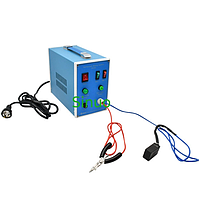
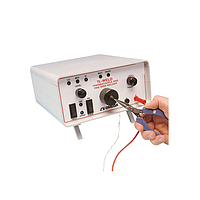
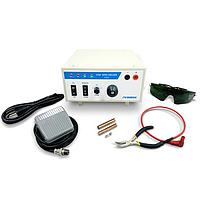
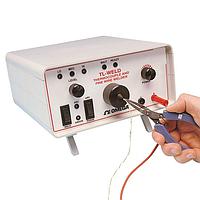
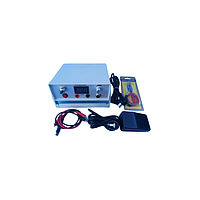
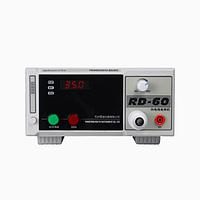
Fine Wire and Thermocouple Welder
Reliable temperature sensing often depends on details that are easy to overlook during assembly. When working with very small conductors, prototype sensors, or custom junctions, the quality of the welded point has a direct impact on measurement stability, repeatability, and sensor life. That is why engineers and maintenance teams often look for the right Fine Wire and Thermocouple Welder tools as part of a complete temperature measurement workflow.
In this category, the focus is on equipment used to join fine thermocouple wires and create clean measuring junctions for testing, development, laboratory work, and industrial applications. These tools are especially relevant where standard prefabricated probes are not the best fit and a custom thermocouple junction offers better response time, geometry, or installation flexibility.
Why fine wire welding matters in temperature measurement
A thermocouple works by measuring the voltage generated at the junction of two dissimilar metals. In practice, the junction itself needs to be formed carefully. For fine-gauge wire, twisting and mechanically joining conductors may not be enough to deliver a stable, durable sensing point, especially in applications exposed to vibration, thermal cycling, or repeated handling.
A dedicated thermocouple welder helps create a small, consistent welded junction with better control than improvised joining methods. This is important in R&D, calibration setups, electronics testing, material studies, and processes where response speed and junction integrity can affect measurement quality. For users building custom assemblies from raw wire, related tools such as a crimping tool may also support connector termination and sensor preparation.
Typical use cases for fine wire and thermocouple welders
These products are commonly used when standard probes do not match the installation constraints or when a sensor must be made quickly for a specific test point. Engineers may weld fine wire thermocouples for surface measurements, embedded sensing, prototype validation, thermal mapping, or temporary instrumentation during troubleshooting.
They are also useful in educational labs and maintenance environments where technicians need to repair or fabricate simple junctions in-house. In many cases, the welder becomes part of a broader accessory ecosystem that includes wire preparation, insulation handling, pass-through hardware, and mounting materials. Depending on the setup, users may also work with feedthroughs when routing sensor leads through enclosures, chambers, or process boundaries.
What to consider when selecting a thermocouple welder
The right choice depends first on the wire size and the type of work being performed. Fine wire applications typically require controlled energy delivery so the junction can be formed cleanly without excessively damaging the conductor. Users should also consider how often the tool will be used, whether portability matters, and whether the workflow is focused on occasional laboratory assembly or frequent production-style preparation.
Another important factor is ease of repeatability. A practical welding solution should help operators form junctions with consistent shape and strength, especially when building multiple sensors for comparison testing. It is also worth considering the broader compatibility of the setup with the wire, connectors, and preparation methods already used on site. If wire fabrication is part of routine sensor work, categories such as adhesives and pastes can also be relevant for mounting or securing finished sensing points.
Role within a custom thermocouple assembly workflow
A fine wire welder is usually not a standalone purchase in real applications. It supports a sequence that may include wire cutting, stripping, junction formation, insulation management, termination, and final installation. In this sense, the product category is best understood as part of a custom sensor preparation process rather than as an isolated accessory.
For fast-response measurements, a properly welded bead can help maintain a compact junction geometry. For test environments where sensor placement changes frequently, the ability to make or remake junctions quickly can save time and reduce dependence on fully preassembled probes. This is one reason the category remains relevant in both engineering development and practical maintenance work.
Manufacturer context and sourcing considerations
Buyers evaluating this category often prefer established names in temperature instrumentation and accessories. Within this range, OMEGA and Dwyeromega are relevant manufacturer references for users building out a dependable temperature measurement toolkit. Their presence is especially useful when customers want better continuity across wire, accessories, and related sensing components.
For B2B purchasing, it is often helpful to think beyond the tool itself. Lead time, accessory compatibility, support for maintenance stock, and fit with existing laboratory or plant practices can all matter as much as the welder function alone. A category page like this is most useful when it helps users narrow their selection based on workflow, not just on product naming.
How this category supports engineering, lab, and industrial teams
In engineering labs, these tools support quick iteration during thermal testing and product development. In industrial settings, they can help technicians prepare replacement sensing points or assemble temporary thermocouples for diagnostics. In quality and validation work, they contribute to more controlled sensor construction where junction consistency affects the quality of comparative results.
Because the application scope is specialized, buyers usually benefit from matching the welder to their actual use pattern: fine wire prototyping, repeated lab fabrication, maintenance support, or general temperature accessory needs. When the surrounding process is considered carefully, a fine wire welding solution becomes a practical way to improve sensor readiness and reduce delays in measurement work.
Choosing with the full accessory ecosystem in mind
It is rarely just about forming a junction. The most effective purchasing decisions account for the complete measurement chain, including installation method, routing, termination, and environmental exposure. A well-chosen welder supports more reliable thermocouple preparation, but the final result also depends on how the finished sensor is mounted, protected, and connected.
For teams comparing options in this category, the goal should be straightforward: choose a solution that fits the wire type, the volume of work, and the level of repeatability required. With the right temperature accessory setup, fine wire and thermocouple welding can become a practical, efficient part of day-to-day testing and instrumentation tasks.
Get exclusive volume discounts, bulk pricing updates, and new product alerts delivered directly to your inbox.
By subscribing, you agree to our Terms of Service and Privacy Policy.
Direct access to our certified experts