For full functionality of this site it is necessary to enable JavaScript.
EMIN.COM.MM
0

Tips for treating damp floors before painting using a concrete moisture meter.

01/06/2026 11:30:39

When the moisture content in concrete exceeds or drops too low, the surface is prone to problems if not properly treated. This is especially true with water-repellent paints, as the paint has difficulty adhering, the floor is prone to peeling, and over time, this reduces durability and affects the overall finish.

Measure the moisture content of the concrete before painting.

The moisture content of the floor directly affects the choice of paint type and application method. Therefore, it's essential to determine the moisture level of the concrete using specialized measuring equipment from the outset to understand the actual condition of the surface. For most civil construction and factory buildings, the ideal moisture content is usually between 5-8%.

In practice, many people use common devices such as the EM-480 concrete and plaster moisture meter to monitor the floor condition before painting. These two models are easy to use, provide quick results, and are suitable for assessing the site before construction.

See more diverse products at: Wood and Building Materials Moisture Meters

If the concrete is too wet or has dried beyond acceptable limits, the paint layer will have difficulty adhering to the substrate. The common consequence is the need for multiple coats of paint, an uneven paint surface, and potential peeling after a short time, reducing the durability and aesthetic appeal of the structure.

Concrete floor surface treatment

Floor painting only achieves good durability and aesthetics when the concrete subfloor is properly prepared from the start. The surface needs to be uniformly roughened to ensure strong paint adhesion and prevent moisture penetration later on.
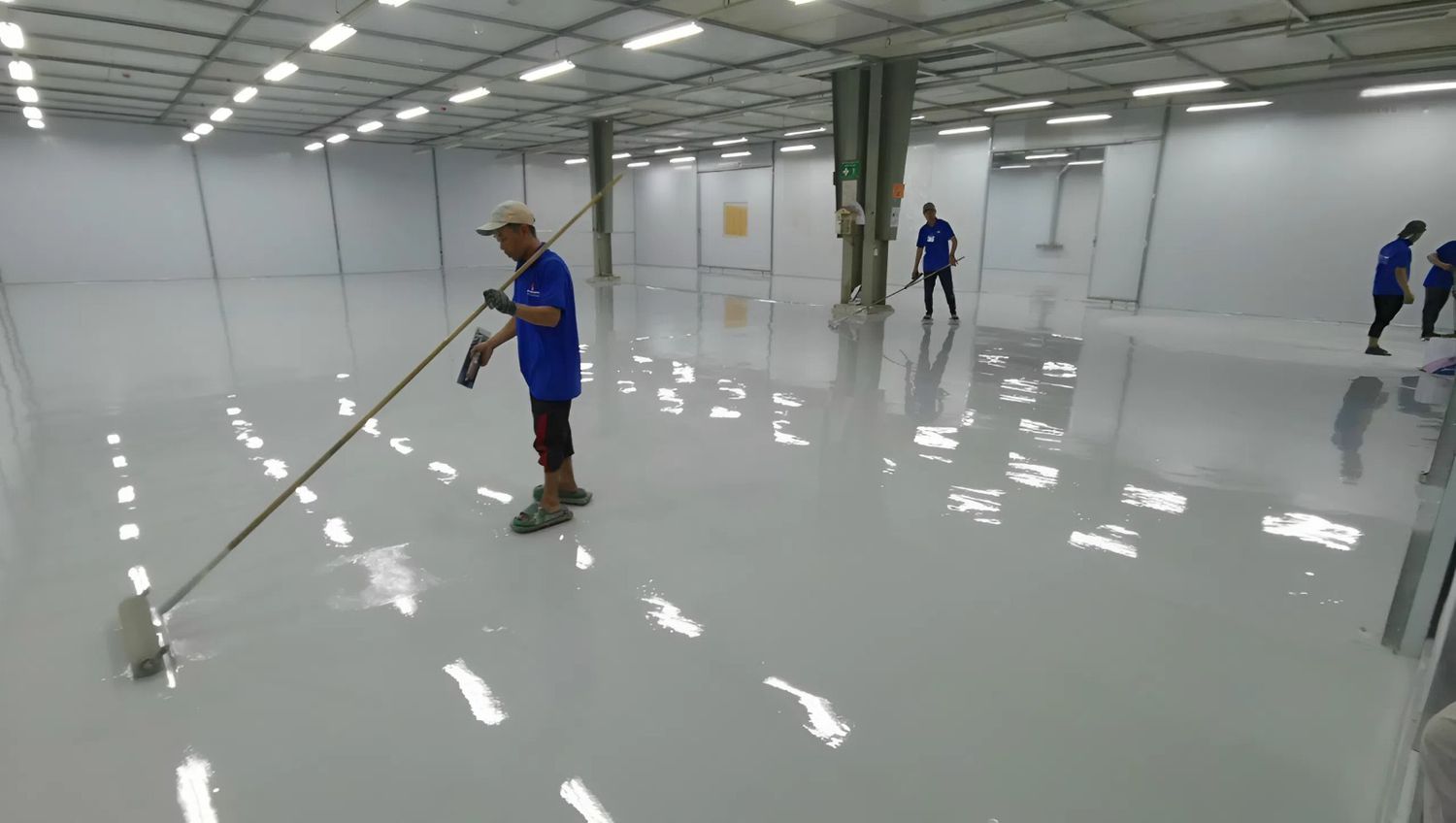
For areas with weak or deteriorated subfloors, thorough treatment is necessary before roughening. Flaking, pitted, or damaged concrete should be removed. Then, use an industrial grinder or sandblasting machine to roughen the surface. Areas with cracks need more careful treatment to prevent them from spreading after use.

After roughening, the floor needs to be thoroughly cleaned. Fine dust, sand particles, and remaining impurities must be vacuumed or swept away to ensure the subsequent paint layer adheres evenly and achieves a high-quality finish.

For damp concrete floors, several drying methods can be applied before painting. In practice, many contractors use specialized gas torches to quickly dry the surface. This method reduces moisture immediately, facilitating subsequent construction steps and saving costs.

To enhance long-term moisture resistance, it's essential to use appropriate waterproofing materials for concrete. These materials penetrate deep into the subfloor structure, limiting moisture evaporation from below. Depending on the floor condition and budget, a suitable solution can be chosen to ensure the quality of the finished surface. Additionally, a moisture-resistant primer is often used to increase the stability of the topcoat.

Before applying any treatment, it's crucial to determine the floor's moisture level to select the most appropriate solution, avoiding waste and ensuring safety during construction.
Related News

Which Vacuum Pump Should You Choose for a Microbiology Lab to Avoid Affecting Samples?
07/15/2026 14:45:07

Vacuum pumps are utilized in a wide range of microbiology laboratory procedures, from membrane filtration and the aspiration of supernatants following centrifugation to sample concentration and the support of negative-pressure systems. Selecting the appropriate pump not only ensures more stable operational processes but also minimizes the risk of sample contamination, reduces maintenance costs, and extends the equipment's lifespan

QCVN 25:2025/BKHCN Takes Effect: Do Businesses Need to Prepare Electrical Safety Testing Equipment?
07/15/2026 09:15:04

Electrical safety is consistently one of the primary criteria evaluated before electrical or electronic equipment—or industrial components—are released to the market. A product may operate reliably yet still fail to meet requirements if its insulation lacks sufficient durability, its grounding resistance exceeds permissible limits, or leakage current occurs during operation.

Why Is Associated Research Considered an Icon of Hipot Technology?
07/14/2026 09:05:30

When it comes to electrical safety testing equipment specifically Hipot testers—many QA/QC and testing engineers are familiar with the globally renowned brand Associated Research. A subsidiary of the parent company IKONIX, Associated Research (ARI) invented the world's first commercial Hipot tester.

What Is the Standard 3-Phase Voltage? How to Read Cabinet-Mounted Meters Without Errors
07/13/2026 15:09:18

Voltmeters are almost invariably found on the panels of electrical cabinets in factories, power stations, or generator systems. A glance lasting just a few seconds allows an operator to determine whether the power supply is stable or showing signs of abnormality. However, not everyone understands the significance of the displayed readings, particularly regarding three-phase electrical systems.

Distinguishing between ARI’s Hypot, HypotUltra, and HypotMax: Which device is right for your factory?
07/13/2026 09:48:30

Few people realize that the concept of the "Hipot Test"—or electrical safety testing—has long existed within the electrical equipment manufacturing industry. Driven by the growing need to verify the voltage withstand capabilities of conductors, motors, and electrical devices, the industry required a robust and virtually fail-safe method to detect insulation weaknesses before products reached the market.

Stay Updated with Offers

Get exclusive volume discounts, bulk pricing updates, and new product alerts delivered directly to your inbox.

By subscribing, you agree to our Terms of Service and Privacy Policy.

Quick Support

Direct access to our certified experts