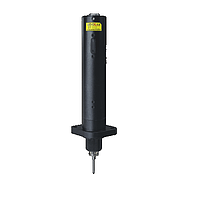
Electric screwdriver
When fastening work becomes repetitive, accuracy-sensitive, or part of a production flow, the choice of tool has a direct impact on throughput and product quality. In those environments, a Electric screwdriver is not simply a powered version of a hand tool; it is a more controlled fastening solution for assembly, maintenance, electronics, and light manufacturing tasks.
This category brings together electric screwdrivers and supporting components used in professional workplaces, from compact precision fastening to higher-torque assembly work. It also includes related accessories such as power adaptors, cords, bits, and replacement sub-assemblies that help keep existing tools operating reliably.
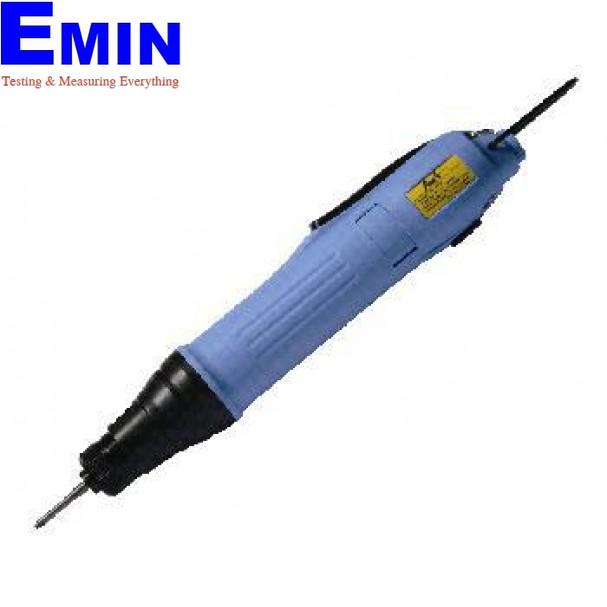
Why electric screwdrivers are widely used in assembly work
Compared with manual fastening, electric screwdrivers help maintain more consistent speed and torque across repeated cycles. This is especially important when operators need to fasten many screws per shift, or when the workpiece includes plastic parts, electronic housings, PCB-related assemblies, or other components that can be damaged by over-tightening.
Another practical advantage is reduced operator fatigue. Instead of relying entirely on wrist force and feel, users can work with a controlled drive system that supports better repeatability over long runs. In production settings, that consistency often matters as much as raw speed.
Typical applications and working environments
Electric screwdrivers are commonly selected for bench assembly, electronics production, product repair, service departments, and semi-automated fastening stations. Depending on the model, they may be used for very small machine screws or for somewhat heavier fastening tasks where a stable torque window is required.
In manual assembly cells, a straight or lever-start driver can support fast, repeatable tightening. In more advanced setups, robotic or controller-based tools can be integrated into stations where process control and repeatability are priorities. For users building a complete workstation, related hand tools such as hex wrench sets or socket wrench sets may also be useful alongside powered fastening equipment.
Product types found in this category
The range typically covers both the main driver units and the supporting parts required for operation or maintenance. Some products are complete fastening tools, while others serve as accessories or replacement items within a larger screwdriver system.
Examples in this category include the ASA ASA-S2000M-PRO full-auto shut off electric screwdriver for low-torque fastening, the ASA BS-4000 brushless full-auto shut off electric screwdriver for a wider torque range, and the Kilews SKD-BN512L+SKP-32B-60WF-BC6P power screwdriver for controlled manual fastening. For automated applications, the Mountz CLF7000XH robotic electric screwdriver represents the type of solution used where fixed process conditions are important.
There are also ecosystem parts such as the ASA APM-302C power adaptor, ASA 2W2133-1 DC cord, and Mountz power tool cables. Consumable and fastening-end items matter as well, and a bit such as the Vessel M-NT20x75 Star screw bit shows how the overall system depends on correct tool-to-fastener matching.
Key selection factors before choosing a model
The first point to consider is torque range. A screwdriver that is too strong for the application can damage screws, threads, or the workpiece, while an undersized tool may struggle to seat fasteners consistently. Matching the tool to screw size, material, and joint requirement is more important than simply choosing a higher-powered model.
The second factor is operating style. Some users need a manual production tool with shut-off control, while others need a robotic driver for integration into automated equipment. It is also worth checking the bit interface, power supply format, cable arrangement, and whether the tool uses a separate controller or adaptor.
Motor type and duty cycle also affect long-term suitability. For example, brushless designs are often preferred in demanding production environments because they support stable operation and reduced maintenance needs. If you are reviewing different brand ecosystems, pages such as ASA and Mountz can help compare available tool families and accessories.
The role of accessories and replacement parts
In industrial use, productivity depends on more than the screwdriver body alone. Power adaptors, control cables, extension cords, and internal replacement assemblies all play a role in keeping a fastening station available and stable over time. That is why this category includes not only finished tools but also support components used for maintenance and continuity.
Items such as the ASA brushless chip sub assembly or PWB sub assembly are relevant when existing tools need service rather than full replacement. Likewise, dedicated cables for Mountz hybrid drivers or YF series drivers help maintain proper connection and system compatibility. For maintenance-heavy environments, keeping suitable support items on hand can reduce downtime and simplify repairs; in some cases, a separate repair kit may also complement routine tool servicing.
Examples of brands and tool ecosystems
This category includes products associated with established fastening brands used in technical assembly environments. Kilews, Mountz, Vessel, and ASA are particularly relevant here because they represent different parts of the fastening ecosystem, including drivers, bits, adaptors, and cables.
For users focused on precision assembly, bit compatibility and torque control are often central. For users working on larger-scale production or integration projects, controller architecture, robotic suitability, and cable or power support may carry more weight. The right choice depends less on brand popularity and more on how the tool fits the fastening process you need to run.
Choosing for accuracy, productivity, and long-term use
A well-matched electric screwdriver helps improve fastening consistency, reduce operator strain, and support a smoother assembly workflow. The most effective selection usually starts with the application itself: screw size, target torque, shift length, required repeatability, and whether the process is manual, semi-automated, or robotic.
If you are comparing options in this category, it is worth looking at the complete setup rather than the driver alone. Tool body, bit type, power adaptor, cable, and service parts all influence how reliably the system will perform in day-to-day use.
For workshops, production lines, and technical service teams, electric screwdrivers are a practical investment when fastening quality and repeatability matter. Reviewing the available tools and accessories together makes it easier to build a setup that fits your process now and remains maintainable over time.
Get exclusive volume discounts, bulk pricing updates, and new product alerts delivered directly to your inbox.
By subscribing, you agree to our Terms of Service and Privacy Policy.
Direct access to our certified experts