File
Clean material removal and accurate edge finishing are often the last steps that determine whether a part fits properly, moves smoothly, or looks professionally finished. In workshop maintenance, metal fabrication, toolroom tasks, and light assembly work, the right file helps technicians refine surfaces, deburr edges, enlarge openings with control, and adjust small features without removing too much material.
This category brings together hand files and file sets used for practical bench work across industrial and service environments. Whether the task involves rough shaping, fine detail correction, bodywork preparation, or small-part finishing, choosing the correct profile and size makes the work faster, more consistent, and easier to control.
Where hand files are commonly used
Files remain essential in many applications because they provide controlled manual finishing where powered tools may be too aggressive or unsuitable. They are widely used for deburring cut metal, correcting fit on brackets and slots, refining corners, smoothing weld-adjacent areas, and tuning small mechanical parts during assembly or repair.
In maintenance departments and production support work, files are also helpful for rework tasks that require precision by feel. For example, a technician may use a flat or half-round profile to clean an edge after machining, while a smaller needle file is better suited to electronics-related hardware, intricate components, or narrow grooves.
Choosing the right file shape for the job
The profile of the file affects how material is removed and which surfaces can be reached effectively. File geometry should match the shape of the workpiece rather than being chosen only by overall length.
- Flat files are suitable for straight edges, flat faces, and general-purpose smoothing.
- Half-round files work well on both flat and curved surfaces, making them versatile for mixed shapes.
- Round files are useful for enlarging holes, refining radii, and working inside circular profiles.
- Triangle files are commonly selected for corners, grooves, and angular features.
- Square files help with slots, rectangular openings, and internal corners.
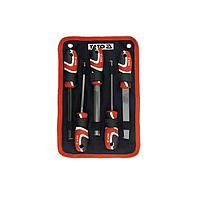
When the work involves several surface types, a set can be more practical than a single file. This is especially true in maintenance benches and service kits where technicians need flexibility without switching to power tools for every small adjustment.
Examples available in this category
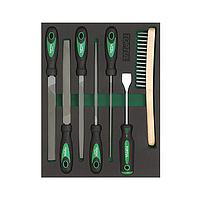
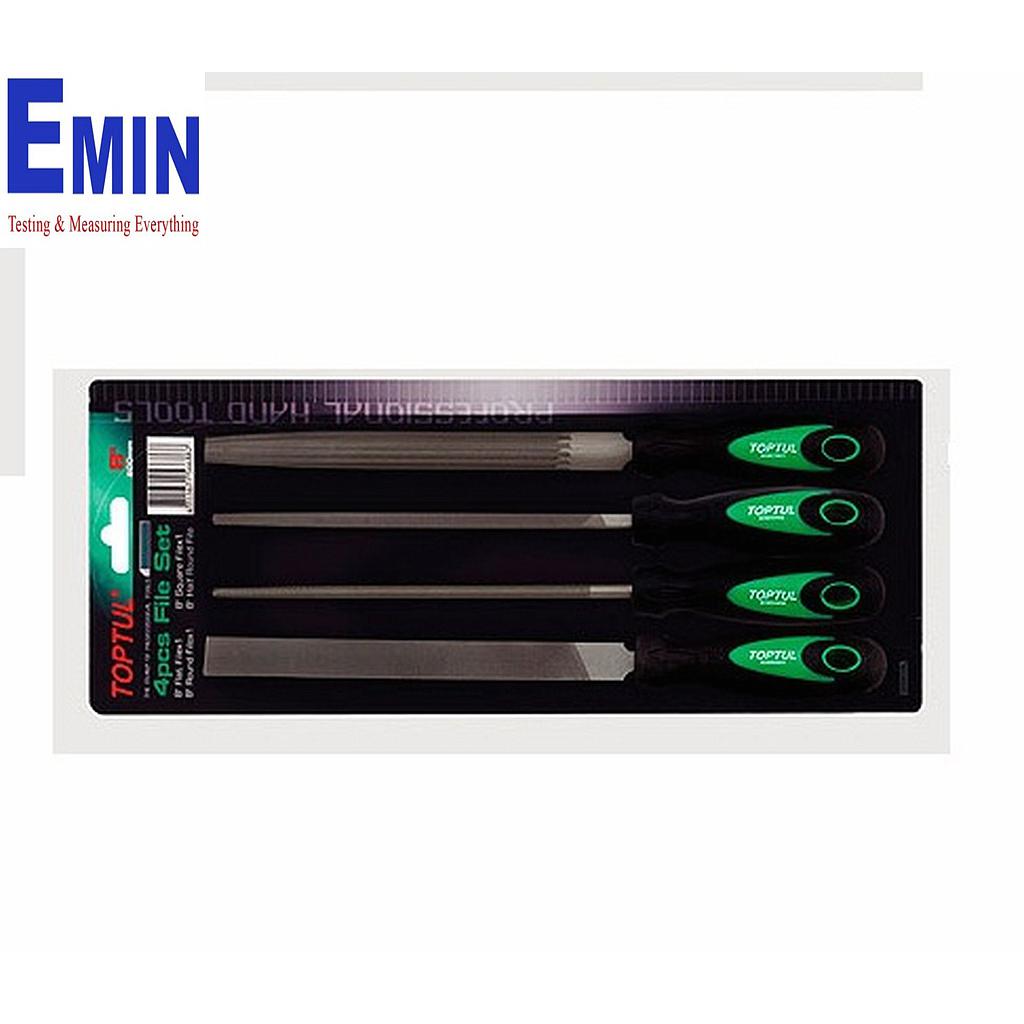
Several products in this category illustrate the range of file types used in real workshop conditions. The TOPTUL SDBC0821 Half Round File 8" is a practical option for applications that alternate between flat and curved contact surfaces. For users who prefer a broader bench kit, the TOPTUL GVB0701 File Tool Set combines multiple file profiles along with supporting hand-finishing tools for general workshop use.
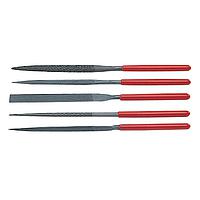
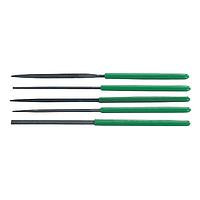
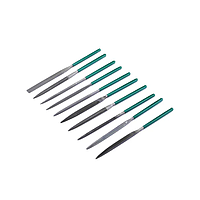
For more detailed work, the Proskit 8PK-605L Needle File Set (5 Pcs) is better aligned with fine shaping and small-feature finishing. The YATO YT-62396 5PCS Diamond Needle File Set also points to applications where small parts and harder surfaces require a more delicate approach. If the job centers on angular profiles, the Endura E9145 Triangle file is a straightforward example of a dedicated shape for corners and groove work.
Small files and sets for precision bench work
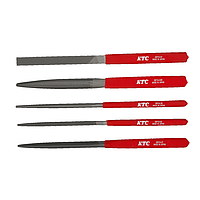
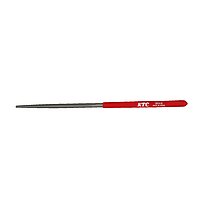
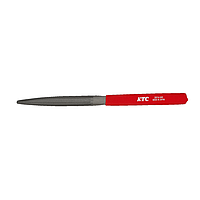
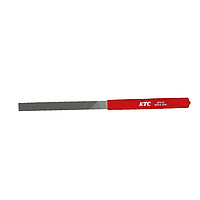
In many industrial settings, full-size files are only part of the solution. Small files are often preferred when access is limited, when the component is narrow, or when the operator needs better tactile control during finishing. This is where compact products such as the KTC ZKF1A-2T, ZKF1A-2S, ZKF1A-2R, ZKF1A-2HR, and ZKF1A-2H become relevant, each supporting a different contact profile for targeted work.
Users who need multiple shapes in one package may find the KTC TZKF1A05 Small File Set more efficient for routine bench use. A set like this can reduce downtime during fitting and rework because the technician can move between shape types without searching for individual tools. In the same way that a socket wrench set improves workflow for fastening tasks, a well-selected file set improves consistency in manual finishing work.
What to consider before selecting a file
The first decision is the type of material and the amount of stock removal required. For heavier material removal or general workshop shaping, standard hand files are commonly used. For smaller parts, delicate edges, and light correction, needle files or compact files offer better precision and lower risk of overworking the part.
It is also important to consider working space, target surface, and handling comfort. Longer files can cover more area efficiently, while shorter files are easier to control in confined spaces. If your workflow involves broader fitting and striking tasks around fabricated parts, it may also be useful to review related hand tools such as hammers for complementary workshop operations.
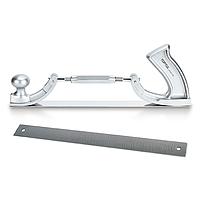
For bodywork and panel-related applications, a dedicated holder and blade arrangement may be more appropriate than a standard bench file. The TOPTUL JGAE0205 Bodywork File Holder Set is an example of a solution intended for that more specialized finishing style.
Files within a broader assembly and maintenance toolkit
A file is rarely used in isolation. In practical maintenance and assembly workflows, it supports fitting, alignment, cleanup, and post-machining correction alongside wrenches, repair tools, and impact hand tools. That is why this category is especially relevant for users building a balanced bench setup rather than shopping for one tool in isolation.
Depending on the task, technicians may pair files with items from repair kits or other hand-finishing tools to complete inspection, correction, and reassembly in one station. This makes the category useful not only for replacement purchases, but also for equipping maintenance teams, service departments, and production support benches with practical finishing capability.
How to browse this category efficiently
If you already know the type of surface you need to work on, start with the file profile first, then compare size and set configuration. For general workshop use, versatile profiles such as flat or half-round are often the most flexible. For narrow details, internal corners, or small mechanical parts, compact and needle-style options usually make more sense.
Brand preference can also be a factor when standardizing tools across a maintenance team. This category includes examples from recognized names such as TOPTUL, Proskit, YATO, Endura, and KTC, covering both individual tools and grouped sets. The best choice depends less on marketing claims and more on the actual shape, access, and control required by the job.
Final thoughts
Manual finishing still plays an important role in industrial and workshop environments, especially when accuracy, feel, and surface control matter. A suitable file helps remove burrs, refine geometry, and improve fit without relying on heavier cutting tools for every correction.
By comparing file shape, tool size, and whether a single piece or set better suits your workflow, you can select a more practical solution for assembly, maintenance, and repair tasks. Explore the products in this category to find the right match for general bench work, detailed finishing, or specialized bodywork applications.
Get exclusive volume discounts, bulk pricing updates, and new product alerts delivered directly to your inbox.
By subscribing, you agree to our Terms of Service and Privacy Policy.
Direct access to our certified experts