Nut Splitter
When a seized or corroded nut cannot be removed without risking damage to the stud, flange, or surrounding equipment, a controlled cutting method becomes the safer option. That is where Nut Splitter tools are especially useful in industrial maintenance, shutdown work, heavy assembly, and plant service operations where fastener removal must be done with precision rather than force.
In this category, the focus is on hydraulic nut splitting solutions designed for a wide span of bolt and nut sizes. These tools are commonly selected for demanding field conditions where manual loosening is impractical and where reducing rework on valuable threaded components matters just as much as removal speed.
Why hydraulic nut splitters are used in industrial maintenance
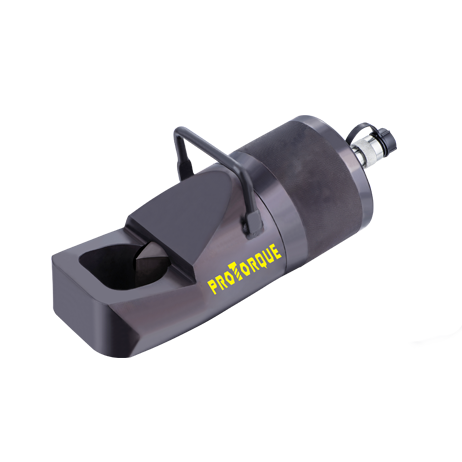
A hydraulic nut splitter applies high force through a cutting blade to crack or split a nut without relying on impact-heavy removal methods. This approach is often preferred when nuts are rusted, deformed, overtightened, or exposed to harsh environments that make conventional hand tools ineffective.
Compared with improvised cutting or excessive torque, hydraulic nut splitting helps improve control and can reduce the chance of damaging adjacent studs or equipment surfaces. In maintenance workshops, refineries, energy facilities, and heavy manufacturing, this makes the tool relevant wherever bolted joints must be opened safely and efficiently.
Typical size coverage in this category
This category includes models covering a broad range, from smaller applications such as M12 to M16 up to very large fasteners in the M76 to M90 range. That spread makes the category suitable for both general plant maintenance and more specialized heavy-duty bolting work.
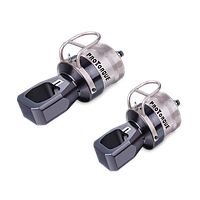
At the compact end, models such as the Protorque NC-1924 Blade Hydraulic Nut Splitter and Protorque NC-2432 are suitable for smaller hex nut dimensions and lighter handling requirements. At the larger end, tools such as the Protorque NS-110115 and Protorque NS-110130 are built for significantly larger nuts and much higher force output, which is important in heavy industrial bolting applications.
Protorque nut splitters for different maintenance scenarios
This selection is centered on Protorque, with models organized around practical nut and bolt size ranges rather than a one-size-fits-all approach. That matters because access conditions, nut geometry, force requirement, and operator handling all change considerably from smaller bolted joints to large-diameter industrial fasteners.
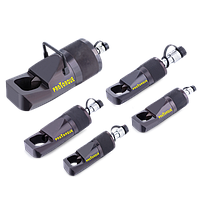
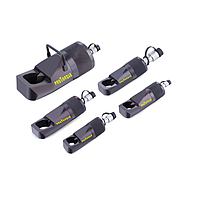
For mid-range work, examples such as the Protorque NC-4150, NC-5060, and NC-6075 support common maintenance tasks where a standard wrenching approach may no longer be enough. For larger heavy-duty jobs, the NS series, including NS-7080, NS-7085, NS-7095, and NS-70105, extends coverage into larger nut sizes while maintaining a hydraulic operating principle suited to controlled force application.
How to choose the right nut splitter
The first step is matching the tool to the actual bolt range and nut size on site. This is more important than choosing by overall tool size alone, because an oversized or undersized splitter can affect positioning, force transfer, and cutting effectiveness. In practice, maintenance teams should verify both the fastener specification and the accessible nut dimensions before selection.
The second factor is required cutting force. Smaller models in this category are suitable for lighter-duty applications, while larger units reach substantially higher capacity for heavy industrial nuts. Weight also matters, especially for field work or overhead access, since a 2 kg compact splitter and a 70 kg class tool serve very different working conditions.
It is also useful to consider serviceability and ecosystem fit. Some models in this category reference hydraulic cylinders, cutting heads, and replacement blades, which helps when planning maintenance cycles, spare parts strategy, or tool standardization across multiple job sites.
Where these tools fit within an assembly tool workflow
Although a nut splitter is a specialized removal tool, it often works alongside broader fastener handling equipment. Before a seized fastener reaches the point of splitting, technicians may attempt removal with a socket wrench set or support disassembly tasks with a hex wrench set, depending on the joint design and available access.
Once the damaged or seized nut is removed, follow-up work may include thread inspection, part replacement, and tool servicing. For teams managing regular shutdown or turnaround activities, keeping a suitable repair kit on hand can also help reduce downtime for supporting tools used across the maintenance process.
Practical selection considerations for field use
In real applications, the correct choice is influenced by more than nominal fastener size. Operators should look at access around the nut, orientation of the assembly, available hydraulic setup, and whether the job requires repeated use across multiple identical joints. A compact splitter may be easier to position in restricted spaces, while a higher-capacity model is more appropriate for large corroded fasteners in heavy plant equipment.
For scheduled maintenance, it can be helpful to standardize a few models that cover the most common ranges in your facility. For example, smaller NC series tools may cover routine service sizes, while larger NS series units can be reserved for major shutdown tasks involving larger bolting assemblies. This kind of range planning helps improve tool availability and reduces delays when seized nuts are encountered unexpectedly.
Examples of models in this category
The product range includes compact options such as the Protorque NC-1924 Blade Hydraulic Nut Splitter for M12 to M16 bolts and the NC-2432 for M16 to M22. Moving upward, the NC-3241 and NC-4150 support larger hex nut sizes often found in industrial assemblies, while the NC-5060 and NC-6075 extend the range further for heavier maintenance work.
For larger applications, the NS series covers substantial nut dimensions and higher output levels. Models such as the Protorque NS-7080, NS-7085, NS-7095, and NS-70105 are suitable for larger bolt ranges, while NS-110115 and NS-110130 address very large fastener sizes where high-force hydraulic tools are required for controlled nut removal.
Choosing a category built around safe fastener removal
This category is designed for buyers who need a practical way to remove damaged, frozen, or over-tightened nuts without turning the job into unnecessary rework. With coverage from smaller maintenance sizes to large industrial bolting applications, the available range supports more accurate selection based on actual nut dimensions, force requirement, and working conditions.
If your team is evaluating tools for shutdown planning, plant maintenance, or heavy assembly service, reviewing the nut size range, tool weight, and hydraulic configuration is the best place to start. A well-matched nut splitter can make fastener removal more controlled, more predictable, and better aligned with professional industrial maintenance practice.
Get exclusive volume discounts, bulk pricing updates, and new product alerts delivered directly to your inbox.
By subscribing, you agree to our Terms of Service and Privacy Policy.
Direct access to our certified experts