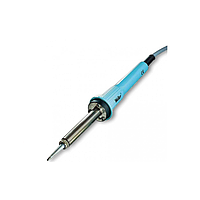
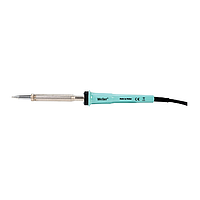
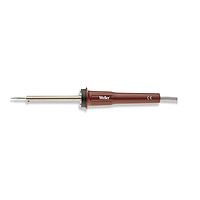
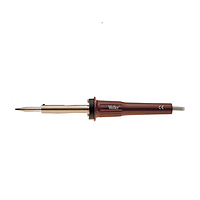
Soldering Iron
Reliable soldering work depends not only on operator skill, but also on choosing the right heating tool, tip geometry, and replacement parts for the job. In electronics assembly, maintenance, cable work, and general repair, the right soldering iron setup helps improve joint quality, shorten working time, and reduce the risk of overheating pads or nearby components.
This category brings together hand soldering tools and compatible tips used in practical bench work, from routine wire and connector soldering to finer PCB tasks. It is relevant for maintenance teams, electronics workshops, production environments, and technical buyers who need equipment that fits the application rather than a one-size-fits-all tool.
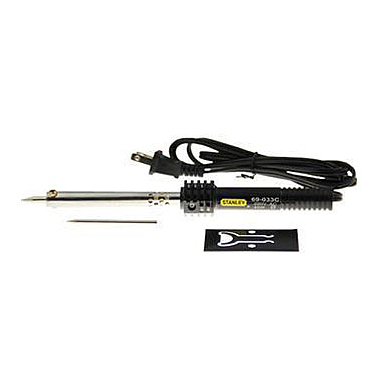
Where soldering irons fit in electronics work
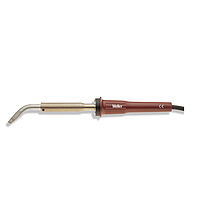
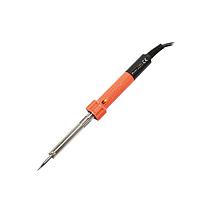
A soldering iron is typically selected based on the type of workpiece, heat demand, and how often the tool will be used. For light-duty PCB assembly, a compact iron with an appropriate fine tip may be enough. For heavier joints, cable terminations, or metal parts with higher thermal mass, a larger tip or a different heating format may be more effective.
Many users compare standalone irons with more controlled bench systems. If temperature stability, frequent use, or interchangeable handpieces are important, it may also be worth reviewing soldering stations as part of the broader tooling setup.
Why tip selection matters as much as the iron itself
In daily soldering work, the tip often has a greater impact on the result than buyers initially expect. Tip shape affects how heat is transferred into the joint, how easily solder wets the surface, and how precisely the operator can work around adjacent parts. A poor match between tip and task can lead to slow heating, excess dwell time, and inconsistent joints.
This category includes replacement and application-specific tips such as the Thermaltronics K80C004 conical tip for more precise work, the Thermaltronics K80DS045 knife style for drag or directional soldering, and bevel formats like the Thermaltronics K80BV020 and K80BV011 that can improve contact area on selected joint types. For broader contact on pads or terminals, a chisel profile such as the Thermaltronics K75CH025 may be more practical.
Examples of tools and replacement tips in this range
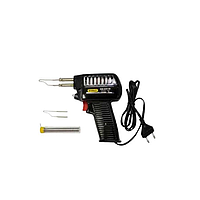
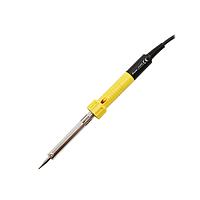
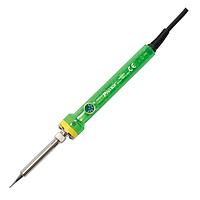
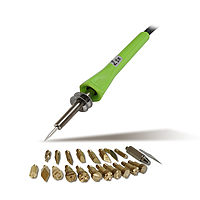
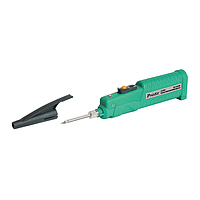
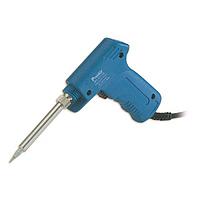
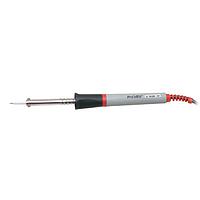
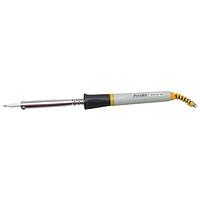
The assortment covers both active soldering tools and consumable parts used to keep existing equipment in service. For example, the HAKKO 585GP-V23 soldering gun is suited to applications where a gun-style format is preferred, while the YATO YT-8272 represents a portable heating tool option for general soldering tasks.
Replacement tips are equally important in professional maintenance and workshop environments. Proskit tip options such as 5SI-216-NK, 5SI-216-NI, 5SI-216-N-4C, and 5SI-216-N-2C help extend the usable life of compatible irons instead of replacing the full tool. The Proskit 5SI-131-B is another example of a model-specific replacement tip used to maintain proper performance on supported handpieces.
How to choose the right soldering iron for your application
The first consideration is the nature of the work. Fine electronic components, small pads, and dense boards usually require better control and smaller contact geometry. In contrast, wire splicing, lugs, connectors, or joints with larger copper mass demand stronger heat transfer and often a larger tip profile.
The second consideration is compatibility and maintenance. Buyers should check whether replacement tips are readily available for the selected tool family, especially in production or service environments. A tool that supports common consumables can reduce downtime and make long-term ownership more practical.
It is also useful to consider workflow. If the operation includes both assembly and correction work, hand soldering may need to be paired with other equipment. For mixed repair benches, users often evaluate nearby categories such as desoldering stations or hot air systems depending on the component package and rework process.
Common tip shapes and their practical use
Conical tips are commonly chosen for access to small points and detailed work, but they are not always the fastest option because the contact area is limited. They are useful when space is tight and precision is more important than rapid heat delivery.
Chisel and bevel tips generally offer better thermal coupling to pads, leads, and small connectors. In many day-to-day jobs, these shapes help complete joints faster and more consistently because they place more usable heated surface against the workpiece. Knife styles can also be useful in specific drag soldering or directional heating scenarios.
For users handling a wider range of board-level tasks beyond simple hand soldering, process planning may also involve BGA rework tools or more advanced rework systems where heat control is critical across larger or more sensitive assemblies.
Who typically buys from this category
This category is relevant to electronics repair shops, contract manufacturing support teams, maintenance departments, laboratory technicians, vocational training centers, and industrial buyers managing consumables for multiple benches. In these environments, purchasing decisions often focus on tool suitability, replacement tip availability, and consistency across technicians.
It is also useful for buyers replacing worn tips on existing equipment rather than changing the whole soldering setup. That is especially common when the installed base already uses specific hand tools and the priority is to keep operators productive with familiar equipment.
What to check before ordering
Before selecting a product, verify the intended use case, required tip geometry, and compatibility with the existing iron or handpiece. For replacement tips, dimensions and supported tool series matter more than appearance alone. Even tips that look similar may not fit correctly or transfer heat as intended.
It is also sensible to consider whether the job is mainly assembly, repair, or heavier-duty soldering. A practical purchasing decision usually balances precision, thermal capacity, consumable availability, and the type of joints performed most often. For technical teams, this approach is more useful than choosing solely by brand name or wattage.
Build a more suitable hand soldering setup
A well-chosen soldering iron and tip combination supports cleaner joints, better process control, and easier maintenance of everyday soldering equipment. Whether the need is for a general-purpose hand tool, a soldering gun, or model-specific replacement tips from lines such as Thermaltronics, Proskit, HAKKO, or YATO, the key is matching the tool to the real working task.
For buyers equipping a new bench or maintaining an existing one, this category provides a practical starting point for hand soldering needs. Reviewing tool format, compatible tips, and the surrounding rework workflow will help narrow the best-fit option for electronics assembly and repair.
Get exclusive volume discounts, bulk pricing updates, and new product alerts delivered directly to your inbox.
By subscribing, you agree to our Terms of Service and Privacy Policy.
Direct access to our certified experts