Atomic and molecular chemical equipment
Understanding matter at the atomic and molecular level is easier when abstract concepts can be observed, assembled, compared, and discussed in a practical setting. In laboratories, lecture halls, and teaching environments, the right equipment helps bridge the gap between theory and visualization, especially for topics such as atomic structure, isotopes, bonding, osmotic behavior, and nuclear data.
Atomic and molecular chemical equipment supports this kind of hands-on learning and demonstration. This category brings together teaching aids, experimental components, and reference tools used in chemistry and physics education, as well as in research-oriented training environments where clarity, repeatability, and didactic value matter.
Where this equipment is used
This type of equipment is commonly selected for schools, universities, technical institutes, and research training labs. It is especially useful when instructors need to explain invisible or microscopic phenomena in a way that students can interact with directly, rather than relying only on diagrams or formulas.
Depending on the teaching objective, the equipment may be used to demonstrate the Bohr atomic model, show relationships between protons, neutrons, and electrons, explore ion formation and bonding, or visualize processes such as osmosis with measurable experimental results. Larger-format visual references can also support lectures and advanced nuclear chemistry discussions.
Typical product types in this category
The category includes several kinds of tools with different roles in the learning process. Some products are designed for direct manipulation by students, while others are intended for teacher-led demonstrations or large-room presentation.
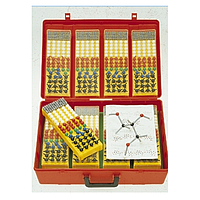
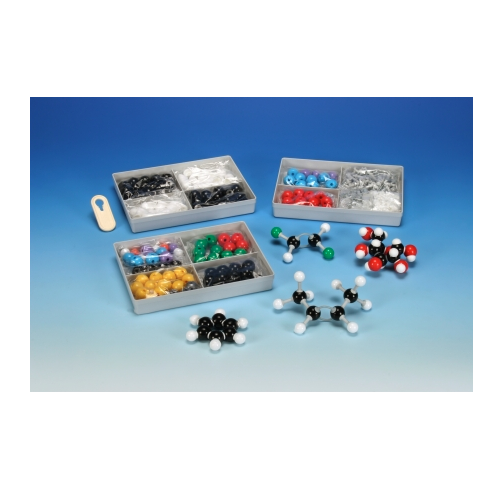
- Interactive atom models for illustrating atomic structure, isotopes, ions, electron arrangements, and basic bonding concepts.
- Experimental chambers and accessories for observing osmotic and electrochemical processes in a controlled and visible way.
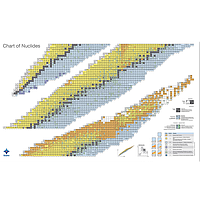
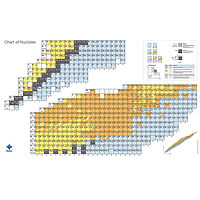
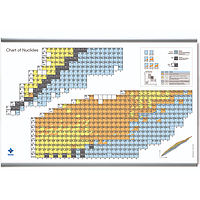
- Reference charts of nuclides for teaching and studying nuclear structure, decay types, and related data in classrooms or lecture halls.
For broader instructional setups, users may also compare these items with solutions found in general chemistry equipment when building a complete teaching laboratory.
Examples from the current range
Several products in this category show how atomic and molecular concepts can be taught in a more tangible way. The PHYWE 3BS-1005319 Interactive Atom Model According To Bohr (classroom set) is suited to group-based instruction, with multiple student exercise models and teacher demonstration elements that help explain atomic numbers, atomic masses, ions, isotopes, and bonding in a structured format.
For individual or smaller exercises, the PHYWE 3BS-1005320 Interactive Atom Model According To Bohr (student atom) provides a more compact option while still supporting core atomic teaching topics. In both cases, the emphasis is on active learning rather than passive viewing, which can be valuable in introductory chemistry and physics lessons.
The PHYWE 35821-00 Osmosis And Electrochemistry Chamber represents a different but related teaching approach. Instead of modeling atomic structure directly, it enables observation of osmotic processes using semipermeable membranes, capillary tubes, and solution concentration differences. Accessories such as the PHYWE 05939-00 Capillary Tube, PHYWE 64840-00 Scale, PHYWE 32987-00 Cellophane, and PHYWE 64701-00 Pipette With Rubber Bulb support setup, measurement, and handling within the experiment.
Large-format visual tools for advanced instruction
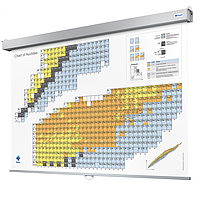
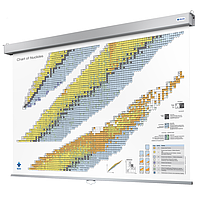
When the learning environment shifts from bench-scale exercises to lectures or research-oriented teaching, large-format charts can become more effective than small tabletop models. The range includes multiple PHYWE Chart Of Nuclides formats, such as pull-up, roll-up, and motorized screen versions, designed for visibility in classrooms and larger rooms.
These charts present extensive nuclide information in a didactically organized format and can support teaching in nuclear chemistry, atomic physics, and related scientific disciplines. Depending on the version, they may be more suitable for flexible room use, fixed wall or ceiling installation, or lecture hall presentation. If your application extends into adjacent experimental topics, it may also be useful to review physicochemical equipment for complementary laboratory setups.
How to choose the right equipment
Selection usually depends on the teaching level, the available space, and whether the equipment will be used for demonstration, student practice, or both. For entry-level instruction, interactive models are often the better choice because they make foundational concepts easier to build and discuss step by step. For experiment-based lessons, chamber systems and accessories are more appropriate because they allow observable changes and measurement.
It is also important to consider the teaching format. A classroom set may be more practical for collaborative learning, while a single student model may fit one-to-one instruction or small lab exercises. Likewise, a pull-up or roll-up chart may work well for mobile teaching spaces, whereas a motorized screen is more aligned with permanent lecture-room installation.
Where molecular and atomic topics overlap with broader chemical instruction, users sometimes combine this category with inorganic chemical equipment or PHYWE products from other educational ranges to create a more complete teaching environment.
Why these tools matter in technical education
Atomic and molecular concepts are essential across chemistry, materials science, physics, and life science education, but they are also among the most difficult subjects to explain without a physical or visual reference. Well-designed teaching equipment helps reduce that difficulty by turning symbolic or microscopic ideas into something that can be arranged, observed, or measured.
This matters not only for early learning but also for higher-level instruction. Students and trainees often understand structure, interaction, and process more effectively when they can connect equations and theory to a visible model or experiment. In that sense, this category supports both conceptual understanding and better classroom communication.
Supporting practical and scalable teaching setups
Another advantage of this category is that it covers more than one teaching scenario. Some products are optimized for repeated classroom use, some for practical student exercises, and others for lecture-based visualization. That makes the category relevant not just for a single lesson topic, but for institutions building a scalable and coherent science education setup.
Whether the goal is to explain atomic structure with manipulable components, demonstrate osmotic behavior through glassware and membranes, or present detailed nuclide data to a larger audience, the equipment in this category supports structured and technically grounded instruction.
Conclusion
Choosing atomic and molecular teaching equipment is ultimately about matching the tool to the learning objective. Interactive models, experimental chambers, and large-format reference charts each serve a different purpose, but all contribute to clearer understanding of complex chemical and physical concepts.
For buyers equipping educational labs, universities, or training centers, this category offers practical options for turning abstract theory into teachable, visible experience. A careful selection based on lesson type, user level, and installation needs will make the equipment more useful over the long term.
Get exclusive volume discounts, bulk pricing updates, and new product alerts delivered directly to your inbox.
By subscribing, you agree to our Terms of Service and Privacy Policy.
Direct access to our certified experts