What is the TDS level for the blood to be safe to drink?
"Is a TDS of 40 ppm acceptable?"
"If the water after the filter is still at 70 ppm, should I replace the filter cartridge?"
"Why does bottled mineral water have a higher TDS than RO water?"
Just join water filter forums or search on Google, and you'll easily find similar questions. The common thread is that most users want a specific number to determine if the water is safe to drink.
However, TDS doesn't work that way.
A reading of 50 ppm isn't necessarily better than 150 ppm. Conversely, a water source with low TDS isn't enough to conclude that it's of higher quality than a source with higher TDS. To understand what TDS level is safe to drink, you first need to understand what the number displayed on the meter actually represents.
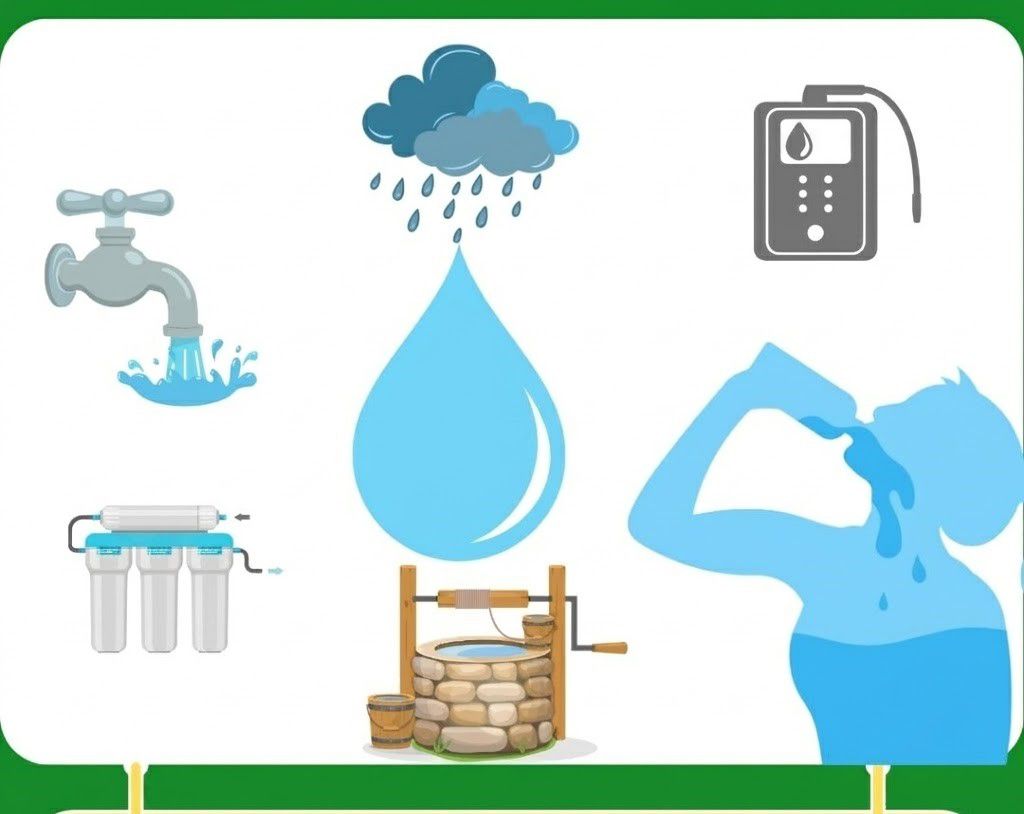
What is TDS and what does this indicator reflect?
TDS stands for Total Dissolved Solids, which refers to the total amount of dissolved solids in water. These substances exist as ions or dissolved minerals such as calcium, magnesium, sodium, potassium, bicarbonate, and many other compounds.
It's important to note that TDS meters don't differentiate between individual components. The device only indicates the total amount of dissolved substances present in the water sample at the time of measurement.
This leads to a rather interesting situation. Two completely different water samples can still yield the same TDS result. A mineral water sample rich in calcium and magnesium might show 200 ppm. Another sample containing many dissolved impurities might also display 200 ppm on the meter's screen. The numbers are the same, but the water quality and usability are completely different.
That's why TDS is considered an indicator to monitor the amount of dissolved substances in water, but not the only tool for assessing safety.
What TDS level is considered safe to drink?
This is the most frequently searched question when it comes to TDS levels.
According to widely applied drinking water standards, water with a TDS below 500 ppm is generally considered suitable for daily use. Meanwhile, many water sources with good sensory quality are often below 300 ppm.
However, trying to find a single "standard" number to apply to all cases is not a truly accurate approach.
A bottle of natural mineral water can have a TDS ranging from a few tens to a few hundred ppm due to its high content of naturally dissolved minerals. In contrast, water after an RO system typically has significantly lower TDS levels because most minerals have been removed during the filtration process.
If you only look at the results displayed on the meter, many people will assume that RO water is always better. But in reality, the two types of water serve different purposes and cannot be simply judged by a single TDS number.
Is it true that the lower the TDS, the better?
This misconception is quite common after users install RO water filtration systems.
Many people continuously monitor the measurement results and feel more reassured when the TDS decreases. However, when the reading increases from 15 ppm to 30 ppm, anxiety often arises even though the water quality remains largely unchanged.
This stems from the fact that many people equate low TDS with clean water.
In reality, TDS only reflects the amount of dissolved substances. When an RO system operates efficiently, the amount of dissolved minerals and ions decreases, so the TDS also decreases. This does not mean that all water with higher TDS is of lower quality.
Natural mineral water is a prime example. Many products have TDS levels many times higher than RO water due to the presence of calcium, magnesium, and other natural minerals. These components are what cause the reading to increase, not a sign of pollution or unsafety.
Why do we get different results each time we measure the same water source?
This is a common problem that confuses many people when they first use a TDS meter.
In the morning, the reading is 25 ppm. In the afternoon, it's 35 ppm. The results continue to change on other days, even though the sample was taken from the same location. In most cases, this is completely unrelated to equipment malfunction.
Water temperature, sampling time, quality of the incoming water source, meter calibration status, and water retention time in the pipeline can all affect the results. For domestic RO systems, membrane lifespan and filter condition also directly impact the output TDS reading.
That's why professional water treatment companies are usually more interested in trends over time rather than a single value at a given time.
Which TDS levels should be monitored?
Instead of focusing on whether the water is at 20 ppm or 40 ppm, monitoring unusual changes in TDS levels is often more valuable.
For example, a filtration system that was previously stable around 25 ppm but then increased to 100 ppm after a few weeks is far more noticeable than a comparison between 15 ppm and 30 ppm.
Continuous changes over a short period often reflect fluctuations in the incoming water source or the filtration system's performance. This is also why TDS meters are widely used in RO system maintenance, feedwater monitoring, production water monitoring, and many industrial water treatment processes.
TDS meters from Hanna, Milwaukee, EZDO, and Sensorex are currently quite popular due to their ability to quickly monitor changes in water sources without the need for complex analysis.
Read more related articles:
Tips for balancing TDS in an aquarium
What is the ideal TDS level for a cup of coffee to always taste good?
Common mistakes when using a TDS meter and how to fix them.
Is it possible to assess water quality using only the TDS index?
The answer is No.
TDS only reflects the total amount of dissolved substances in water, while water quality depends on many other factors such as microorganisms, heavy metals, residual chlorine, hardness, organic compounds, or specific pollutants.
A water sample with low TDS may still contain components that the TDS meter cannot detect. Conversely, a water source with higher TDS may be perfectly suitable for daily use if other parameters meet requirements.
Therefore, laboratories and water treatment units do not use TDS as the sole criterion for evaluating water quality. The greatest value of the measurement lies in its ability to monitor changes in water sources over time, assess the effectiveness of filtration systems, and detect early signs of abnormalities during operation.
A good TDS reading doesn't necessarily mean better water. Conversely, a slightly higher TDS reading isn't enough to conclude that the water is of poor quality. When used correctly, TDS meters are very useful tools for monitoring and supervising water sources, but they should always be considered within the overall context of water quality rather than being the sole criterion for making decisions.