Lead-free electronic soldering stations are specialized electronic heating systems designed to work with lead-free solder alloys, comply with RoHS requirements, and typically use tin-silver-copper alloys such as SAC305.
Lead-free alloys have significantly higher melting points, approximately 217–220°C, than traditional lead-based Sn-Pb solder, which melts at around 183°C. Conventional soldering stations may not provide sufficient thermal recovery, potentially resulting in cold solder joints, voids, or damage to temperature-sensitive components.
Advantages of Lead-Free Soldering
Switching to lead-free soldering is not only a regulatory requirement for complying with international environmental standards such as RoHS and WEEE, but also offers important technical and safety benefits.
Improved operator health and safety: Lead (Pb) is a highly toxic heavy metal that can accumulate in the body through inhalation and exposure. Eliminating lead from soldering materials reduces technicians' risk of lead poisoning during long working shifts in manufacturing facilities.
Good mechanical strength and electrical conductivity: Standard alloys such as SAC305 (tin-silver-copper) provide good tensile strength and mechanical stress resistance after solidification, making them suitable for applications involving vibration. They also offer stable electrical conductivity for electronic circuits, including high-frequency signal circuits.
Reliability in high-end products: Lead-free solder joints can meet the stringent requirements of aerospace, medical devices, and automotive electronics, where connections must remain reliable under demanding temperature conditions.
Improved resistance to copper dissolution at high temperatures: Some lead-free alloys can reduce copper dissolution from printed circuit boards (PCBs) into solder joints compared with traditional lead-based solder.
Environmental benefits: Eliminating toxic heavy metals such as lead helps reduce the risk of soil and water contamination during the collection, processing, and recycling of electronic circuit board waste.
How to Identify Lead-Free Solder and Solder Joints
During manufacturing and quality control (QC), distinguishing between lead-based and lead-free materials is essential to prevent the mixing of incompatible soldering processes. The following characteristics can help identify each type.
Identifying Solder by Labels and Material Specifications
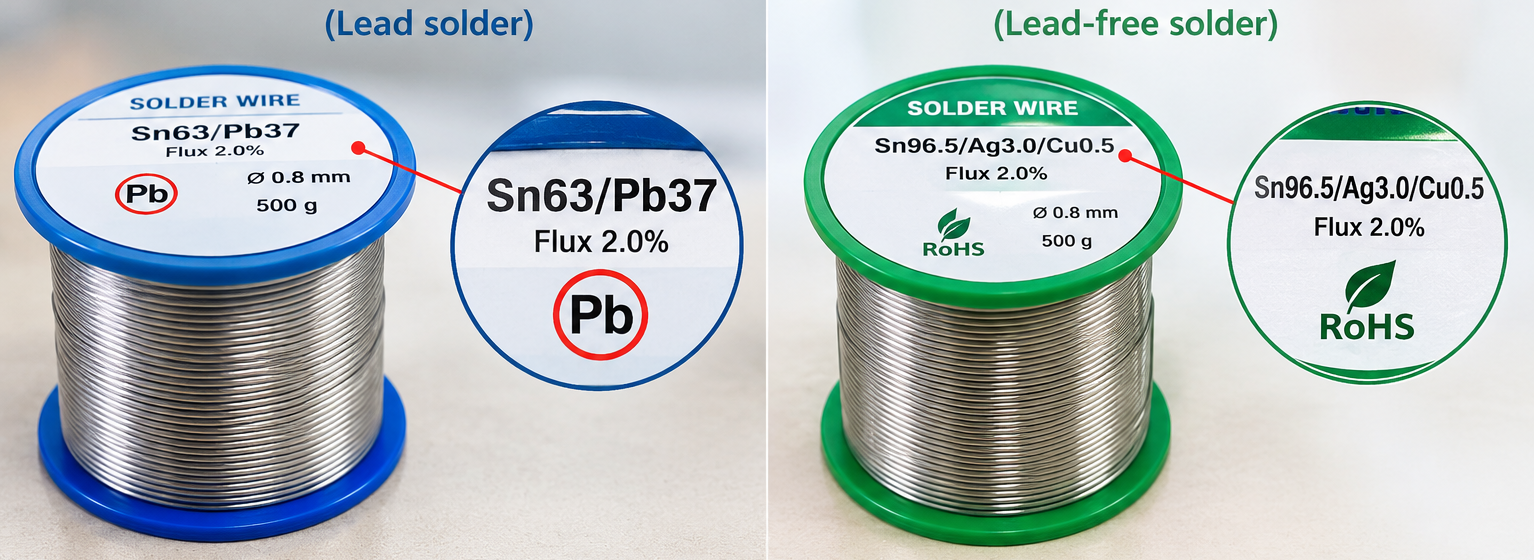
Spools of lead-free solder wire or solder alloy are typically marked with labels such as Lead-Free or LF, or with a specific alloy composition such as Sn96.5/Ag3.0/Cu0.5 (SAC305). RoHS compliance logos may also appear on the packaging.
Lead-based solder commonly uses alloys such as Sn60/Pb40 or Sn63/Pb37. These alloys melt at relatively low temperatures, wet surfaces readily, and produce shiny solder joints, making them suitable for PCB repair and soldering beginners.
Identifying Solder by Joint Appearance
Lead-based solder (Sn-Pb): Typically produces a highly reflective, smooth, mirror-like surface with a slightly concave profile due to its characteristic solidification shrinkage.
Lead-free solder: Generally has a slightly duller surface and is less mirror-like than lead-based solder. Its surface may also appear somewhat rougher because of differences in alloy composition and solidification behavior.
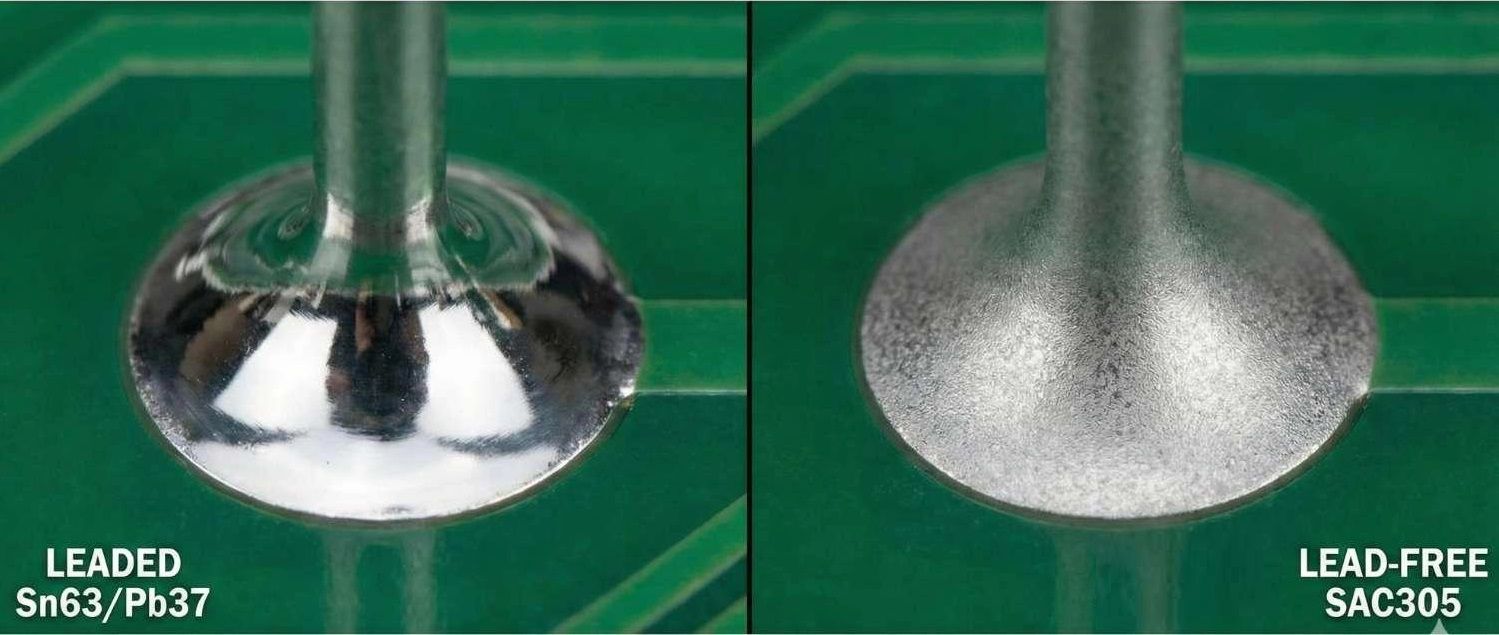
Rapid screening with X-ray fluorescence (XRF) analyzers: In large electronics manufacturing facilities, handheld or benchtop X-ray fluorescence analyzers can quickly scan circuit boards to determine lead content and check whether it exceeds applicable limits, often within seconds.
Lead-Free Soldering Requires a Suitable Soldering Station
Lead-free solder generally requires higher operating temperatures, making high-power soldering stations with advanced thermal recovery technology more suitable. Low-cost or conventional low-power soldering irons may not provide adequate performance for demanding lead-free soldering applications.
Technical Challenges in Lead-Free Soldering
One major challenge is the sudden loss of heat at the contact point. Lead-free alloys generally have higher surface tension and can exhibit lower thermal conductivity than traditional lead-based solder, requiring a continuous energy supply from the soldering station.
If the equipment cannot recover heat quickly enough, the temperature at the soldering tip may drop below the required level. This can result in dull solder joints, a non-uniform metallurgical structure, and reduced mechanical reliability.
Meanwhile, the higher operating temperatures required for lead-free soldering accelerate oxidation and corrosion of the soldering tip. Without intelligent temperature control, this can significantly shorten tip life.
Specialized Soldering Station Technology
To address these challenges, modern industrial soldering stations use direct-heating technology with sensors integrated into the heating element.
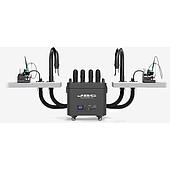
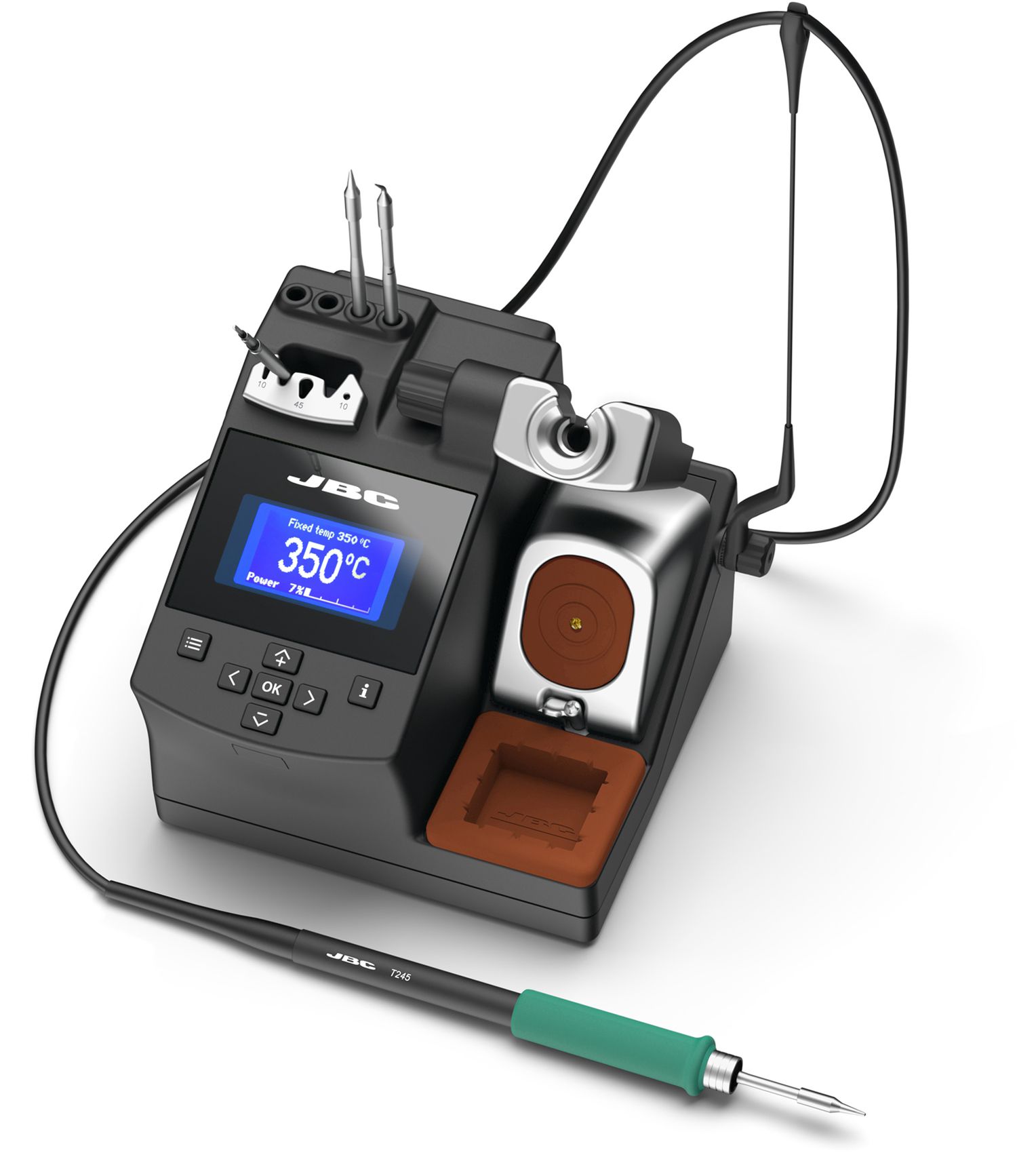
The JBC CD-2BQF delivers peak power of up to 130 W and reaches operating temperature in approximately two seconds. This design provides excellent thermal stability with minimal temperature variation, helping meet the demanding requirements of electronic component soldering.
In addition to its high power output, the station features an intelligent temperature reduction mode that activates when the soldering iron is placed in its holder. This function helps protect the tip from excessive heat when not in use, extending its service life compared with conventional soldering equipment.
Equipping production lines with precision lead-free soldering systems helps manufacturers maintain consistent solder joint quality and meet applicable IPC standards for large-scale PCB manufacturing.