What Is the Biggest Advantage of a Rapid-Firing Furnace?
The most noticeable advantage of a rapid-firing furnace is its processing speed. A firing cycle that normally takes several hours can often be reduced to just a few tens of minutes, allowing more samples to be processed each day while significantly reducing waiting time between batches.
In material research laboratories or small-scale production lines, fast thermal response allows engineers to test multiple temperature profiles continuously without waiting too long for the furnace to stabilize. This is especially beneficial for materials that require repeated optimization of firing conditions, such as zirconia, technical ceramics, and electronic materials.
Why Is Low Thermal Inertia Important?
Rapid-firing furnaces typically use lightweight insulation materials and low thermal-mass furnace chambers. As a result, the temperature can rise or fall almost immediately after the control system adjusts the heating power.
Fast thermal response allows the temperature profile to follow the programmed settings more accurately, especially in processes that require short holding times or continuous temperature changes. In material research, even a difference of a few minutes during the heating stage can create major changes in the final structure or color of the product.
Many laboratories today increasingly prefer systems with fast thermal response in order to shorten the development time of new materials. Modern furnace systems are also being designed with more precise temperature profile control, improved energy efficiency, and automated firing cycles.
New furnace models have begun integrating advanced improvements such as precise temperature profile control, energy optimization, and automated firing cycles.
When Should a Rapid-Firing Furnace Be Used?
Rapid-firing furnaces are suitable for applications that require short processing times or multiple firing cycles throughout the day. Common applications include material research, R&D laboratories, electronic materials, and small-sample sintering.
For large samples or materials that are sensitive to thermal shock, conventional furnaces are often more stable because of their slower and more uniform heating characteristics.
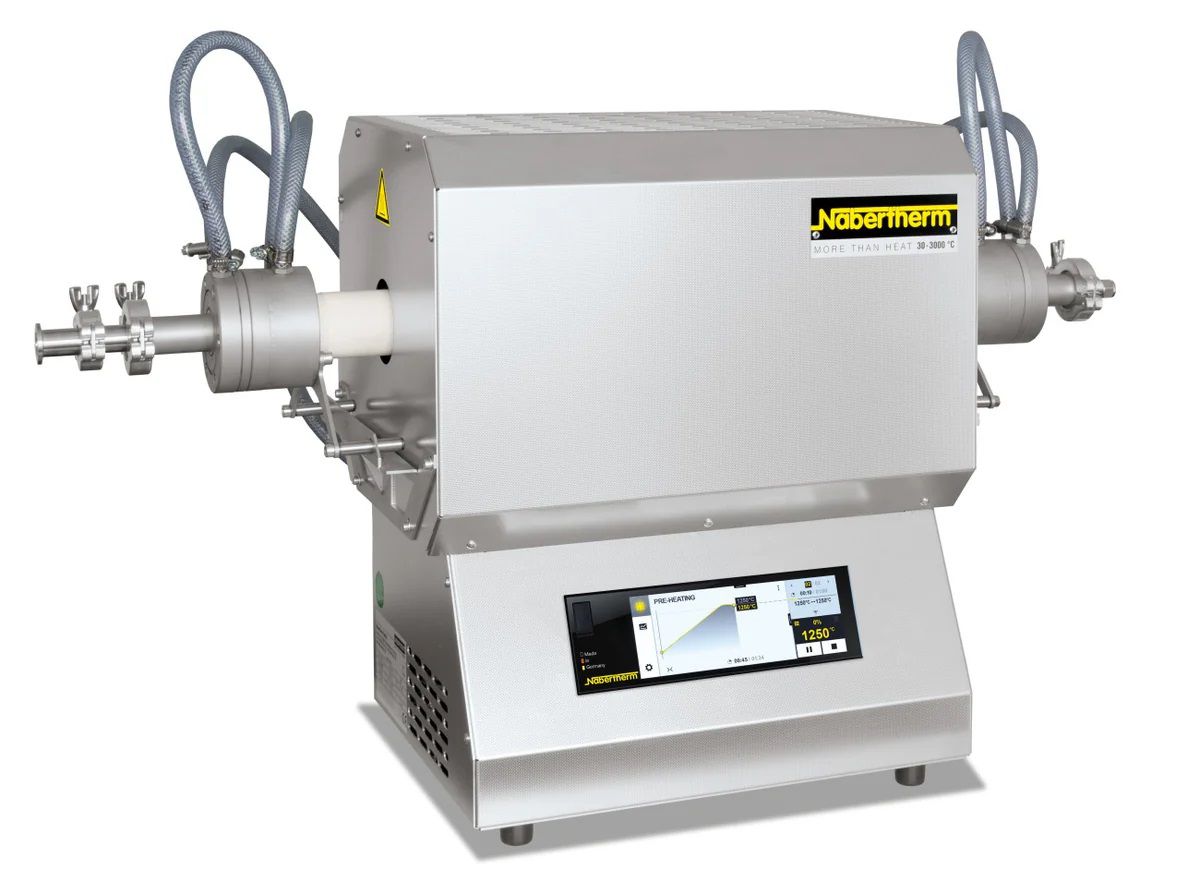
Nabertherm Furnaces
Is Rapid-Firing Furnaces Save Energy?
Many people assume that higher heating rates always result in greater power consumption. In reality, the instantaneous power of a rapid-firing furnace may be higher, but the total operating time is often much shorter.
When the firing cycle is reduced, heat loss through the furnace walls and surrounding environment also decreases. For small sample testing or short firing processes, the total energy consumption can sometimes be lower than that of a conventional furnace operating continuously for many hours.
Why Can Many Materials Not Withstand High Heating Rates?
Not all materials can tolerate rapid temperature increases. In many cases, the faster the firing process, the greater the material deviation becomes, and an entire batch may fail even when the furnace temperature is completely accurate.
The temperature inside a high-temperature furnace can rise extremely quickly, but the material itself does not absorb heat at the same rate. When heat is applied too aggressively, the outer layer of the material heats up and expands first while the core remains relatively cool. This temperature difference creates internal thermal gradients and significant mechanical stress within the material.
For materials with low thermal conductivity, such as ceramics, refractory materials, or zirconia, this effect becomes especially pronounced. Many products may appear nearly perfect on the outside while microscopic cracks or structural damage have already formed internally after firing. Even with the same glaze formula, raw material composition, and firing temperature, noticeable differences in color and product quality can still occur between batches.
When metal components are heated too quickly, certain surface areas are exposed to heat earlier than others. Under high-temperature conditions, this imbalance causes oxidation to occur unevenly, forming different oxide layers across the material surface. In stainless steel, tool steel, or components with complex geometries, discoloration, slight deformation, or variations in mechanical properties may still occur even when the furnace temperature precisely follows the programmed settings.
Suggested some rapid-firing furnace models
NABERTHERM L1/12: Features a compact 1-liter chamber with fast heating capability, suitable for sample testing, ashing, or thermal profile research in laboratory environments.
NABERTHERM LS 25/13: Designed with low thermal inertia, strong heating performance, and very short cycle times. Its 25-liter chamber is well suited for engineering material research and high-speed ceramic firing.
NABERTHERM RD 30/200/11: Provides extremely high heating rates thanks to heating elements positioned directly around the heating zone. This 30 mm tube furnace is commonly used in advanced material research, technical ceramics, and thermal processes requiring rapid thermal response.