Many restaurants still rely on taste and inherited experience. This method works well when there's only one person in the kitchen, cooking a small amount of food, and everything is under control. But as the restaurant gets busier, with more assistants, more cooking shifts, and more water, the flavor starts to fluctuate unexpectedly. That's why more and more people are looking for ways to control saltiness more precisely instead of relying solely on taste.
Why does saltiness have such a significant impact on pho broth?
Salt isn't just about creating a salty flavor; it brings out the bone broth, preserves the meaty aroma, and makes the broth lighter and more flavorful. Too little salt makes the broth bland and empty, leaving no lasting impression. Too much salt makes the broth harsh, causing thirst, and customers are likely to leave half a bowl untouched.
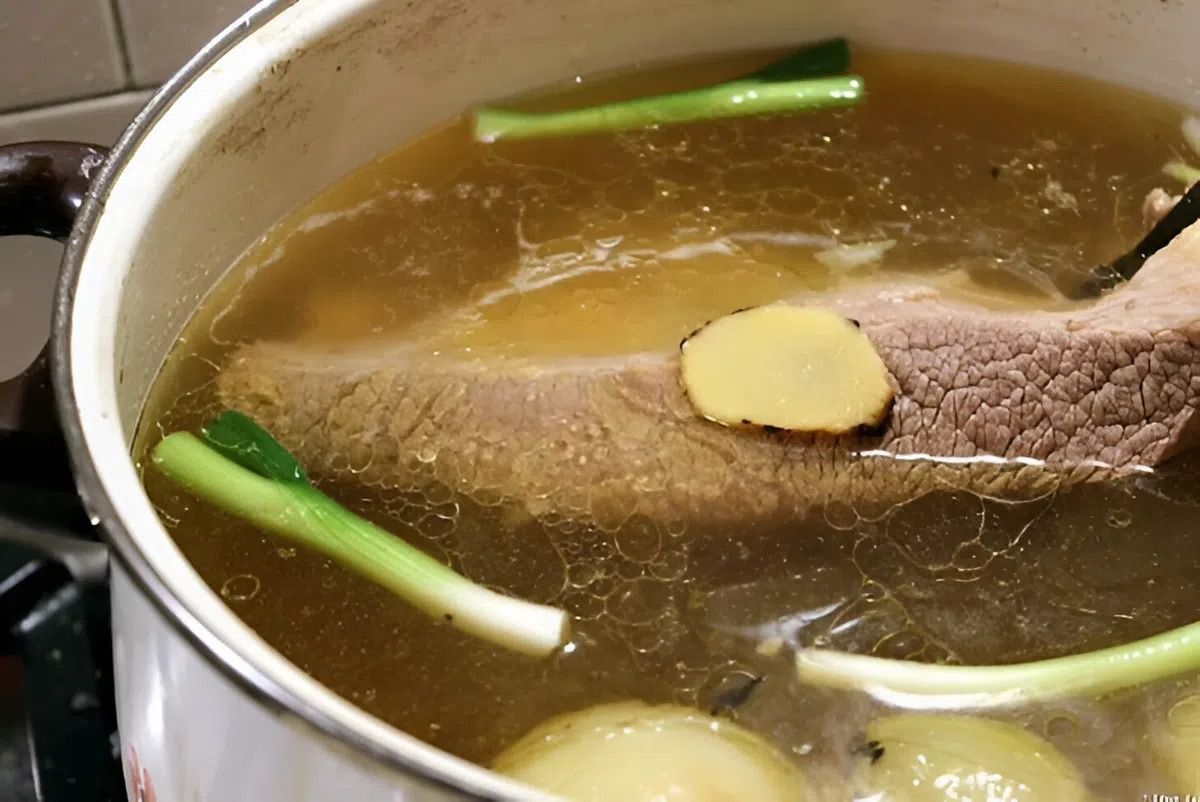
In a small kitchen, the cook can taste and adjust continuously. But when many people are seasoning together, each with their own taste, and sharing the same pot of broth, there are many differing opinions. At this point, having a common benchmark makes everything much easier. Everyone knows what level they're cooking at, eliminating arguments about right and wrong.
What is the ideal saltiness level for pho broth?
According to the experience of many long-standing pho restaurants, the broth is usually palatable when the saltiness level is between 0.4 and 0.8 percent, depending on the recipe and the target customer. This level is strong enough to complement the noodles and vegetables, but not harsh on the throat.
Restaurants catering to Northern, Southern, or foreign customers may adjust the level slightly higher or lower. The important thing is that once you find the right level for your restaurant, you maintain consistency from one pot to the next, day after day.
When should a pho restaurant consider using a salinity meter?
For pho restaurants, kitchens, or eateries, a suitable kitchen aid usually has three simple criteria:
- Easy to use
- Quick measurement
- Durable in a kitchen environment
Many kitchens choose compact, lightweight models with simple operation; just scoop a small amount of broth and you'll know the saltiness level immediately. No in-depth technical knowledge is needed; anyone in the kitchen can use it after a few tries.
Which type of salinity meter should I choose for pho broth?
In reality, pho restaurants don't need overly complex equipment or complicated features. Simple yet easy-to-use equipment that provides consistent results and fits the daily kitchen rhythm is sufficient.
Currently, many pho restaurants and kitchens choose the DMT-20 because it's quite simple to use; just take a spoonful of broth, quickly check the water level, and you'll know if any adjustments are needed.
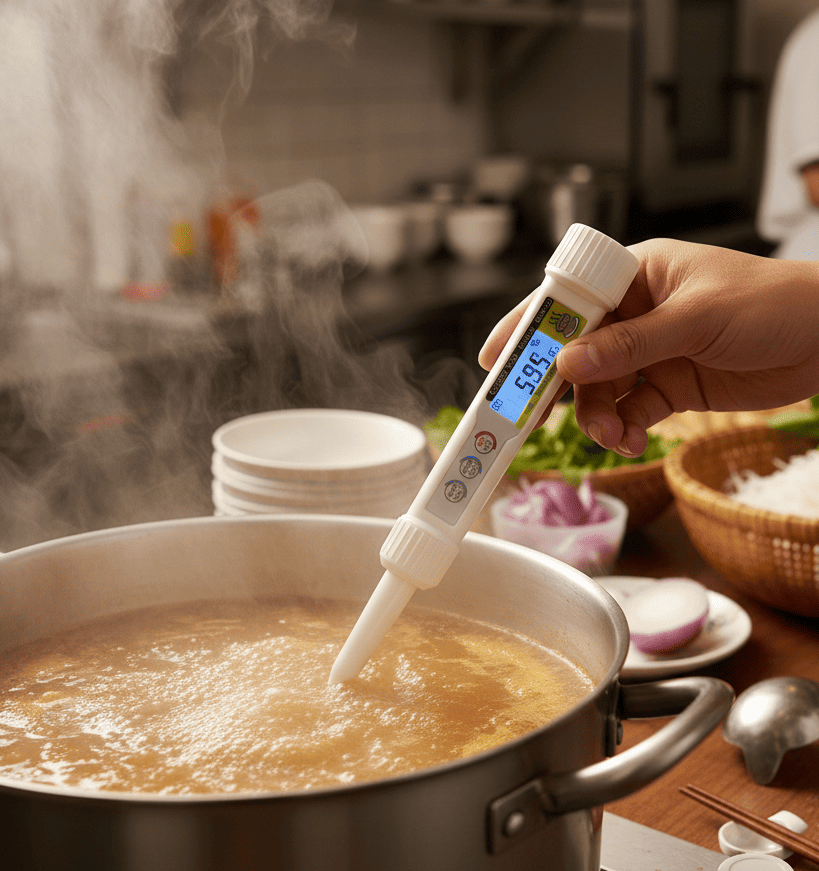
This device is designed for kitchen use, is compact, easy to clean, and works well with hot water. When cooking multiple pots in quick succession, checking the salt level doesn't interrupt the cooking process, nor is it cumbersome or inconvenient.
A highly appreciated feature is the consistent measurement results between checks. This allows restaurants to maintain a consistent salt level, regardless of changes in cooks or batch sizes. For restaurants that prioritize consistent flavor every day, this is a very important factor to consider.