In power transmission and distribution systems, electrical cables connect equipment and maintain reliable power delivery. However, cable insulation can deteriorate over time due to operating conditions, environmental exposure, or mechanical stress. High-voltage tester is a specialized tool for evaluating the voltage withstand capability of an insulation system and identifying potential insulation failures before they develop into system faults.
Testing must be performed by qualified personnel in accordance with the equipment operating procedure and the technical requirements applicable to each cable type. Test results should not be evaluated in isolation but considered together with operating conditions, service history, and the characteristics of the cable installation.
What Is Cable Withstand Voltage Test Equipment ?
Cable withstand voltage test equipment is a group of instruments designed to generate and control a specified test voltage for evaluating the dielectric strength of cable insulation. During the test, voltage is applied at a defined level and for a specified duration according to the selected test method.
The purpose is to identify potential defects in the insulation system and reduce the risk of insulation breakdown during normal operation.
Unlike visual inspection, this test evaluates the behavior of the insulation when subjected to electrical stress. It is therefore commonly included in the testing of newly installed cables and in the condition assessment of cables already in service.
Factors Affecting Cable Voltage Withstand Capability
Cable voltage withstand capability is not necessarily constant throughout the service life of a cable. When developing a testing program, operators should consider factors that may affect insulation condition:
Insulation material: The quality and properties of the insulation material directly affect the dielectric strength of the cable.
Manufacturing process: Contaminants, voids, or areas of concentrated electrical stress introduced during manufacturing can weaken the insulation system.
Operating environment: Temperature, humidity, and corrosive substances can gradually affect cable insulation.
Operating conditions: Overloading, short circuits, and mechanical damage can accelerate insulation aging and deterioration.
Because several factors can act simultaneously, periodic testing and proper test data recording provide useful information for monitoring changes in cable condition over time.
Common Types of High-Voltage Test Equipment
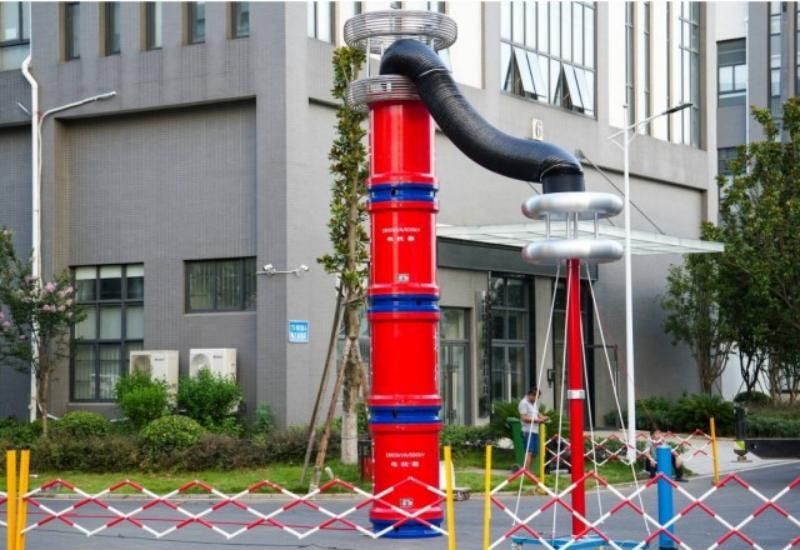
Depending on the application, cable withstand voltage test equipment can include DC voltage testers, AC voltage testers, and series resonant test systems. Each method is suited to different testing conditions. Selection should be based on the cable type, voltage rating, test requirements, and applicable technical standards or procedures.
Some modern systems integrate measurement, control, and data processing functions to support voltage ramp-up, voltage holding, timing, and discharge operations. These functions can reduce manual intervention but do not eliminate the need for operator supervision.
Before testing, the compatibility between the test equipment, the cable under test, and the safety measures at the site should be verified.
Preparing for a Cable Withstand Voltage Test
Operators should be properly trained, understand the equipment operating instructions, establish a clearly marked test area, and ensure that grounding connections are correctly installed. Personnel safety must be the priority before any high-voltage test begins.
An effective test starts with proper preparation. First, identify the cable type, installation condition, and testing objective to determine the appropriate test method. The test voltage and duration must comply with the applicable technical requirements. Increasing the test voltage beyond the specified level can damage the cable or create additional risks.
The test area should be dry, adequately ventilated, and protected from conditions that could interfere with the measurement. Before applying voltage, carefully inspect the connections, test leads, cable ends, and grounding system.
The hazardous area should be clearly marked and access should be restricted to authorized personnel. Operators must understand the complete operating sequence, particularly voltage ramp-up, emergency shutdown, and discharge procedures after the test.
Throughout the test, information about the cable under test, test conditions, voltage behavior, and observed results should be recorded. These records provide a basis for analyzing and comparing results from different test periods and for making appropriate maintenance decisions.
The testing frequency depends on the cable type, service age, operating environment, and applicable technical requirements. Newly installed cables are generally tested before being placed into service, while in-service cables should be tested according to an appropriate maintenance and condition-monitoring program.
What to Do When the Test Result Fails
If a test result indicates a failure, the cable should not be returned to service based solely on an initial assessment. The test should be stopped in accordance with the applicable safety procedure, followed by verification of the test equipment and an analysis of possible causes.
Potential causes may include an unstable power source, a problem with a component of the test system, or deterioration of the cable insulation.
The technical team should then inspect the cable system to determine the location and severity of the abnormality. Depending on the actual condition, repair or replacement may be considered.
A careful approach based on test data and appropriate safety procedures allows cable withstand voltage test equipment to provide practical support for the inspection, maintenance, and reliable operation of electrical power systems.