Consequently, automotive paint thickness gauges have become essential tools frequently used by garages, showrooms, and vehicle appraisal services. After just a few minutes of taking measurements at various points, the device can determine whether a vehicle retains its original paintwork or has undergone bodywork repairs, the application of body filler, or repainting.
How does a car paint thickness gauge work?
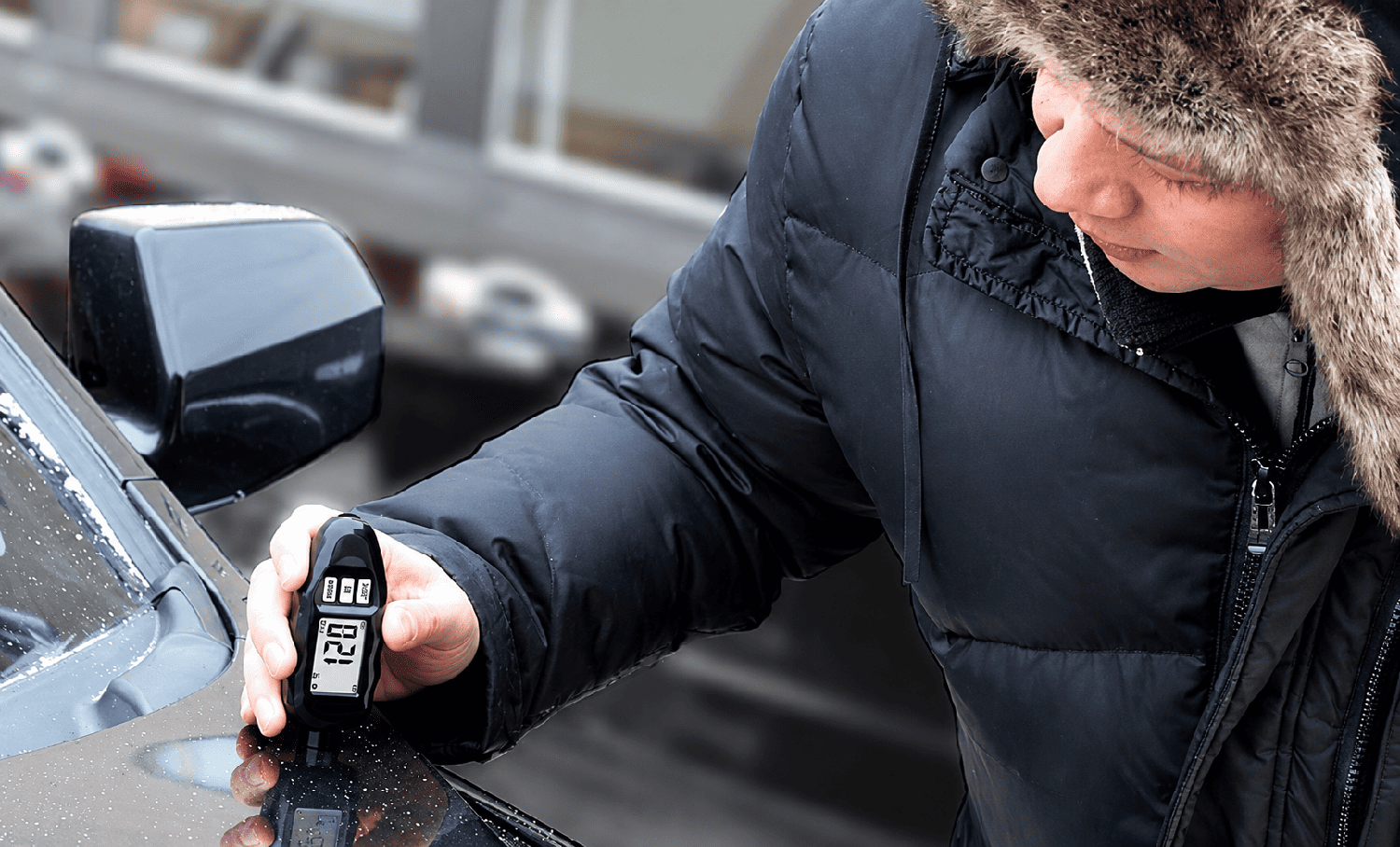
The device is essentially a coating thickness gauge that employs magnetic induction or eddy current principles to measure the distance from the paint surface to the underlying metal or substrate.
The displayed value is in micrometers (μm), representing the total thickness of the coating on the surface. Each measurement takes only a few seconds yet yields significant information regarding the vehicle's repair history.
How does the paintwork change after each repair?
Factory-finished vehicle bodies typically exhibit relatively uniform paint thickness across various panels. While minor variations may occur due to the manufacturing process, the discrepancies are usually insignificant.
Repair work following a collision significantly alters the coating thickness.
If the bodywork sustains only minor scratches and is repainted, the thickness generally increases slightly compared to the original factory finish.
Areas that have suffered severe dents require panel beating and the application of body filler before the final coat is applied. In such cases, the coating thickness can increase by several hundred micrometers or even exceed 1,000 μm resulting in a distinct difference when measured.
These changes are difficult to detect with the naked eye, yet a measuring device registers them almost instantly.
Compare multiple locations for greater clarity
A reading of 180 μm on a single door is not sufficient grounds to conclude that the vehicle has undergone repairs. That figure must be compared against the corresponding door on the opposite side, as well as the front fenders, hood, and trunk lid.
If measurements across the entire vehicle hover within a relatively consistent range, this is typically indicative of the original factory paint.
Conversely, if certain areas show readings significantly higher than the rest, it warrants further inspection. A concentration of abnormal readings in a specific area strongly suggests a history of collision or bodywork repair.
Can a paint thickness gauge determine the severity of an accident?
The device merely indicates coating thickness; it cannot definitively determine whether the vehicle has been involved in a minor or severe collision.
A high reading suggests that the area has undergone more extensive repair than usual, but identifying the specific cause requires considering other factors—such as the chassis, weld seams, bolts, body panel gaps, and maintenance records.
In other words, the gauge serves to highlight areas requiring closer inspection rather than providing a final conclusion.
How should you choose a car paint thickness gauge?
Modern vehicles are constructed using various materials, such as steel, aluminum, or a combination of both. Devices capable of automatically detecting the substrate material help expedite the measurement process and minimize errors.
Specialized coating thickness gauges also offer features like data storage, average value calculation, and continuous measurement across multiple points, making them ideal for repair shops, inspection centers, used car showrooms, and vehicle quality assessment agencies.
Coating thickness provides a more accurate reflection of a vehicle's repair history than its exterior paint color. While paint can be color-matched to the original and surfaces meticulously polished, the additional material layers applied during bodywork and repainting inevitably leave traces in the coating thickness.
This is why professional repair shops and used-car appraisers incorporate automotive paint thickness gauges into their standard inspection procedures. Just a few minutes of measuring various points provides buyers with objective data before making a purchase, significantly reducing the risk of buying a vehicle that has sustained major collisions or undergone extensive repairs.