Car battery
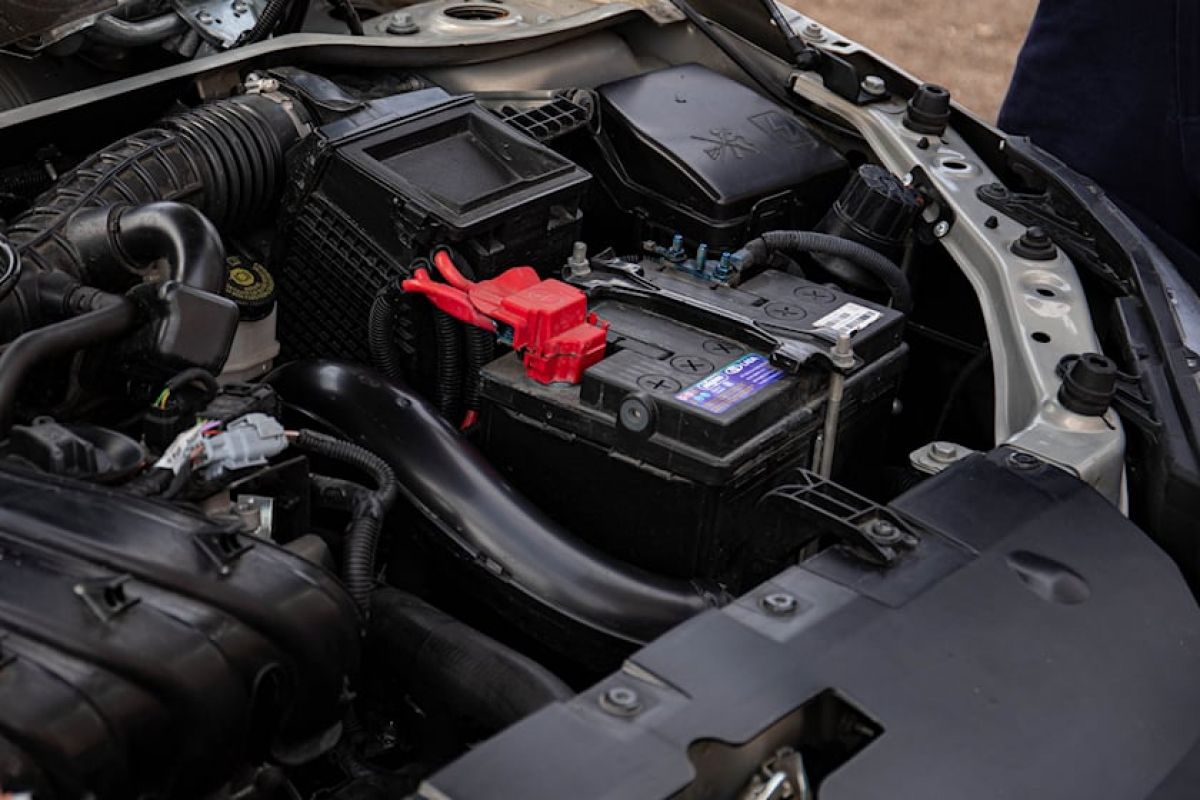
A battery is a device used to store electrical energy. For cars, the battery plays an important role in providing power for vehicle systems to operate. The main function of the battery is to ensure that it provides enough electricity to start the vehicle, maintain operation of the electric lock, horn, lights, and provide stable power for the memory, ECU and other parts of the vehicle.
Why is it necessary to check the car battery?
After a period of use, the battery may become damaged or degraded. Periodic testing helps you determine whether the battery is still working well or not, then promptly replace or treat it to ensure the vehicle always operates stably.
Here are a few ways to test your car battery:
- Observe with the naked eye
- Use testing equipment with activated carbon cylinders
- Check with a circuit light
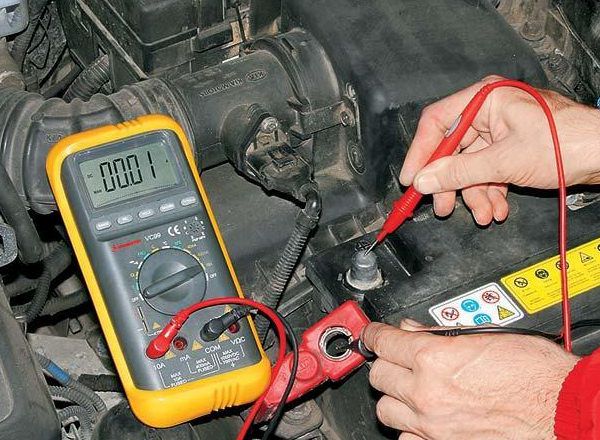
- Check with a multimeter
How to recognize if the car battery is having problems
The battery is an important part of the car and is responsible for providing electricity to start the engine and maintain the operation of load systems such as sound, lighting, and cooling systems. When the battery has problems, the quality of the trip will be significantly affected. Below are some signs of a damaged battery so you can handle it promptly:
- The battery warning light on the dashboard lights up: This is the first sign that the battery has a problem and needs to be checked immediately.
- Weak or prolonged engine starting: If the vehicle takes longer to start than usual, the battery is likely weak and needs to be checked or replaced.
- Difficulty starting the car in the morning: When the car is not running, the battery is not charged from the generator, leading to difficulty starting in the morning due to the battery losing power.
- Swollen battery: This is a clear sign that the battery is damaged. The cause may be due to overcharging, poor battery quality, or environmental impact. In this case, check the capacity and replace the battery with a new one to ensure safety.
What is the standard voltage of a car battery?
A well-functioning car usually has a stable battery with a voltage level of about 12.6V. If the voltage drops below 10V, this may indicate a battery problem or a fault arising from the engine system.
To accurately determine battery condition, measurements should be performed after the battery has "rested" for at least 1 hour. Ideally, check in the morning after the car has been left overnight.
Steps to check the battery with a multimeter
To check the car battery capacity, you need to use a multimeter with DC voltage measurement function. The steps are as follows:
- Step 1: Turn the adjustment knob of the meter to the DC voltage measurement function (symbolized as V~). If the screen shows AC, press the Select button to switch to DC mode.
- Step 2: Connect the test lead to the battery, making sure the meter's red wire is connected to the positive pole and the black wire is to the negative pole. Normally, the positive and negative poles of the battery are denoted by + (positive) and – (negative).
- Step 3: Observe the value displayed on the screen. If the meter shows about 12.6V, the battery is still working well. However, if the voltage is below 10V, the battery shows signs of weakness or is about to fail and should be replaced to avoid affecting vehicle use.
Note:
When using a meter to test a car battery, especially with older analog or VOM meters, choosing the correct measuring range is very important. Today, most electronic multimeters have the ability to automatically select the measurement range, making it more convenient for users. However, if you are using older measuring devices that do not have this feature, you need to choose the appropriate measurement level.
Normally, the voltage of a car battery will be around 12.6V. Therefore, to get accurate measurement results, you should choose a voltage range close to the value to be measured, such as 20V or 30V measurement range. This helps ensure that the measurement results are most accurate, avoiding errors due to choosing the wrong measuring range.
Choose a multimeter to test car batteries
Today, there are many types of multimeters on the market, making many technicians confused in choosing. If you are looking for a quality and suitable product for your work, below is a suggestion worth considering.
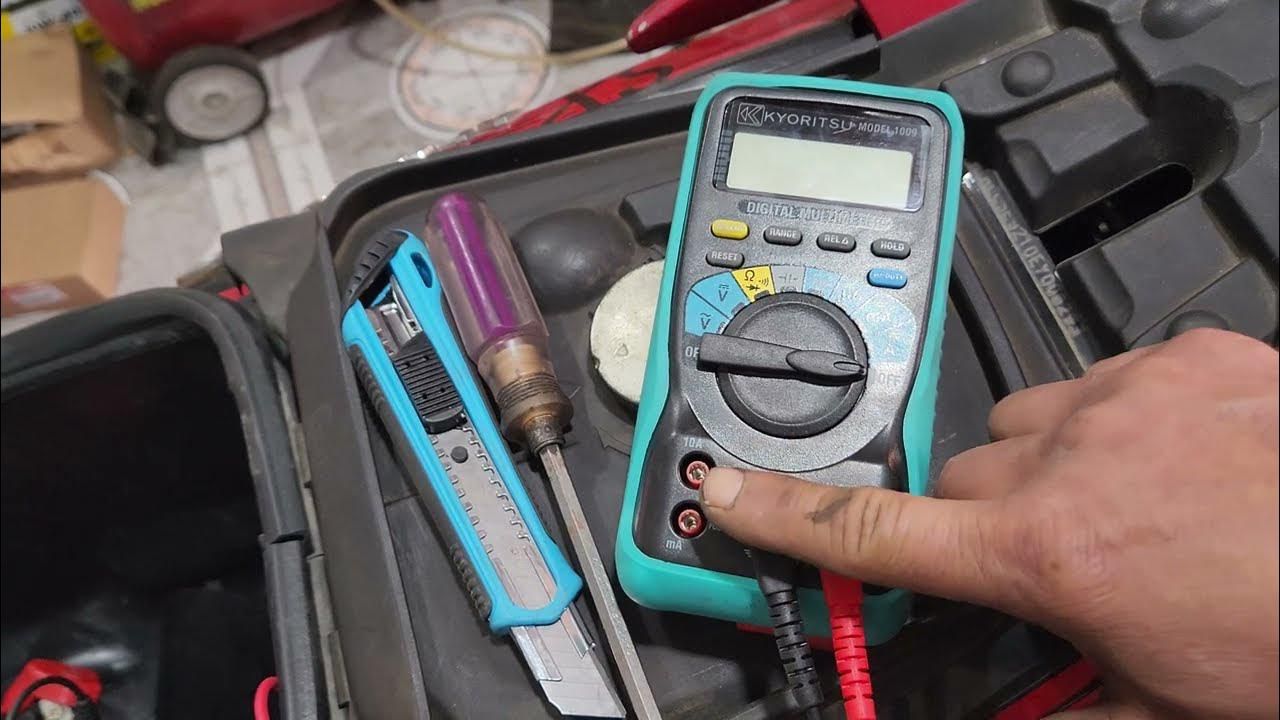
Kyoritsu 1009 supports AC/DC voltage measurement up to 600V. With a counter of up to 4000 counts, Kyoritsu 1009 helps users easily read measurement results more accurately and clearly.
In addition to the ability to measure voltage, Kyoritsu 1009 also supports measuring other parameters such as resistance, current, frequency, capacitance, and even has a diode test function. This product is equipped with both automatic and manual measurement modes, making it more flexible during work
Sanwa CD800A multimeter
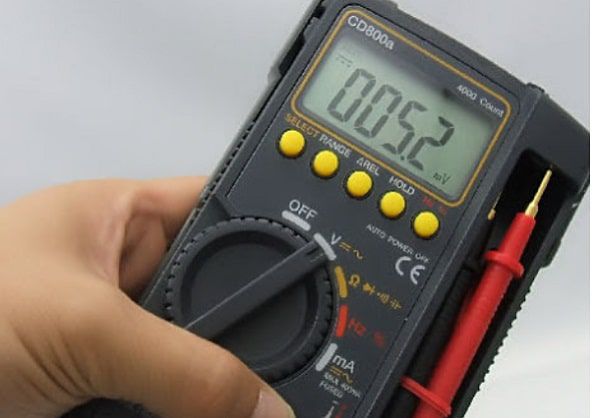
The Sanwa CD800A is also a suitable choice for those looking for an affordable multimeter model that still ensures all important features. With the ability to measure AC/DC voltage up to 600V and high display number reaching 4000, Sanwa CD800A helps users measure accurately with an error of only 0.7%.
This device is also equipped with useful features such as storing measurement data, displaying Min/Max values, and especially the ability to measure TRUE-RMS.
See more at EMIN multimeter