Choosing a veterinary ultrasound scanner for use on a farm requires equipment that can withstand frequent movement between different livestock areas, dusty or humid conditions, and the need for quick operation. For reproductive diagnosis, image quality, a suitable probe, and stable performance directly affect the effectiveness of examinations.
Prioritize mobility and durability
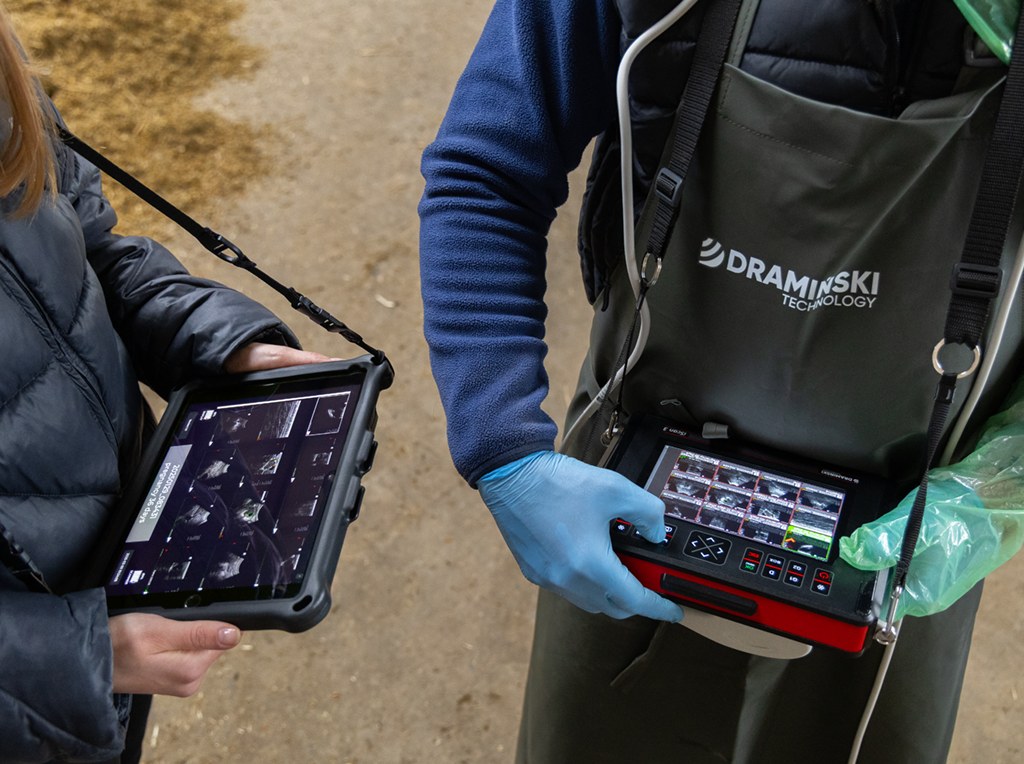
Field equipment needs to travel easily from one animal or farm to another. A lightweight, compact ultrasound unit can make daily work less cumbersome, particularly when examinations are performed across multiple locations. Belt- or harness-mounted designs can be useful because they keep the unit accessible while leaving the operator’s hands free during transrectal examinations.
Durability is equally important. Unlike a controlled clinical environment, farm conditions may expose equipment to shocks, dust, moisture, and lower temperatures. When evaluating a unit, consider how its casing, controls, and probe are likely to hold up in these conditions. Practical feedback from veterinarians can be especially valuable when assessing real-world resistance to dust and water.
Assess image quality for bovine reproductive work
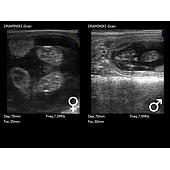
Clear, high-contrast imaging supports confident assessment during reproductive examinations. Image quality can assist with evaluating ovarian structures, including follicles, cysts, and corpora lutea. It is also relevant for pregnancy staging, checking uterine conditions such as fluid accumulation or pyometra, and carrying out follow-up examinations after procedures.
Rather than looking at resolution alone, assess the overall imaging workflow. Useful considerations include probe frequency, imaging depth, and the ability to adjust parameters such as depth and gain in real time. Controls that are straightforward to reach and adjust can be particularly helpful when working around cattle in a busy barn.
Choose the appropriate probe configuration
A linear rectal probe is the standard choice for transrectal cattle examinations. Its long, narrow form is designed for this application, but handling comfort still matters. The probe should be ergonomic, easy to clean, and resistant to fluid exposure and routine field handling.
The source information notes that linear rectal probes for cattle commonly operate in the 5–9 MHz range, balancing resolution and penetration. Depending on the examination needs, some ultrasound systems may also support convex probes for transabdominal scanning or Doppler probes for blood-flow evaluation. The right configuration should reflect the type of work performed most often rather than features that may not be used in practice.
Plan for battery use throughout the day
Battery performance is a central consideration for a portable veterinary ultrasound. Veterinarians may visit several farms in one day without convenient access to electrical power. A system intended for intensive field work should support approximately four hours of use, according to the source guidance.
Swappable batteries can reduce interruptions between visits. Charging options that use a vehicle power outlet or a power bank may also provide additional flexibility when working away from a clinic. Before selecting a device, consider the expected scanning schedule and how charging will fit into normal travel routines.
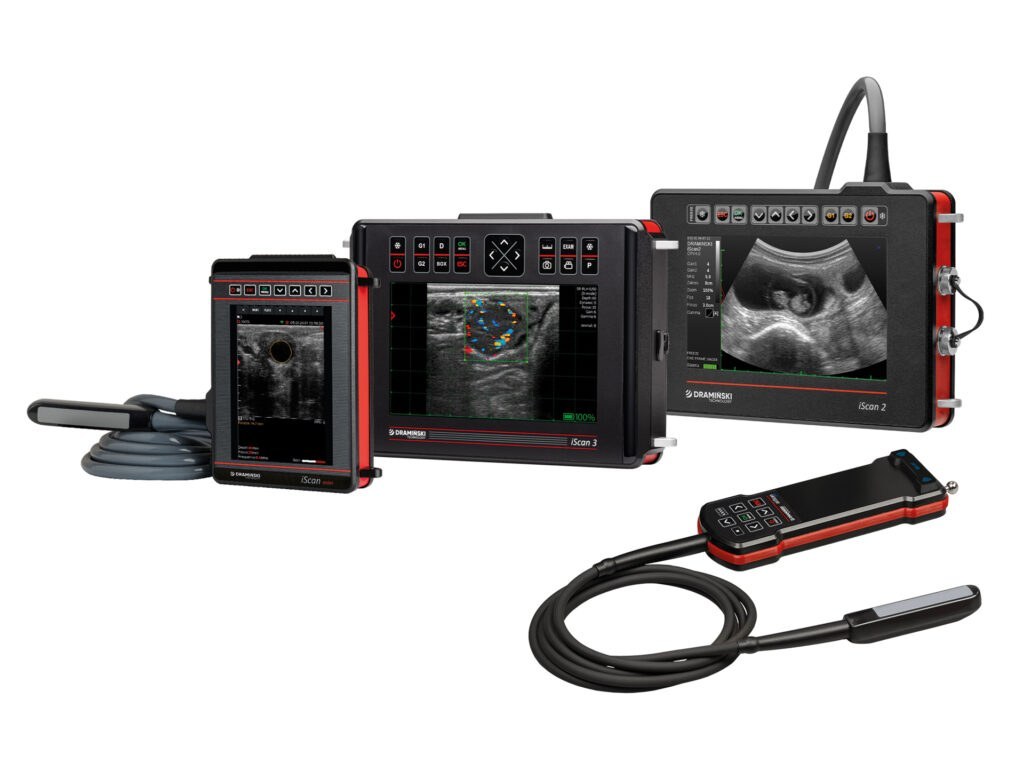
Review everyday operation and record keeping
A field ultrasound machine should start quickly and provide intuitive controls. Fast adjustment of depth and gain helps the operator respond to changing examination conditions. Screen readability in sunlight is another practical point worth checking, as it can affect visibility when working near open barn doors or outdoors.
Image and video storage can support documentation and later review. Depending on the system, records may be saved to USB storage or transferred wirelessly through Bluetooth or Wi-Fi. Dedicated pregnancy functions with automatic CRL or BPD measurements may help speed embryo age assessment. Mobile applications or cloud-based archiving can also be useful for organizing results, case notes, and information shared with farmers.
Include service and support in the decision
Price should be considered alongside service response, spare-parts access, and the availability of a replacement unit during repairs. Even well-maintained equipment can require service. For this reason, dependable local support can be as important as the machine’s feature set.
Before making a decision, it is advisable to consider the experiences of users working in similar conditions. Practical questions include whether the display is easy to view under bright light, whether the probe is easy to clean, and whether the housing can withstand exposure to dust or moisture.
A suitable cattle ultrasound scanner should provide a good balance of durability, portability, clear imaging, a reliable probe, battery life, and ease of operation.