Battery Accessories
Reliable battery-powered designs depend on more than the cell itself. Small mechanical and electrical parts such as holders, clips, contacts, and battery modules play a critical role in maintaining stable connections, simplifying assembly, and supporting safe replacement or backup power integration across industrial, embedded, and electronic applications.
Battery Accessories covers the supporting hardware used to mount, connect, secure, and interface batteries within a wider power system. Whether you are building a compact PCB assembly, servicing a field device, or specifying backup power components for control equipment, the right accessory helps improve fit, serviceability, and electrical continuity.
Where battery accessories fit in a power system
In practical terms, this category supports the connection layer between the battery and the end device. That may include simple spring contacts for low-power electronics, snap or clip-style parts for easy battery replacement, or more application-specific modules designed to work within a UPS or DC backup architecture.
These components are often selected alongside core power products such as power supplies or charging hardware, because the electrical source and the mechanical interface need to work together. A well-matched accessory can reduce intermittent contact issues, simplify maintenance, and support more consistent performance over the life of the assembly.
Common accessory types in this category
This category includes a broad mix of hardware used with different battery formats and installation methods. Some parts are intended for direct PCB integration, while others are better suited for panel, cable, or modular assemblies where batteries must be replaced quickly or retained securely in environments subject to vibration or repeated handling.
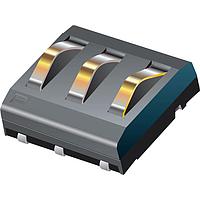
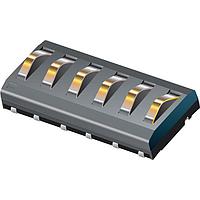
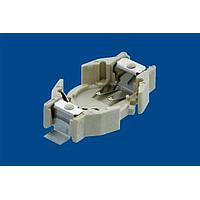
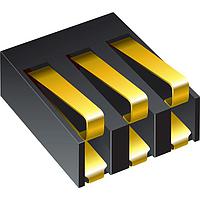
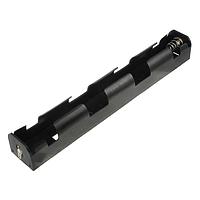
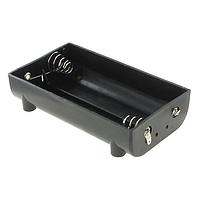
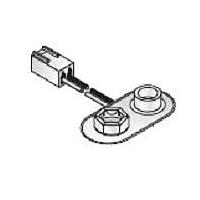
Examples from the range illustrate that variety. Products such as the Adafruit 2089, Adafruit 653, and Adafruit 783 are typical of compact battery contact and holder solutions used in electronics prototyping and embedded builds. At the same time, modular contact options such as the Bourns H-843 design kit and Bourns 70ABJ or 70ADJ series help engineers configure battery contact arrangements for board-level designs with defined mounting and contact requirements.
Selection factors that matter in real applications
Choosing the right accessory usually starts with the battery form factor and the way the battery will be installed or replaced. Contact geometry, number of positions, mounting style, and termination method all influence compatibility with the host design. For PCB applications, engineers commonly focus on SMT or through-board integration, while serviceable field assemblies may prioritize ease of insertion and removal.
Material and contact finish also affect long-term reliability. Copper alloy contacts and plated surfaces are frequently used to support conductivity and reduce wear at the mating point. If the device may see movement, shock, or repeated battery replacement, the accessory should be evaluated not only for fit, but also for retention strength and stable pressure on the cell over time.
Illustrative products and manufacturer options
Several well-known suppliers are represented in this range, including Bourns, Adafruit, 3M, Hirschmann, and Delta Group. Each serves slightly different needs, from compact electronics and maker-oriented assemblies to modular industrial power implementations and established interconnect solutions.
For example, the Hirschmann 930-317-801 and 3M 1010018345 provide useful reference points for battery contact and holder selection where dependable connection hardware is needed. In a different use case, the Delta Group DRN-24V7AAEN battery module is relevant for systems built around DC UPS support, showing that battery accessories can extend beyond simple holders into broader backup power architectures.
Battery accessories for PCB design, maintenance, and backup power
Not every battery accessory is chosen for the same reason. In PCB-mounted electronics, the priority is often compact integration, controlled contact placement, and repeatable assembly. In maintenance-driven environments, users may prefer accessories that make battery changes faster and reduce the risk of incorrect insertion or weak terminal contact.
For control panels, instrumentation, or continuity-focused systems, accessory selection may tie into a wider backup power strategy. In those cases, it can also be useful to review related categories such as battery charger products or supercapacitors when the application involves charging, hold-up time, or short-term ride-through support.
Why contact quality and mechanical fit are so important
A battery may meet the voltage requirement on paper, yet the assembly can still fail if the connection hardware is poorly matched. Loose retention, insufficient spring force, or a contact style that does not suit the cell format can cause voltage drop, intermittent resets, or difficult servicing. This is especially important in portable electronics, industrial handheld devices, and installed equipment that may be exposed to vibration.
Mechanical fit and electrical continuity should therefore be considered together. Accessories that align with the intended battery size, mounting method, and replacement cycle help reduce avoidable field issues and make the finished product easier to assemble and maintain.
Finding the right option for your build
When comparing battery accessories, it helps to narrow the selection by battery type, number of cells, mounting style, and intended use environment. A simple single-cell contact for a compact board has very different priorities from a multi-position modular contact arrangement or a framed battery module designed for a DC UPS system.
This category is intended to support those different design paths with parts ranging from board-level contacts to more specialized battery support hardware. If your project needs dependable battery interfacing rather than the battery itself, reviewing the accessory format first will usually speed up component selection and lead to a better mechanical and electrical fit.
From compact clips and holders to modular contacts and backup-oriented battery modules, the right accessory helps turn a battery into a usable, maintainable part of the overall system. A careful match between cell format, mounting approach, and operating context will make the final design more practical in both production and long-term use.
Get exclusive volume discounts, bulk pricing updates, and new product alerts delivered directly to your inbox.
By subscribing, you agree to our Terms of Service and Privacy Policy.
Direct access to our certified experts