COD, BOD controler
In wastewater treatment, surface water monitoring, and industrial discharge control, reliable organic load measurement is essential for process visibility and compliance work. Operators often need a practical way to track COD and BOD controler systems that can support continuous monitoring, integrate with plant controls, and simplify routine maintenance.
This category focuses on instruments used to monitor and manage chemical oxygen demand measurement in online applications, along with the controller-and-sensor combinations commonly used around COD-based process supervision. For teams building a broader water analysis setup, this product group also fits naturally alongside water quality controllers and monitors used across treatment, utility, and industrial sites.
Where COD and BOD monitoring fits in real processes
COD is widely used as a fast and practical indicator of organic pollution load in water and wastewater. In many installations, online COD measurement helps operators respond more quickly than lab-only workflows, especially where influent quality changes throughout the day or where process optimization depends on continuous data.
BOD remains important as a broader water quality indicator, but online systems in this category are typically centered on COD measurement and controller integration. In practice, that makes these devices useful for treatment plants, industrial effluent monitoring points, equalization tanks, and process streams where stable trending, alarms, and signal output matter more than occasional spot checks.
Typical configuration of a COD controller system
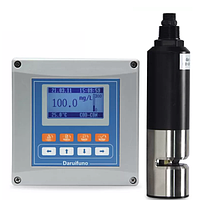
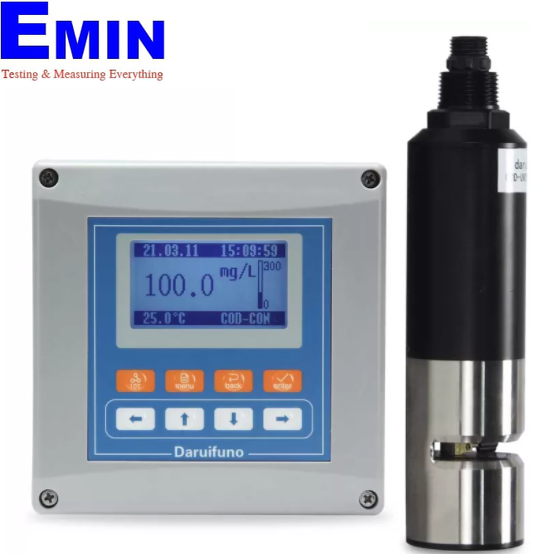
A standard setup usually includes a controller and a compatible digital sensor. The controller handles display, relay output, analog transmission, communication, and local operation, while the sensor performs the actual measurement in the process. This architecture makes it easier to integrate online analysis into panels, SCADA, or distributed monitoring systems.
Within this category, Daruifuno provides examples of that structure through the DUC2-COD series and matching digital sensors. Models such as the Daruifuno DUC2-COD-H-D and DUC2-COD-H-A illustrate common controller functions including 4-20 mA output, RS485 Modbus RTU communication, relay signaling, historical data recording, and panel-friendly installation. If you are comparing product ecosystems by supplier, the Daruifuno brand page can help you review related instrumentation in one place.
Controller and sensor examples in this category
For users selecting a complete online solution, the controller is only one part of the decision. Sensor range, measurement principle, installation conditions, and expected water characteristics often determine whether a combination will perform well in the field.
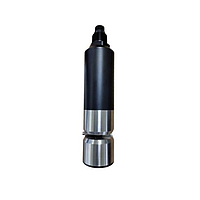
Examples in this category include the Daruifuno COD UV351-C digital COD sensor, designed for the DUC2-COD series with a broader COD range, and the COD UV351-B digital COD sensor for lower-range applications. These sensors use the UV254 ultraviolet absorption method, a common approach for online COD-related measurement where fast response and digital communication are required. Because application conditions vary, the right choice depends on the expected concentration range, turbidity behavior, and how the measured data will be used in process control.
What to consider when selecting a COD controller
The first step is to define the measurement objective. Some sites need continuous trend monitoring for operational adjustment, while others need alarm functions, analog retransmission to a PLC, or digital data exchange to a supervisory system. In these cases, it is worth checking for features such as relay outputs, 4-20 mA transmission, event history, and RS485 Modbus RTU support.
The second step is to evaluate the installation environment. Power supply requirements, enclosure protection, wiring distance, and maintenance accessibility can all influence controller choice. For example, the controllers shown here are available in both DC-powered and AC-powered versions, which may help depending on whether the instrument is being installed in a control panel, a remote skid, or an existing treatment cabinet.
Finally, pay close attention to the sensor side of the system. A digital COD sensor should be matched to the target measurement range and the process conditions, not selected by price or range alone. Water composition, fouling tendency, and the need for compensation or downstream interpretation of values can all affect long-term usability.
Integration with plant monitoring and automation
One of the main reasons to use online COD instrumentation is the ability to connect water analysis data to process control. Controllers in this class commonly provide analog outputs for retransmission and digital communication for centralized monitoring. That makes them suitable for linking measurement points with local alarms, data loggers, PLCs, or site-wide environmental management systems.
In multi-parameter installations, COD monitoring is often used together with dissolved oxygen, conductivity, resistivity, or other water quality variables to provide a more complete process picture. Depending on the application, users may also compare this category with DO controllers or with dedicated water resistivity controller options for utility water and treatment monitoring.
Why measurement principle and maintenance matter
Online analyzers deliver the most value when the measurement principle matches the application. UV-based COD sensing can provide fast response and continuous digital output, but performance still depends on water matrix, fouling, optical path suitability, and calibration practice. This is why range selection and installation assessment are as important as the controller specification itself.
Maintenance planning should also be part of the selection process. Features such as maintenance record storage, calibration support, and historical data review can help maintenance teams keep instruments running consistently. For plants with multiple online analyzers, these practical details often matter just as much as the headline measurement range.
Choosing the right category for your project
This category is most relevant when you need a dedicated online COD controller, a compatible digital COD sensor, or a controller-based solution for integration into water and wastewater monitoring systems. It is especially useful for projects where continuous indication, alarm handling, signal output, and communication are required rather than standalone laboratory analysis.
If your goal is broader multi-parameter monitoring, you may want to compare nearby categories and build a more complete instrumentation package. For focused COD applications, however, this range provides a practical starting point for selecting the right controller-and-sensor combination based on measurement range, installation conditions, and integration needs.
With the right setup, online COD monitoring can support faster decisions, more stable treatment performance, and clearer visibility into changing water conditions. Reviewing controller functions together with sensor compatibility is usually the most effective way to narrow down the best option for your process.
Get exclusive volume discounts, bulk pricing updates, and new product alerts delivered directly to your inbox.
By subscribing, you agree to our Terms of Service and Privacy Policy.
Direct access to our certified experts