DO Controllers
Maintaining stable dissolved oxygen levels is a practical requirement in many water treatment, aquaculture, and process applications. When oxygen concentration drifts too low or too high, process efficiency, biological activity, and product quality can all be affected. This is where DO Controllers become important: they help monitor dissolved oxygen continuously and support control actions based on real operating conditions.
On this category page, you can explore dissolved oxygen controllers, transmitters, and related monitoring devices designed for integration into industrial and environmental systems. The range includes compact transmitters for panel or DIN-rail installation, dedicated controllers for oxygen regulation, and broader monitoring platforms for applications that also require pH, conductivity, salinity, or temperature oversight.
Where dissolved oxygen control is used
Dissolved oxygen measurement is commonly used wherever water quality directly affects a process. Typical use cases include aeration management, biological treatment stages, fish and aquatic life support, storage tanks, and general water quality supervision. In these environments, a controller is not only used to display values, but also to trigger alarms, drive outputs, or support automatic dosing and control logic.
Compared with standalone indication, a dedicated controller gives operators better visibility into oxygen trends and allows the signal to be integrated with pumps, blowers, relays, or supervisory systems. If your application involves several water parameters rather than oxygen alone, it may also be useful to review broader water quality controllers and monitors for a wider process overview.
What you can expect in this DO Controllers range
This category covers more than one device format, which is useful because dissolved oxygen systems are not always implemented the same way. Some installations need a compact transmitter that converts sensor input into analog signals for a PLC or SCADA system, while others require a local controller with relay logic, display, alarm handling, and configurable setpoints.
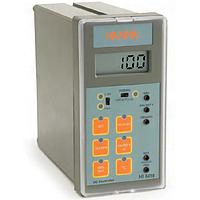
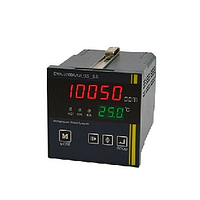
For example, the HANNA HI8410 Dissolved Oxygen Controller represents a dedicated control approach, combining oxygen measurement with output and alarm functions suitable for panel-based operation. In contrast, Meinsberg devices such as the MV4030, MV4030-U, MV3030, and MV3030-U are more aligned with transmitter-based integration, offering different communication and output options depending on whether the system requires current or voltage signals, display presence, or serial connectivity.
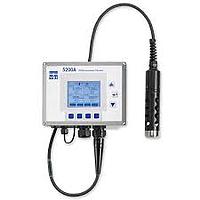
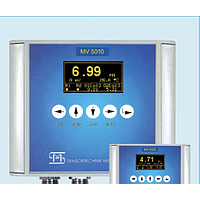
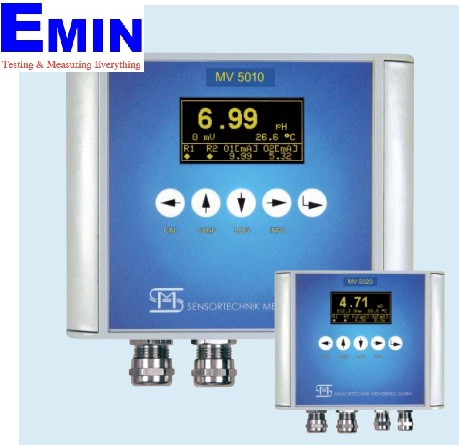
For more advanced setups, the Meinsberg MV5030/DO set extends the concept toward a more feature-rich control platform, while the YSI 5200A addresses applications where dissolved oxygen is one parameter within a larger multiparameter monitoring and control strategy.
How to choose the right dissolved oxygen controller
The best starting point is to define whether you need measurement only, local control, or full system integration. If the main requirement is to send a dissolved oxygen value to another controller, a transmitter with analog output may be the most practical choice. If you need direct alarm response, relay switching, or configurable control behavior at the instrument level, a dedicated DO controller will usually be more appropriate.
Signal type also matters. Some systems are built around 4-20 mA outputs, while others use voltage outputs or serial communication such as USB or RS232 for configuration and data access. In compact cabinet installations, slim transmitters can simplify integration. In operator-facing environments, a display-equipped instrument may improve usability during commissioning, calibration, and routine checks.
Temperature handling is another important consideration because dissolved oxygen readings are closely tied to water temperature. Devices in this category may include temperature measurement or compensation support, helping maintain more reliable readings across changing process conditions. In applications where oxygen control is part of a broader automation scheme, related categories such as COD and BOD control solutions may also be relevant depending on the treatment process.
Representative products in this category
Several products in this range illustrate the variety of dissolved oxygen control architectures available. The HANNA HI8410 is positioned as a dedicated dissolved oxygen controller with control-oriented functions such as setpoint handling, alarm relay capability, and support for recorder output. This type of instrument is suitable where oxygen needs to be actively monitored and managed at the panel level.
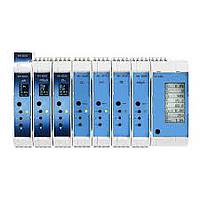
Meinsberg offers multiple transmitter variants for dissolved oxygen measurement. The MV4030 and MV4030-U provide display-based operation with USB connectivity, while the MV3030 and MV3030-U focus on compact transmitter functionality with RS232 communication and selectable analog output styles depending on the version. This gives system designers flexibility when matching instruments to existing cabinet layouts and control standards.
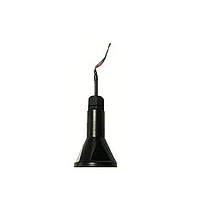
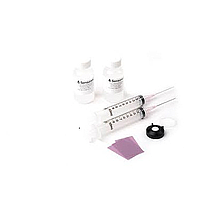
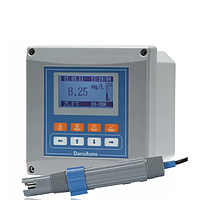
For users looking beyond single-parameter control, the YSI 5200A Multiparameter Monitoring and Control Instrument combines dissolved oxygen with other common water quality parameters. Meanwhile, SENSOREX options such as the DOMA-10 and DOMA-20 show a simpler transmitter-oriented path for applications that need direct 4-20 mA dissolved oxygen output. The presence of maintenance-related items like the SENSOREX CLDA-5018 kit also highlights an important point: reliable measurement depends not only on the controller, but also on ongoing sensor upkeep.
Controller, transmitter, or multiparameter platform?
A useful way to compare options is to think in terms of system role. A controller is generally chosen when the instrument must make local decisions, handle alarms, or interact directly with process equipment. A transmitter is often selected when the logic already exists in a PLC, DCS, or central automation layer, and the main need is a stable process signal.
A multiparameter platform becomes attractive when dissolved oxygen is only one part of the process picture. In water treatment and environmental monitoring, oxygen levels are often reviewed alongside pH, conductivity, salinity, or temperature. Choosing a platform that supports several parameters can reduce panel complexity and improve process visibility, especially where logging and communication features are also required.
Practical selection factors for industrial users
Beyond measurement range, industrial buyers usually evaluate how a device fits into the real installation. Mounting format, power supply, enclosure design, output scaling, relay availability, and communication options all influence deployment time and long-term maintainability. A controller that fits the control cabinet and matches the plant signal standard can reduce engineering effort significantly.
It is also worth considering calibration workflow and maintenance access. Dissolved oxygen systems depend on correct sensor condition and compensation behavior, so instruments that simplify routine setup can help reduce downtime. If your process also involves conductivity or ultra-pure water monitoring in adjacent stages, related equipment such as a water resistivity controller may be part of the broader instrumentation strategy.
Why this category matters for process stability
Dissolved oxygen is one of the most actionable water quality variables because it directly influences biological performance, oxidation efficiency, and overall system balance. Selecting the right controller or transmitter helps turn a raw oxygen reading into a usable control signal, alarm point, or operational decision. That is especially important in installations where oxygen demand can change with load, temperature, or process stage.
This DO Controllers category brings together instruments suited to different levels of complexity, from straightforward analog transmitters to more advanced control and monitoring platforms. By comparing control functions, output formats, temperature support, and integration options, buyers can narrow down the right solution for their application with a clearer technical basis.
Whether you need a compact dissolved oxygen transmitter for cabinet integration or a more complete monitoring and control instrument, the products in this category are intended to support dependable oxygen measurement in real process environments. Reviewing the application, required outputs, and level of automation will usually lead to the most practical choice.
Get exclusive volume discounts, bulk pricing updates, and new product alerts delivered directly to your inbox.
By subscribing, you agree to our Terms of Service and Privacy Policy.
Direct access to our certified experts