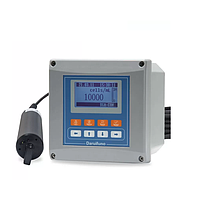
Digital Blue Green Algae Controller
In reservoirs, drinking water plants, aquaculture systems, and surface water monitoring points, early visibility into algae activity can support faster operational decisions. When cyanobacteria levels begin to rise, a dedicated Digital Blue Green Algae Controller helps turn sensor data into a usable signal for alarms, trending, and process response instead of relying only on manual sampling.
This category focuses on instruments used to measure and manage blue green algae readings in continuous monitoring applications. It is especially relevant where operators need stable communication, controller outputs, and compatibility with broader water quality monitoring systems.
Why continuous blue green algae monitoring matters
Blue green algae monitoring is often part of a broader water quality strategy, particularly in applications where bloom development may affect treatment performance, source water conditions, or biological stability. A controller-based setup allows readings from an online sensor to be displayed, recorded, and transmitted to supervisory systems for ongoing review.
Compared with periodic lab checks alone, a continuous setup can provide faster indication of changing conditions. This is useful when operators need to respond through alarms, process adjustments, or additional verification alongside other parameters managed through water quality controllers and monitors.
What equipment is included in this category
This category typically centers on the controller that receives signals from a blue green algae sensor and presents the data in a practical control interface. In the current product range, that includes panel or wall-mount controllers designed for field integration, data display, relay output, and standard industrial communication.
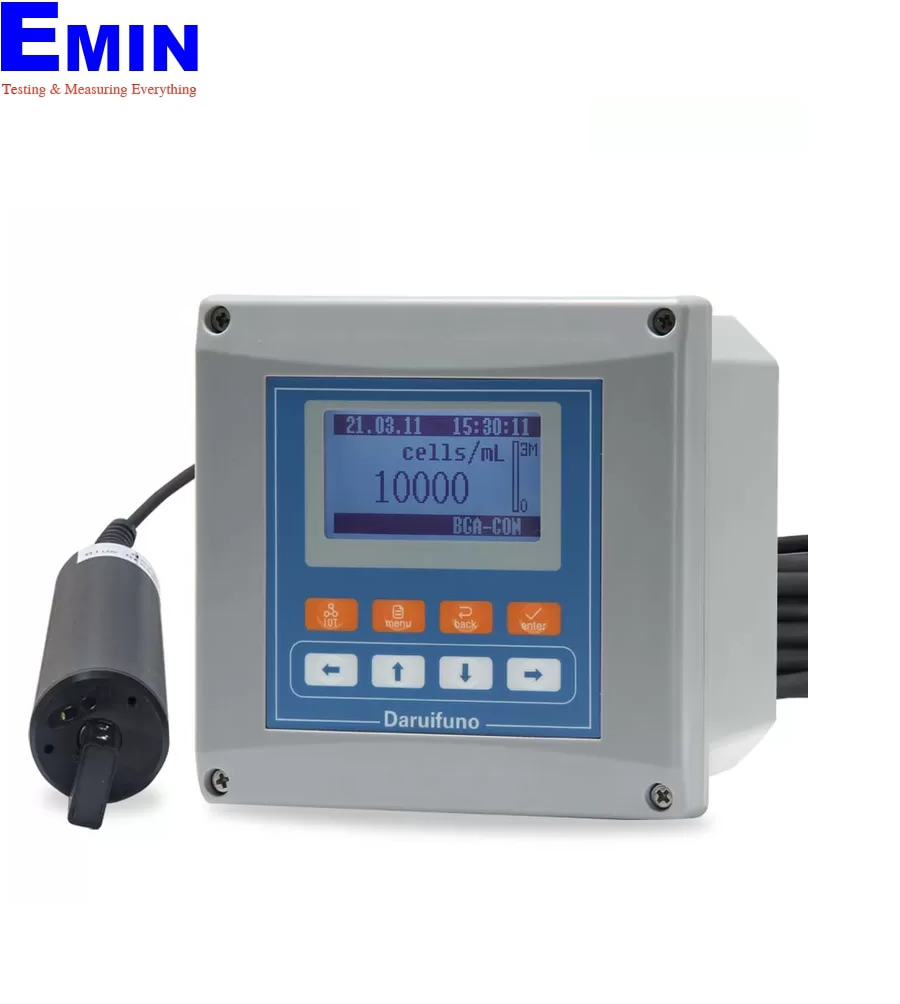
For example, the Daruifuno DUC2-BGA-H-D and DUC2-BGA-H-A are digital controllers for blue green algae measurement, with display capability, 4-20 mA output, RS485 communication, and relay functions. These controllers are intended to work as part of a complete monitoring loop together with compatible sensors rather than as standalone laboratory instruments.
Sensor and controller pairing in a complete monitoring loop
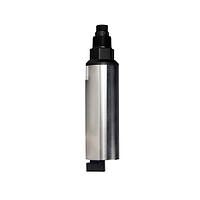
A practical installation usually combines a field sensor, signal processing, and control or SCADA integration. In this ecosystem, sensors such as the Daruifuno BGA351-S and BGA350-S perform fluorescence-based measurement, while the controller handles visualization, output scaling, historical records, and alarm logic.
This pairing matters because the controller is where process integration happens. Outputs such as RS485 Modbus-RTU and analog current signals make it easier to connect algae monitoring with a plant PLC, data logger, or central environmental dashboard.
Key selection points for a digital blue green algae controller
When choosing a controller, the first question is usually compatibility with the intended sensor and the plant’s electrical standard. In this category, available models include both DC-powered and AC-powered controller options, which can help match existing cabinet design or site power availability.
It is also worth reviewing the required communication and output format. Many industrial users need 4-20 mA for analog transmission and RS485 Modbus-RTU for digital networking, especially when algae data is combined with readings from other water parameters such as dissolved oxygen through DO controllers.
Installation method is another practical factor. Wall mounting, panel mounting, and pipe clamping can all affect enclosure layout, cable routing, and maintenance access. For outdoor or washdown-adjacent environments, protection rating and housing suitability should also be checked against site conditions.
Representative products in this range
The Daruifuno DUC2-BGA-H-D is a digital blue green algae controller with a wide display range, LCD interface, configurable relays, analog current output, and DC power input. It suits applications where 18~36VDC is preferred for industrial control panels or low-voltage systems.
The Daruifuno DUC2-BGA-H-A offers a similar control concept but with 100~240VAC power input, which may be more convenient in installations where mains power is directly available. Both models support historical data recording and communication over RS485, helping operators trend changing conditions over time.
On the sensing side, the Daruifuno BGA351-S and BGA350-S illustrate how the measurement point is built around fluorescence technology, compact installation formats, and online operation. The difference in body material and mounting style can influence mechanical fit, while the controller remains the central interface for data handling and response logic.
Where these controllers are commonly used
Digital blue green algae controllers are relevant anywhere continuous observation of cyanobacteria trends is important. Typical examples include raw water intake monitoring, lakes and reservoirs, aquaculture systems, environmental stations, and treatment facilities that want earlier warning of changes affecting water quality management.
They can also support multi-parameter setups where algae data is reviewed together with organic load indicators or other environmental variables. In broader monitoring architectures, this may sit alongside equipment such as COD and BOD controllers when a site needs more complete process visibility.
Integration, data handling, and maintenance considerations
For B2B users, the value of a controller is not limited to displaying a number on screen. A good fit should support alarm handling, output flexibility, and straightforward connection to existing automation infrastructure. Relay outputs can be used for threshold alarms, while analog and digital communication channels make it easier to move data into plant-level systems.
Maintenance planning is just as important. Sensor cleaning, calibration workflow, cable routing, and enclosure location all influence long-term measurement stability. When reviewing options, it is helpful to look at the complete measuring chain rather than selecting the controller in isolation.
Choosing the right configuration for your site
The most suitable controller depends on how the monitoring point will be powered, how data needs to be transmitted, and which sensor format is being installed. Sites that already standardize on AC panels may prefer one configuration, while DC-based systems or remote cabinets may point to another. The controller should also align with the plant’s preferred approach to alarms, data logging, and communications.
If your application involves continuous water quality supervision, this category provides a focused starting point for building a blue green algae monitoring solution around compatible sensors and controller outputs. Reviewing the intended installation environment, power supply, and integration needs upfront will make it easier to select a setup that fits real operating conditions.
Get exclusive volume discounts, bulk pricing updates, and new product alerts delivered directly to your inbox.
By subscribing, you agree to our Terms of Service and Privacy Policy.
Direct access to our certified experts