Motion and Position Monitoring
Accurate feedback on movement, travel, and equipment state is essential in automated systems, valve assemblies, machine tools, and process lines. When teams need to verify whether a component has reached a target position, changed state, or stayed within an expected range, the right Motion and Position Monitoring devices help turn mechanical motion into reliable control signals.
This category brings together products used to monitor rotary and linear movement, confirm end positions, and support safer, more consistent machine operation. It is especially relevant where status indication, switching, and position feedback need to remain dependable in industrial environments, including outdoor, washdown, or hazardous locations.
Where motion and position monitoring is used
In practice, position monitoring is not limited to one device type or one industry. It appears in valve automation, material handling, packaging machinery, doors and access systems, and many process control applications where operators or controllers need to know whether motion has occurred and whether a mechanism is in the expected position.
These devices may be used for simple open/closed indication, multi-point switching, or continuous feedback to a control system. In broader system design, they often work alongside controllers, signal interfaces, and operator displays to support diagnostics, interlocks, and process visibility.
Typical device roles in this category
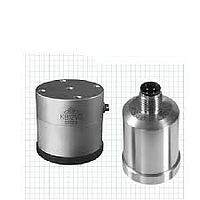
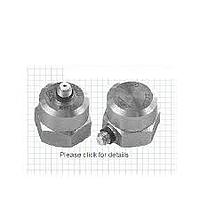
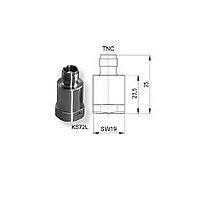
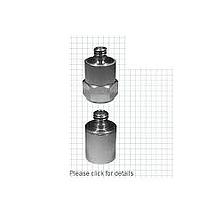
This range covers several common monitoring functions. Some products act as position sensors that detect a defined point or short sensing travel. Others serve as position indicators mounted on valves or actuators, providing local visual indication together with switch outputs or signal transmission for remote monitoring.
For example, the Dwyer DT1060 and DT1160 stainless steel position sensors are suited to applications where compact sensing and repeatable switching are important, particularly in demanding environments. On the valve and actuator side, models such as the Dwyer 42VD0-J1, 44VD0-J1, 15VD0, and 45VD0 illustrate how a position indicator can combine visual status, switching functions, and in some versions analog output such as 4 to 20 mA for integration into plant monitoring systems.
Selection factors that matter in industrial applications
Choosing the right device starts with the motion being monitored. Linear movement, short travel detection, rotary travel, and valve position indication each call for different mounting methods and sensing approaches. It is also important to define whether the application only needs discrete switching, or whether it benefits from analog feedback for trending, remote indication, or integration with a PLC or DCS.
Environmental conditions are equally important. In many installations, exposure to moisture, dust, vibration, chemicals, or hazardous areas will strongly influence the selection. Several featured Dwyer products in this category are designed with weatherproof or hazardous-location-oriented construction, which can be a key requirement in oil and gas, chemical processing, water treatment, and outdoor utility systems.
Understanding outputs and switching options
Not every monitoring point needs the same type of output. A basic switch output is often enough for end-of-travel confirmation, alarm logic, or permissive control. In these cases, SPDT switching options can provide flexible normally open or normally closed logic depending on wiring requirements.
Where plant personnel need more than simple on/off feedback, devices with transmitter capability can be a better fit. Certain Dwyer indicators in this category provide a 4 to 20 mA output, which is widely used in process environments for stable long-distance signal transmission. This is useful when the exact valve or actuator position must be sent back to a monitoring loop, displayed through meters and indicators, or captured by a supervisory control platform.
Hazardous area and weatherproof considerations
Many motion feedback points are installed in locations where standard commercial enclosures are not appropriate. Chemical plants, fuel handling systems, and exposed outdoor installations may require sealed construction, robust housings, and compliance with industrial enclosure expectations. In these cases, the device enclosure is just as important as the sensing principle.
The Dwyer DT series position sensors and several Dwyer valve position indicators listed here reflect this need with stainless steel or aluminum construction, sealed designs, and enclosure ratings intended for demanding service. For engineering teams, this helps reduce the gap between instrument functionality and site compliance requirements. If the application also involves broader instrumentation loops, it can be helpful to review related process control and monitoring devices during system planning.
Examples from the current range
Dwyer is the most visible manufacturer in this selection, with products that map well to real industrial use cases. The DT1060 and DT1160 stainless steel position sensors are relevant where short-range, repeatable position detection is needed, especially in compact or hazardous-area-adjacent installations.
For valve and actuator feedback, the Dwyer 12VD0-J1, 14VD0-J1, 42AD0, 44AD0, and 14AD0 represent switch-based position indication options, while the Dwyer 15VD0 and 45VD0 show how combined switch and transmitter functionality can support more advanced control architectures. The exact choice depends on whether the project prioritizes local indication, switch count, analog feedback, or enclosure characteristics.
How these products fit into a wider control ecosystem
Motion feedback devices are rarely selected in isolation. They usually form part of a larger control chain that includes actuators, input modules, displays, alarms, and accessories for mounting and wiring. A well-matched setup improves troubleshooting and makes it easier to identify whether a problem comes from the actuator, the mechanical linkage, or the feedback element itself.
When building out a complete installation, users often compare this category with control and monitoring accessories for connection and mounting support, or with adjacent monitoring products for expanded machine feedback. This category is therefore useful not only for replacement parts, but also for new machine builds, retrofit projects, and process instrumentation upgrades.
Practical buying guidance
Before selecting a product, it helps to confirm a few basics: the type of motion being monitored, the required output signal, environmental exposure, available supply power, and how the signal will be interpreted by the control system. Mechanical interface details also matter, especially on valve and actuator assemblies where drive method, travel range, and mounting arrangement affect compatibility.
If the application needs straightforward discrete feedback, a switch-based indicator may be sufficient. If the system requires remote trending or proportional indication, a transmitter-equipped model may be more appropriate. For harsher sites, prioritize enclosure performance and construction materials early in the selection process rather than treating them as secondary features.
For industrial users evaluating sensing, indication, and feedback options around moving equipment, this category provides a focused starting point. By matching motion type, output requirement, and installation environment carefully, it becomes much easier to choose a device that supports reliable monitoring over the long term.
Get exclusive volume discounts, bulk pricing updates, and new product alerts delivered directly to your inbox.
By subscribing, you agree to our Terms of Service and Privacy Policy.
Direct access to our certified experts