Actuators and Positioners
Accurate valve movement and repeatable mechanical positioning are critical in automated process systems, especially where reliability, clear status feedback, and safe operation matter as much as raw motion. In these environments, Actuators and Positioners help convert control intent into physical movement while making it easier to verify whether a valve or driven mechanism is actually where it should be.
This category brings together devices used to drive, indicate, and monitor position in industrial control applications. It is particularly relevant for users specifying electric valve actuation, open/closed feedback, and position-aware control assemblies in utility systems, process lines, and hazardous or demanding installations.

Where actuators and positioners fit in an automation system
An actuator provides the mechanical force needed to move a valve or similar device, while a position-indicating or switching component helps confirm movement and end position. In practice, these devices are often selected together because motion without feedback can create uncertainty, and feedback without a suitable drive mechanism cannot complete the control loop.
Within broader motion control systems, this category sits alongside products such as motion and position sensors and other position-monitoring technologies. The difference is that actuators and positioners are closely tied to the final controlled movement, especially in on/off valve service where torque, travel, enclosure protection, and switching feedback all need to align.
Common applications for valve actuation and position indication
These products are widely used wherever valves must be opened, closed, or monitored without relying solely on manual operation. Typical examples include fluid handling skids, plant utilities, water treatment equipment, HVAC-related process control, and industrial systems where remote actuation is preferred for consistency or safety.
They are also useful in installations that require visible indication of valve state or electrical confirmation through limit switches. For users working with integrated control panels, PLC-based logic, or supervisory monitoring, devices in this category support clearer operating status and easier troubleshooting during commissioning and maintenance.
Representative products in this category
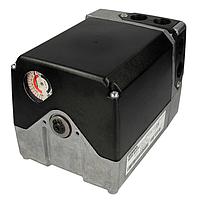
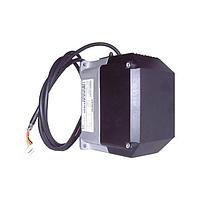
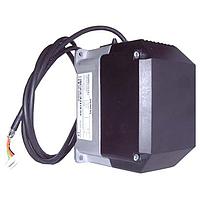
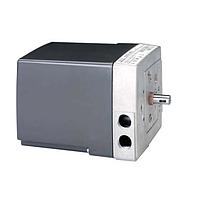
Dwyer is one of the key manufacturers represented here, with solutions that cover both electric valve actuation and position feedback. For example, the Dwyer ACT-TI series includes electric two-position actuators available across a broad torque range, from compact models such as the ACT-TI01-220VAC up to higher-torque options like the ACT-TI10-220VAC.
This spread is useful when application requirements vary significantly. Lower-torque actuators may suit smaller valve assemblies or lighter-duty movement, while larger models are more appropriate where higher breakaway torque or more substantial valve loads are expected. The series also includes features commonly valued in industrial service, such as integrated position indication and limit switches.
For feedback and confirmation, products such as the Dwyer QV-210101 and QV-210111 valve position indicators/switches provide a practical way to signal open or closed status. In applications where local visual confirmation is important, these devices can simplify operator checks while also supporting electrical status integration into the control system.
What to evaluate when selecting an actuator
The first specification many engineers review is torque. The actuator must be able to move the valve reliably under real operating conditions, not just under ideal bench conditions. Required torque can be influenced by valve size, media, pressure, seal friction, mounting arrangement, and how frequently the valve cycles.
Next, consider cycle time and duty cycle. A faster actuator may be desirable for quick process response, but the intended operating pattern matters just as much. Some models in this category are suited to intermittent use, while others are better matched to more frequent operation, so the expected on/off cycling profile should be part of the selection process.
Electrical requirements also matter. Supply voltage, input control signal, and field wiring method should fit the existing panel and site standards. When standardization across multiple assets is important, browsing related drive hardware such as AC and DC motors can also help users compare how motion is implemented elsewhere in the system.
Why enclosure and environmental ratings matter
Industrial actuators and position devices are often installed in washdown areas, outdoor locations, dusty plants, or hazardous environments. That is why enclosure protection should be reviewed early in the selection process, not treated as a secondary detail after torque and voltage.
Several featured Dwyer actuator models are specified with NEMA Type 7 enclosures, while the QV position indicators/switches are listed with IP56, IP66, NEMA Type 4, and NEMA Type 4X ratings. For users designing around moisture ingress, dust exposure, or enclosure washdown concerns, these details can strongly affect long-term reliability and maintenance intervals.
Temperature range is another important point. Equipment exposed to outdoor weather, unconditioned plant rooms, or process-adjacent heat should be selected with operating limits in mind. Matching environmental capability to the actual installation helps reduce nuisance faults and premature wear.
Position feedback, indication, and system visibility
In many automated valve assemblies, getting the valve to move is only part of the requirement. Operators and control systems also need trustworthy confirmation that the commanded action has been completed. This is where position feedback, limit switches, and visual indicators become especially valuable.
The Dwyer QV series illustrates this need well. These units are designed to provide switch-based status indication, and certain versions include bright LED visual indication for open/closed confirmation. In a practical plant setting, that combination can support both local visibility for technicians and straightforward integration with supervisory logic.
If the application requires broader sensing beyond end-of-travel confirmation, related categories such as displacement transducers may be relevant for continuous position measurement in other machine or motion applications.
Choosing by application rather than by model number alone
Although model numbers and torque values are important, a better starting point is the operating scenario. Ask whether the device is intended for simple open/close valve control, whether confirmation of final position is required, whether the site has hazardous-area considerations, and how quickly the motion must occur.
It also helps to think in terms of the complete assembly. A successful specification usually considers actuator torque, switching method, enclosure type, electrical connection, and how status information will be used by the operator or control system. Users comparing options may also want to review adjacent product groups such as motion & position sensors when the application extends beyond valve automation into wider machine position monitoring.
Final considerations for sourcing actuators and positioners
This category is best approached as part of a complete motion-and-feedback requirement rather than as a standalone hardware purchase. Whether you need a compact electric actuator, a higher-torque valve drive, or a dedicated position indicator with switch output, the right choice depends on how the equipment will operate in the field.
By reviewing torque range, duty expectations, enclosure rating, wiring, and position indication together, buyers can narrow the options more effectively and avoid mismatches between actuator capability and process demands. For industrial users building or upgrading valve control systems, this range of actuators and positioners provides a practical foundation for dependable mechanical movement and clearer operational visibility.
Get exclusive volume discounts, bulk pricing updates, and new product alerts delivered directly to your inbox.
By subscribing, you agree to our Terms of Service and Privacy Policy.
Direct access to our certified experts