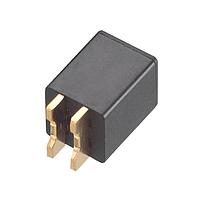
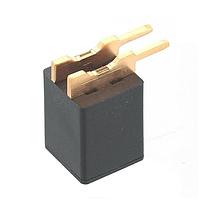
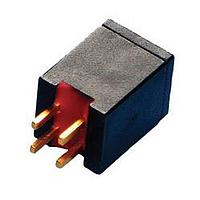
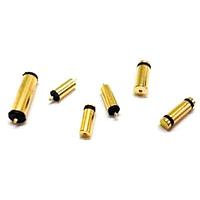
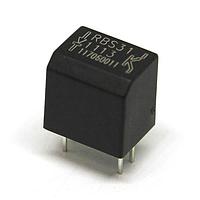
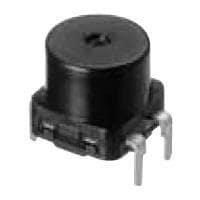
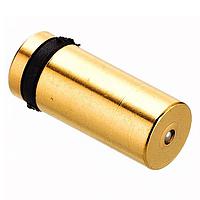
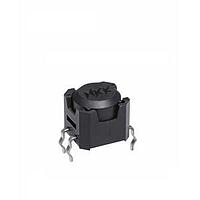
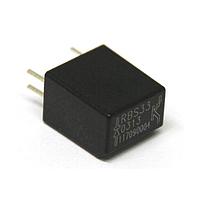
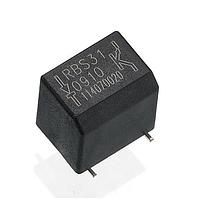
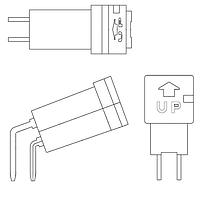
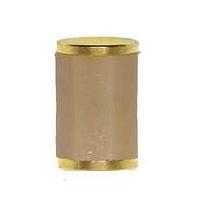
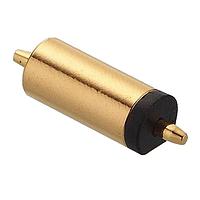
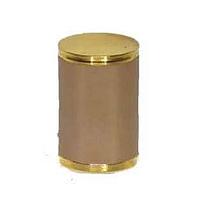
Tilt Switches
When a system needs a simple way to detect orientation, movement direction, or an out-of-position condition, a switching-based sensor is often the most practical choice. Tilt switches are widely used for this purpose in equipment that must respond when an enclosure, panel, handheld device, or machine element reaches a defined angle.
Within motion and position monitoring, these components are valued for their straightforward output and easy integration. Instead of providing a continuous measurement signal, they typically act as a discrete device that changes state when a tilt threshold is reached, making them suitable for alarms, interlocks, wake-up functions, and basic position detection in industrial and electronic designs.
Where tilt switches fit in motion and position sensing
Not every application requires a full analog or digital angle measurement. In many B2B design projects, the real requirement is simply to know whether something is upright, inverted, level enough, or outside an acceptable orientation range. That is where threshold-based tilt detection becomes useful.
Tilt switches are commonly selected when engineers want a compact component that can trigger a control response with minimal signal processing. They can be used in operator panels, security devices, portable instruments, machine covers, service access doors, and motion-sensitive electronics where a binary output is more useful than a continuously variable reading.
Typical applications for tilt switches
These devices are often chosen for designs where orientation matters, but full motion tracking would add unnecessary cost or complexity. A tilt switch can help determine whether a product has been moved, tipped, opened, or handled in an unusual position.
Common use cases include safety interlocks, tamper detection, equipment shutdown logic, handheld device orientation sensing, and basic motion activation. In broader motion-monitoring systems, engineers may compare them with technologies such as inclinometers when the application requires actual angle measurement rather than a simple switched response.
How to choose the right device
Selecting the right part starts with the switching behavior required by the application. Engineers typically look at the desired tilt angle, switching orientation, mounting direction, electrical interface, and the expected operating environment. A good selection process also considers vibration exposure, shock, enclosure constraints, and whether the switch is intended for continuous monitoring or occasional event detection.
Mechanical integration is equally important. Board layout, product housing geometry, and installation angle can all affect real-world performance. For designs that need a more compact PCB-level approach, related solutions in board mount motion and position sensors may also be relevant, especially when space and assembly method are key design constraints.
Tilt switches versus other orientation and motion sensors
A tilt switch is not the right answer for every position-sensing task, and understanding that distinction helps avoid overdesign or underdesign. If the application only needs an on/off response at a certain orientation, a switching device can be a very efficient option. If the system needs angle output, dynamic motion analysis, or closed-loop feedback, another sensor category may be more appropriate.
For example, gyroscopes are typically considered when rotational movement and dynamic motion behavior matter, while distance sensors are used when position must be inferred from spacing or travel. The key advantage of tilt switches remains their simplicity: they are often easier to implement in applications where the output only needs to indicate whether a tilt condition has occurred.
Manufacturers commonly considered in this category
Buyer requirements in industrial and OEM sourcing often include not only device function, but also availability, form factor consistency, and integration with established component standards. In this category, sourcing teams may review options from manufacturers such as Omron Electronics, C&K, Panasonic Industrial Devices, TE CONNECTIVITY SENSORS, E-Switch, NKK Switches, and OncQue.
Each supplier may support different design priorities, from compact packaging and switching style to application-specific mechanical integration. For that reason, procurement and engineering teams usually evaluate tilt switches not as isolated parts, but as components within a broader sensing and control architecture.
Integration considerations in industrial and OEM design
In practical system design, the switch itself is only one part of the decision. Engineers also need to consider debounce behavior, controller input compatibility, wiring or PCB connection method, and how the switching event will be interpreted by the host system. This is especially important in equipment where false triggering could affect safety logic, diagnostics, or machine availability.
Environmental conditions can also influence device choice. Installations exposed to repeated vibration, transport shock, or variable mounting positions may require more careful validation during prototyping. In many cases, the best approach is to define the required switching event clearly first, then narrow the component shortlist according to installation, signal, and reliability priorities.
Choosing the right category for your sensing requirement
Tilt switches are a strong fit when the application calls for a simple, reliable way to detect orientation change without the complexity of full motion measurement. They support many designs where the main objective is to trigger a response once a defined tilt condition is reached, rather than to continuously calculate position.
If your project needs more than a switched output, it may be worth comparing this category with adjacent motion and position sensing technologies. For buyers and engineers building practical monitoring systems, the right choice usually comes down to a straightforward question: do you need a simple orientation event, or do you need richer motion data? Starting from that requirement makes it much easier to select the most suitable device category.
Get exclusive volume discounts, bulk pricing updates, and new product alerts delivered directly to your inbox.
By subscribing, you agree to our Terms of Service and Privacy Policy.
Direct access to our certified experts