For full functionality of this site it is necessary to enable JavaScript.
EMIN.COM.MM
0

Cutting lenses with an angle grinder is the simplest

11/22/2024 14:35:56

You can use a hand grinder to cut iron or stainless steel round pipe mounts easily without worrying about the quality of the finished product. To understand how to do it as well as important notes, please refer to our article below for more information!

What is round tube jaw cutting?

Round pipe clamp cutting is a technique that uses an iron cutter or hand grinder to create a beveled cut on a round pipe, so that this cut fits tightly and closely to the body of another round pipe at a 90 degree angle.
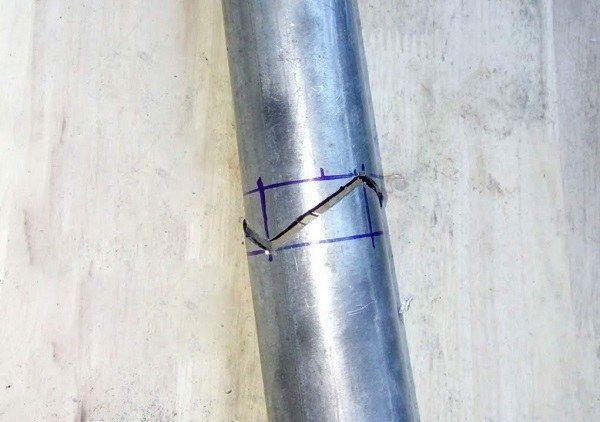
The preparation steps are the same:

To do this, you need to immediately buy a hand-held angle grinder, an iron or stainless steel pipe that needs to be processed, another metal pipe of equivalent size (slightly larger than the pipe that needs to be processed), a Regular sheet of paper, marker, ruler and a soft, flexible ruler.
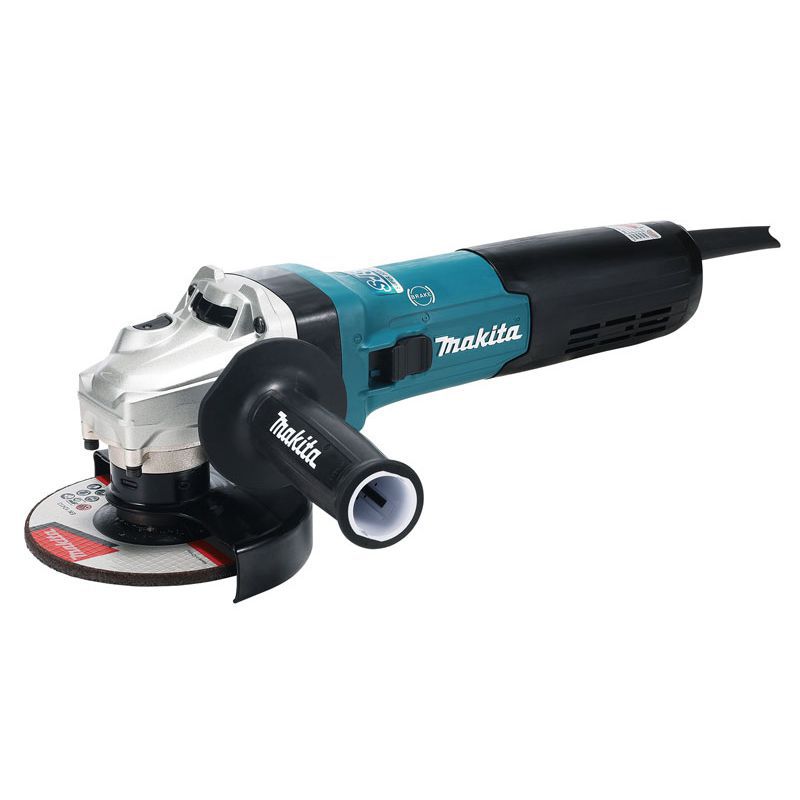
Steps:

Step 1:

- First of all, you need to determine the vertical size of the thin metal bar based on the formula: take the size of the iron/stainless steel pipe to be processed and divide by 3. For example, if the round pipe has a diameter of 5 cm, then the width of the thin metal rod will be 1.6 cm (5:3 ≈ 1.6).

- Then, use a sheet of paper to wrap around the prepared thin metal bar and cut off the excess paper so that the paper fits tightly to the size of the metal tube.

Step 2:

- Fold the cut paper in half, then fold it in half again to form 4 even folds. Use a marker to draw a small line at each fold.

- Then, based on the lines marked on the paper, you mark again on the thin metal tube. To ensure accuracy, you should use a ruler to measure and draw 4 parallel lines according to the marks on the metal pipe.

Step 3:

- Place the thin metal pipe inside the iron or stainless steel pipe that you plan to use the angle grinder to cut, and adjust the size to suit your work requirements.

- Use a pen to draw two circles on the iron/stainless steel pipe, along the edges of the two ends of the thin metal pipe and mark the same lines as on the metal pipe made before.

- After completing the marking, remove the thin metal tube from the iron/stainless steel tube.

Step 4:- Use a flexible ruler or tape measure to draw a curve connecting the marked points on the iron/stainless steel pipe, so that this curve runs from one connection point to another (in two opposite positions). match).

Step 5:

- Finally, use a grinder to cut along the drawn curve. Thanks to this method, you will be able to cut two round pipes at the same time quickly and achieve the desired standard size.

If your work often requires cutting pipe clamps, investing in a specialized pipe cutting machine is a reasonable choice to improve work efficiency and save time. The pipe clamp cutting machine is designed with fully automatic cutting processes thanks to the clamp cutting die (also known as punching die), helping to ensure accuracy and uniformity for each product.

However, if you only need to cut the tube mount a few times and do not require too much precision, using an angle grinder is still a viable solution. Although the initial results may not be perfect, with persistence and practice, your iron cutting skills will improve.

Above are my shares on how to cut pipe clamps with an angle grinder. To refer to the product, please visit the website emin.vn

Related News

Which Vacuum Pump Should You Choose for a Microbiology Lab to Avoid Affecting Samples?
07/15/2026 14:45:07

Vacuum pumps are utilized in a wide range of microbiology laboratory procedures, from membrane filtration and the aspiration of supernatants following centrifugation to sample concentration and the support of negative-pressure systems. Selecting the appropriate pump not only ensures more stable operational processes but also minimizes the risk of sample contamination, reduces maintenance costs, and extends the equipment's lifespan

QCVN 25:2025/BKHCN Takes Effect: Do Businesses Need to Prepare Electrical Safety Testing Equipment?
07/15/2026 09:15:04

Electrical safety is consistently one of the primary criteria evaluated before electrical or electronic equipment—or industrial components—are released to the market. A product may operate reliably yet still fail to meet requirements if its insulation lacks sufficient durability, its grounding resistance exceeds permissible limits, or leakage current occurs during operation.

Why Is Associated Research Considered an Icon of Hipot Technology?
07/14/2026 09:05:30

When it comes to electrical safety testing equipment specifically Hipot testers—many QA/QC and testing engineers are familiar with the globally renowned brand Associated Research. A subsidiary of the parent company IKONIX, Associated Research (ARI) invented the world's first commercial Hipot tester.

What Is the Standard 3-Phase Voltage? How to Read Cabinet-Mounted Meters Without Errors
07/13/2026 15:09:18

Voltmeters are almost invariably found on the panels of electrical cabinets in factories, power stations, or generator systems. A glance lasting just a few seconds allows an operator to determine whether the power supply is stable or showing signs of abnormality. However, not everyone understands the significance of the displayed readings, particularly regarding three-phase electrical systems.

Distinguishing between ARI’s Hypot, HypotUltra, and HypotMax: Which device is right for your factory?
07/13/2026 09:48:30

Few people realize that the concept of the "Hipot Test"—or electrical safety testing—has long existed within the electrical equipment manufacturing industry. Driven by the growing need to verify the voltage withstand capabilities of conductors, motors, and electrical devices, the industry required a robust and virtually fail-safe method to detect insulation weaknesses before products reached the market.

Stay Updated with Offers

Get exclusive volume discounts, bulk pricing updates, and new product alerts delivered directly to your inbox.

By subscribing, you agree to our Terms of Service and Privacy Policy.

Quick Support

Direct access to our certified experts