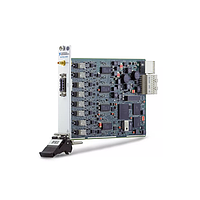
Sound and Vibration
Accurate acoustic and dynamic measurements depend on more than just sensors. In test benches, machine diagnostics, structural analysis, and product validation, the quality of the acquisition hardware directly affects the reliability of vibration and audio data. This category brings together Sound and Vibration hardware designed for precise signal capture in laboratory, industrial, and field environments.
Within the broader data acquisition workflow, these devices are used when standard analog input modules are not enough for dynamic signal analysis. They are suited to applications that require synchronized sampling, AC/DC coupling options, stable sample rates, and front-end connections appropriate for microphones, accelerometers, and other measurement transducers.
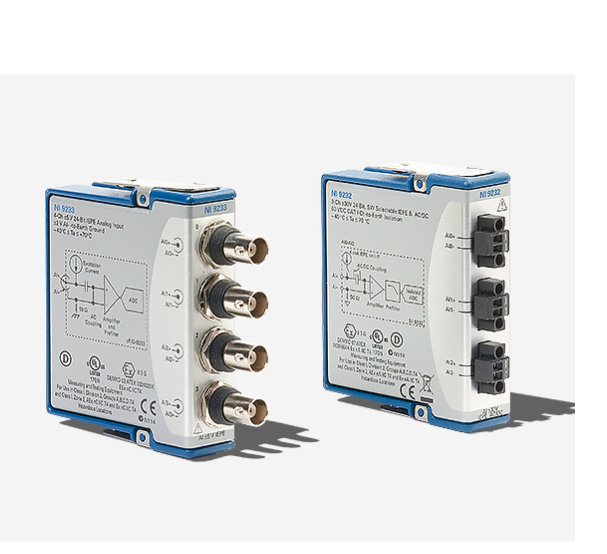
Hardware built for dynamic signal measurement
Sound and vibration systems are typically selected for signals that change quickly and need to be captured with consistent timing and low distortion. Compared with general-purpose DAQ, this type of hardware focuses on dynamic signal acquisition, making it suitable for condition monitoring, noise testing, modal analysis, and rotating machinery evaluation.
In this category, the available NI platforms span USB, PCI, PXIe, and FieldDAQ form factors. That range makes it easier to choose hardware based on where the measurement happens: a portable setup near the asset, a PCI-based desktop system, a high-channel-count PXI test rack, or a distributed field installation exposed to demanding temperatures and environments.
Typical device formats in this category
USB devices are often preferred when mobility and quick setup matter. For example, the NI USB-4431 and NI USB-4432 provide compact sound and vibration measurement options with BNC front connections and sample rates up to 102.4 kS/s. These are practical choices for benchtop validation, maintenance work, and temporary measurement stations where direct PC connection is convenient.
PCI devices remain relevant in installed test systems that rely on internal expansion. Models such as the NI PCI-4472, NI PCI-4472B, NI PCI-4474, NI PCI-4461, and NI PCI-4462 support multi-channel dynamic acquisition, with some versions offering higher sample rates or analog output capability depending on the measurement task. This makes them suitable for long-term workstation-based setups where stability and repeatability are priorities.
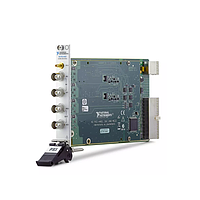
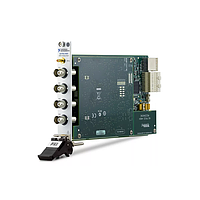
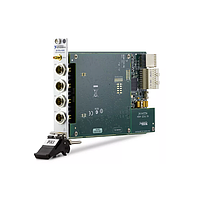
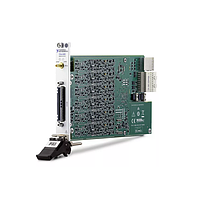
For scalable automated test systems, PXIe modules provide a strong path forward. The NI PXIe-4492, NI PXIe-4497, NI PXIe-4499, and NI PXIe-4480 are designed for PXI environments where synchronized multi-channel acquisition and system expansion are important. If your application also involves broader mixed-signal measurement tasks, related multifunction I/O hardware may help complete the overall test architecture.
What to look for when selecting sound and vibration hardware
The first selection factor is usually channel count. A two-channel or four-channel device may be enough for basic transfer measurements, dual-sensor analysis, or compact acoustic setups. Higher channel counts, such as 8 or 16 channels, are more appropriate when measuring multiple accelerometers, performing comparative structural tests, or monitoring several points on a machine at once.
Sample rate is equally important. In this category, several devices support 102.4 kS/s, while others such as the NI PCI-4462, NI PCI-4461, and PXIe models reach 204.8 kS/s, and the NI PXIe-4480 extends further to 1.25 MS/s. The right choice depends on the frequency content of the signals you need to observe and the level of detail required in time- or frequency-domain analysis.
Another practical consideration is front connectivity. BNC, SMB, and InfiniBand-style front connections each affect cable selection, signal integrity, and integration with existing fixtures. For users working across multiple electrical measurements, it can also be useful to compare these devices with dedicated voltage measurement modules when the application is not strictly vibration-focused.
Signal conditioning and measurement quality considerations
Many sound and vibration measurements involve sensors that produce small, noise-sensitive signals. Features such as AC/DC coupling, simultaneous sampling behavior, and stable front-end design help preserve measurement fidelity before the data reaches analysis software. These details matter when you are comparing low-frequency trends, evaluating resonance behavior, or correlating channels in modal or NVH work.
Some devices in this category also support practical requirements for sensor-based acquisition workflows. The NI FD-11634, for example, is positioned for FieldDAQ use and includes characteristics relevant to field deployment, including an 8-channel architecture, 24-bit ADC behavior, software-selectable AC/DC coupling, and operation across a wide temperature range. For distributed systems that combine dynamic measurements with networked machine data, adjacent technologies such as industrial communication buses may be part of the broader system design.
Where these devices are commonly used
This category is relevant for teams involved in product development, predictive maintenance, validation labs, and automated test engineering. Typical use cases include measuring machine vibration, capturing acoustic responses, studying structural dynamics, verifying rotating equipment behavior, and collecting synchronized data from multiple sensors during endurance or performance tests.
Portable USB models can fit maintenance and troubleshooting scenarios, while PXIe modules are better aligned with high-density test benches and integration into larger automated systems. FieldDAQ-oriented hardware is especially useful when measurements need to be taken close to the source rather than routing sensitive analog signals back to a centralized cabinet.
NI platform options for different integration needs
This category centers on hardware from NI, a widely used platform in measurement and test environments. One advantage of this ecosystem is the availability of several hardware families under the same general acquisition framework, allowing engineers to move from portable setups to rack-based or field-deployed systems without changing the measurement focus.
For compact installations, NI USB-4431 and USB-4432 offer accessible entry points. For internal PC-based systems, PCI options such as the NI PCI-4472 series and PCI-446x series remain useful. For larger channel counts and modular expansion, PXIe choices including the NI PXIe-4499 and PXIe-4497 support more demanding test configurations. This spread of options makes the category suitable for both standalone measurement tasks and broader automated test strategies.
Choosing the right category for your application
Not every dynamic measurement project belongs in the same hardware family. If your requirement centers on audio, vibration, and fast-changing analog signals, sound and vibration hardware is the right starting point. If the task is broader and includes mixed analog, digital, and control signals, a multifunction DAQ approach may be more appropriate. If the focus is on discrete status handling or actuator interfacing, categories such as digital I/O or current and voltage measurement may align better with the job.
In practice, selection often comes down to the measurement objective, the number of channels, the installation environment, and the preferred bus architecture. Reviewing those factors early helps narrow the options between portable USB devices, PCI cards, PXIe modules, and field-ready platforms.
Final considerations
When evaluating sound and vibration acquisition hardware, it helps to think beyond basic input count and compare the full measurement chain: sensor type, connection method, expected frequency range, deployment location, and future scalability. The products in this category provide several ways to build that chain with hardware suited to dynamic signal capture rather than general-purpose acquisition alone.
Whether you are setting up a compact diagnostic station, expanding a PXI-based validation platform, or deploying rugged measurement points closer to the asset, this category offers a focused starting point for selecting sound and vibration data acquisition hardware that matches real test and monitoring requirements.
Get exclusive volume discounts, bulk pricing updates, and new product alerts delivered directly to your inbox.
By subscribing, you agree to our Terms of Service and Privacy Policy.
Direct access to our certified experts