Radiation Meter/Detectors for Nuclear and Xray, Gama Beta
Radiation monitoring is essential wherever people, facilities, or materials may be exposed to ionizing energy. In industrial safety, laboratories, healthcare support environments, inspection work, and environmental checks, the right instrument helps users verify exposure levels, log measurement history, and respond quickly when alarm thresholds are exceeded.
This category brings together radiation meters and detectors used for nuclear, X-ray, gamma, beta, and in some cases alpha-related measurement tasks. The product range covers handheld survey-style instruments, radon monitoring devices, electronic personal dosimeters, and data-reading accessories for dose management workflows.
Where these instruments are typically used
Radiation detection equipment is selected according to the type of source, the measurement objective, and the working environment. Some users need a portable device for area surveys and spot checks, while others need continuous personal dose tracking or long-term radon monitoring in enclosed spaces.
Typical applications include workplace safety programs, building and environmental checks, maintenance around X-ray sources, dose supervision for personnel, and screening tasks where a fast response to changing radiation levels is important. In broader environmental monitoring setups, these instruments may be used alongside air quality sensors or other air-environment tools when multiple risk factors need to be observed together.
Main device groups in this category
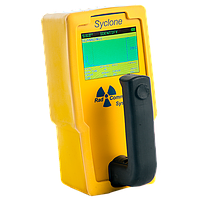
The category includes several distinct equipment types rather than one single instrument class. Handheld radiation meters are commonly used for direct measurement of dose rate or count activity during field checks and routine inspections. Depending on the detector design, they may support detection of gamma, beta, X-ray, and sometimes alpha radiation.
Personal dosimeters focus on the accumulated dose received by an individual and are typically worn during work shifts. These compact units are designed for fast alarm notification, event logging, and practical day-to-day use in controlled areas. There are also dedicated radon detectors intended for long-duration monitoring in buildings or rooms where airborne radioactive gas is a concern, and accessories such as data readers that support record transfer from compatible dosimeters or survey meters.
Examples of instruments available
For general-purpose portable measurement, the IMI range includes models such as the IMI Rad 100 and the IMI RADALERT 100X. These devices are based on Geiger-Mueller detection principles and are suitable for users who need a practical handheld meter for checking alpha, beta, gamma, and X-ray radiation, with audible count indication and straightforward field operation.
In the PCE lineup, the PCE-RDM 10 serves as a compact meter for beta, gamma, and X-ray measurement with dose-rate display and alarm functionality. PCE also offers specialized radon-focused instruments such as the PCE RD 75 and PCE RD 100, which are better aligned with long-term indoor radiation assessment than with instant survey work.
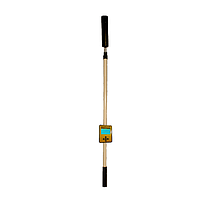
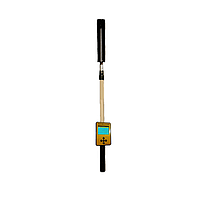
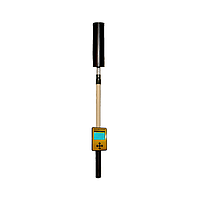
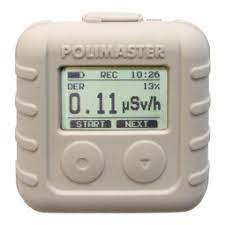
For wearable dose monitoring, POLIMASTER provides compact personal dosimeters such as the PoliSimeter series, designed for continuous individual monitoring with visual, audible, and vibration alerts. At a larger scale, products such as the POLIMASTER PoliPack series are intended for mobile radiation detection scenarios where portability and broader screening capability are both important.
The HITACHI SDM-301C fits a different role. Rather than acting as a primary detector, it works as a dosimeter data reader, enabling communication and data transfer from supported survey meters and dosemeters to a PC, which can be useful in managed monitoring programs.
How to choose the right radiation meter or detector
The first selection step is to define what needs to be measured. If the task is area checking or source detection, a handheld meter may be appropriate. If the requirement is personnel protection and cumulative exposure tracking, a wearable dosimeter is usually the better choice. For building surveys related to radon, a dedicated radon detector is more suitable than a general Geiger counter.
The second step is to confirm the radiation types involved. Some instruments are designed mainly for gamma and X-ray dose-rate monitoring, while others can also respond to beta or alpha radiation depending on detector construction. It is also important to consider whether the user needs count-based indication, dose rate in µSv/h, accumulated dose logging, or alarm thresholds for operational safety.
Practical factors also matter: memory capacity, USB or wireless communication, battery type, ingress protection, and screen readability can affect real-world usability. In industrial or facility management environments, users may also compare these devices with other monitoring tools such as air and gas transmitters when building a wider safety or compliance system.
Detector technologies and measurement logic
Many products in this category use the Geiger-Mueller tube, a widely used detector technology for portable radiation meters and dosimeters. It is valued for reliable detection, clear count response, and suitability for compact handheld or wearable designs. Devices based on this principle are often chosen for routine monitoring, quick screening, and dose-rate indication.
Some specialized instruments use pulse ionisation chamber technology for radon measurement, which is better suited to long-term airborne radon monitoring. Other advanced systems, including certain POLIMASTER backpack solutions, use scintillation-based detectors and can support broader detection tasks, including radionuclide-related functions and higher-mobility deployment scenarios.
Because each detector type is optimized for a different purpose, selection should be driven by the measurement objective rather than by form factor alone. A small handheld meter is convenient, but it is not automatically the right solution for personal dose compliance or indoor radon assessment.
Features that matter in daily operation
In practical use, fast alarms and easy interpretation are often more important than long specification tables. Many users prioritize clear display units, adjustable warning thresholds, count indication, data storage, and simple PC connectivity for traceability. Audible alerts, visual alarms, and vibration notifications are especially relevant for wearable devices used in active work zones.
Environmental durability can also be a deciding factor. Personal dosimeters intended for field or industrial use may offer robust housing and long battery life, while fixed-location or indoor radon detectors focus more on measurement continuity and historical trend recording. If the device will be used as part of a broader monitoring routine, data export and logging convenience should be reviewed early in the selection process.
Related considerations for B2B buyers
For companies, laboratories, and institutions, purchasing radiation monitoring equipment usually involves more than selecting a single device. Buyers often need to align the instrument with internal safety procedures, user roles, calibration routines, and reporting requirements. A handheld meter for maintenance staff, a personal dosimeter for controlled-area workers, and a data reader for record collection may all belong to the same program.
It is also useful to think about the surrounding measurement ecosystem. In some facilities, radiation monitoring is one part of a wider environmental control strategy that may include ventilation checks, particulate workflows with an aerosol generator, or other air-environment measurement tools. Choosing compatible instruments with suitable data handling can make long-term operation more efficient.
Finding the right fit for your application
This category is intended for users who need dependable instruments for radiation survey, dose monitoring, radon measurement, or supporting data transfer tasks. From portable Geiger-Mueller meters and compact personal dosimeters to specialized radon detectors and reader accessories, the available range supports different operating scenarios rather than a one-size-fits-all approach.
If you are comparing options, start with the radiation type, monitoring objective, and usage pattern, then narrow the shortlist by alarm method, communication interface, portability, and data requirements. That approach makes it easier to identify a radiation meter or detector that fits the technical task as well as the daily workflow.
Get exclusive volume discounts, bulk pricing updates, and new product alerts delivered directly to your inbox.
By subscribing, you agree to our Terms of Service and Privacy Policy.
Direct access to our certified experts