
DC Power Supply Calibration Service
Stable DC output is critical in electronics manufacturing, laboratory testing, maintenance, and automated production environments. When a power source begins to drift, display values no longer match actual output, or load regulation becomes uncertain, measurement results and downstream equipment performance can be affected. A professional DC Power Supply Calibration Service helps verify that the instrument delivers voltage and current accurately across its intended operating range.
Calibration is especially important for facilities that rely on repeatable test conditions, documented quality systems, or traceable maintenance practices. Instead of treating the power supply as a simple utility device, calibration confirms its role as a controlled source within the broader measurement chain.
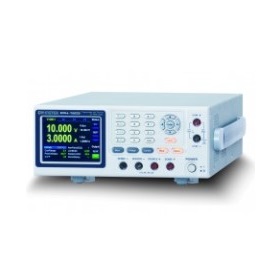
Why DC power supply calibration matters
In many technical environments, a DC power supply is used to energize boards, components, sensors, communication modules, and embedded systems during test or service work. If the actual output differs from the set value, it can lead to invalid test data, troubleshooting errors, or unnecessary concern about the load under evaluation.
Calibration helps confirm key performance points such as output voltage, output current, and the relationship between indicated and delivered values. It also supports confidence in measurement consistency over time, which is important for preventive maintenance programs, quality audits, and internal equipment control procedures.
What is typically checked during calibration
The scope of service can vary depending on the power supply type, usage pattern, and applicable internal quality requirements. In general, calibration focuses on verifying whether the source performs within acceptable tolerance at selected points across its operating range rather than only at a single nominal setting.
Common evaluation points may include output accuracy, display accuracy, current limiting behavior, and stability under different load conditions. For organizations that depend on documented technical records, a structured calibration process also provides useful evidence for equipment history, maintenance planning, and compliance workflows.
Suitable applications and operating environments
DC power supply calibration is relevant in a wide range of B2B settings, including R&D laboratories, service centers, production lines, educational labs, and industrial test benches. Any process that depends on known DC source values can benefit from regular verification, particularly where products are validated against electrical performance criteria.
It is also useful in repair and maintenance environments where technicians compare expected device behavior against known supply conditions. When the source itself is not verified, fault isolation becomes less reliable. Calibration reduces that uncertainty and supports more dependable diagnostics.
When to schedule calibration
Many companies establish a periodic interval based on internal quality procedures, equipment criticality, or operating frequency. A shorter interval may be appropriate for units used daily in testing or production, while backup or lightly used units may be managed differently depending on risk and documentation requirements.
Calibration should also be considered after repair, after relocation, after suspected overload events, or whenever output behavior appears abnormal. Signs such as unstable readings, mismatch between front-panel indication and measured output, or inconsistent current limiting can indicate that the instrument should be checked sooner rather than later.
How to choose the right service scope
Not all power sources are used in the same way, so the calibration approach should match the application. Some facilities need basic verification for standard bench supplies, while others require more detailed checks for programmable equipment integrated into automated systems. If your workflow depends on remote control functions or repeatable output sequences, a more specialized service path may be worth considering.
For example, organizations using digitally controlled units may also want to review options for programmable DC power supply calibration. Where both AC and DC sources are maintained in the same facility, it can also be helpful to align service planning with broader AC power supply calibration requirements.
Calibration in the context of a complete power test environment
Power verification rarely exists in isolation. In real test systems, the power supply works alongside meters, electronic loads, oscilloscopes, DAQ hardware, and application-specific fixtures. If the source is out of tolerance, the entire test setup may produce misleading results even when the rest of the instruments are functioning properly.
For facilities supporting multiple power technologies, calibration planning may also extend to specialized systems such as plasma power supply calibration. Looking at the whole equipment ecosystem helps maintenance teams prioritize critical assets and reduce avoidable process variation.
Documentation and quality considerations
A well-managed calibration program supports more than technical accuracy alone. It also strengthens traceability, equipment status control, and consistency across departments that share the same power sources. This is especially relevant for organizations operating under formal inspection, validation, or quality management procedures.
Documented calibration results can help teams make informed decisions about continued use, adjustment, or retirement of a unit. They also make it easier to standardize service intervals across related equipment categories, including broader AC/DC power supply calibration services where mixed-source environments are involved.
Key points before sending a unit for calibration
Before arranging service, it is useful to review how the power supply is actually used: typical voltage and current ranges, whether it is bench-top or integrated into a rack system, and whether output programming or protection functions are critical to the process. This context helps define a calibration scope that is practical and relevant rather than overly generic.
It is also worth checking the unit’s recent history, including repair activity, unusual operating conditions, or symptoms observed by technicians. Clear usage information supports a more effective evaluation and helps ensure the calibration outcome is meaningful for day-to-day operation.
Choosing the right calibration approach for a DC power supply is ultimately about protecting test confidence, process repeatability, and equipment reliability. With the right service scope and interval, organizations can maintain dependable source performance and reduce uncertainty across the electrical test workflow.
Get exclusive volume discounts, bulk pricing updates, and new product alerts delivered directly to your inbox.
By subscribing, you agree to our Terms of Service and Privacy Policy.
Direct access to our certified experts