SMU Tester Calibration Service
Accurate source and measure performance is critical in semiconductor evaluation, materials research, and low-current electrical testing. When an instrument is expected to source voltage or current while measuring the response with high precision, even small deviations can affect traceability, repeatability, and confidence in test results. That is why SMU Tester Calibration Service plays an important role in maintaining reliable measurement workflows.
This category is focused on calibration support for source measure units used in laboratories, production environments, and advanced electronic testing. Whether the equipment is used for IV characterization, device validation, or sensitive bench measurements, periodic calibration helps confirm that the instrument remains aligned with required performance and quality standards.
Why calibration matters for source measure units
An SMU combines a programmable source with a measurement function in one instrument. This dual role makes it especially useful for applications that require controlled excitation and simultaneous reading, but it also means that calibration must consider both sourcing accuracy and measurement accuracy together.
In practical use, drift can appear in output levels, reading stability, low-level current measurement, or voltage compliance behavior over time. Calibration helps verify that the instrument continues to perform as expected across the ranges relevant to engineering work, quality control, and test system maintenance.
Typical use cases for SMU tester calibration
Organizations that rely on source measure units often work in environments where data quality directly influences engineering decisions. This includes semiconductor test, component characterization, sensor validation, materials analysis, and R&D setups that involve low-current or precision DC measurements.
Regular calibration is also important when the SMU is part of a larger verification chain. If your team also manages other electrical instruments, related services such as multimeter calibration or clamp meter calibration may be relevant for keeping the broader test environment consistent.
Supported brands and service examples
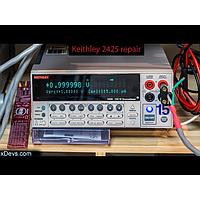
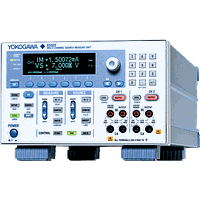
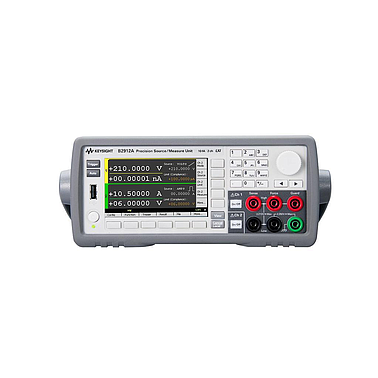
This category includes calibration service options for widely used manufacturers in precision electrical measurement. Common examples include support related to KEITHLEY, KEYSIGHT, and YOKOGAWA platforms, all of which are commonly found in electronics labs and semiconductor test environments.
Representative service listings in this category include the KEITHLEY SMU Semiconductor Test Calibration Service, KEYSIGHT SMU Semiconductor Test Calibration Service, and YOKOGAWA Source Measure Unit Calibration Service. These examples help illustrate the scope of service for instruments used in precision source-and-measure applications rather than serving as a complete list of supported configurations.
What is typically evaluated during calibration
While the exact procedure depends on the instrument and its intended operating ranges, calibration generally focuses on functions that are central to SMU performance. These may include voltage source behavior, current source behavior, voltage measurement, current measurement, and the consistency of readings across relevant test points.
For many users, the main concern is not just whether the instrument powers on, but whether it can deliver traceable results when working with sensitive devices or low-level signals. Calibration helps verify that the SMU remains suitable for tasks where confidence in output and reading integrity is essential.
How to choose the right calibration service
Selection usually starts with the actual role of the SMU in your workflow. Instruments used for research prototypes may require attention to low-level measurement confidence, while units in production or incoming inspection may need calibration intervals aligned with internal quality procedures, audit requirements, or system maintenance schedules.
It is also useful to consider the surrounding instrument ecosystem. For facilities that maintain broader electrical verification capability, services such as multifunction electrical installations meter calibration can complement SMU support where multiple types of electrical test equipment are managed under one calibration program.
Benefits for laboratory and production environments
A well-managed calibration plan supports more than instrument compliance. It helps reduce uncertainty in test results, improves comparability between measurement sessions, and supports troubleshooting when product behavior or process data appears inconsistent. For engineering teams, this can mean fewer doubts about whether a deviation comes from the device under test or from the instrument itself.
In production and quality environments, calibrated SMUs can also support better process control and documentation. This is especially important when measurement records are used for qualification, supplier communication, internal audits, or formal reporting.
When to review calibration intervals
Calibration intervals should reflect how the instrument is used rather than following a one-size-fits-all schedule. Heavily used SMUs, instruments exposed to transport or environmental variation, and units involved in critical validation tasks may need more frequent review than equipment used occasionally on a bench.
If your operation includes specialized electrical test tools beyond SMUs, it may also be worth reviewing adjacent services such as phase indicator calibration where relevant to your maintenance and compliance program. Looking at calibration as a system rather than a single service often improves long-term reliability.
Choosing with confidence
For teams working with precision electrical characterization, source measure units are not just another bench instrument. They are part of the measurement backbone for device evaluation, validation, and controlled sourcing tasks. A suitable calibration service helps protect the value of that equipment and supports dependable results across day-to-day testing.
Explore this category to find service options matched to common SMU platforms and applications. If your workflow depends on accurate sourcing and measurement in one instrument, keeping calibration current is a practical step toward better data quality, stronger traceability, and more consistent technical decisions.
Get exclusive volume discounts, bulk pricing updates, and new product alerts delivered directly to your inbox.
By subscribing, you agree to our Terms of Service and Privacy Policy.
Direct access to our certified experts