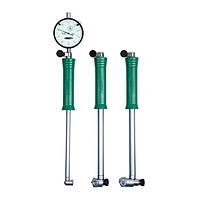
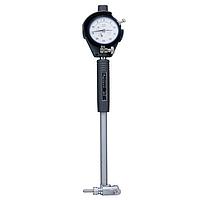
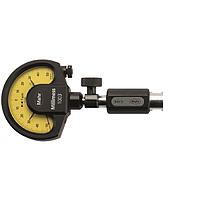
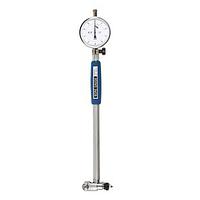
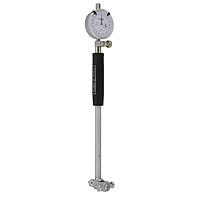
Bore Gage Calibration Service
Accurate internal diameter measurement depends on more than the condition of the instrument itself. In production, maintenance, and quality control, even a small deviation in a bore gage can affect fit, tolerance verification, and inspection results across the entire process. A professional Bore Gage Calibration Service helps confirm that the instrument is reading correctly and remains suitable for precision measurement tasks.
This service category is intended for users who rely on bore gages to check holes, cylinders, bearing seats, and other internal dimensions where repeatable measurement matters. Whether the tool is used in a machining environment, an inspection room, or routine maintenance work, calibration supports confidence in the measured value and improves traceability across the measurement system.
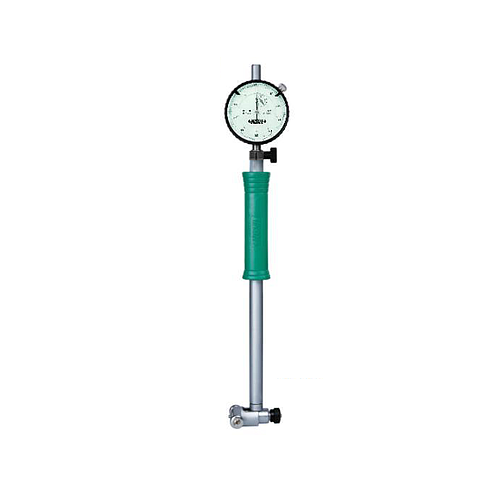
Why bore gage calibration matters
Bore gages are commonly used to verify internal diameters, out-of-round conditions, taper, and dimensional consistency inside machined features. Because these measurements are often part of a tolerance chain, the instrument should be checked at defined intervals to reduce the risk of incorrect acceptance or rejection during inspection.
Calibration is especially important when the gage is used frequently, exposed to shop-floor conditions, or involved in final quality checks. Regular verification helps identify drift, wear, or setup-related errors before they become a larger issue in production or incoming inspection.
Typical situations where calibration is needed
Many companies send bore gages for calibration as part of scheduled quality system maintenance, but there are also practical triggers that make recalibration necessary. These include inconsistent readings, instrument impact, long periods of use, or changes in the required measurement accuracy for a specific job.
Calibration is also relevant when integrating bore gages into a broader inspection program alongside instruments such as micrometer calibration services or depth gauge calibration services. In these cases, keeping multiple measuring tools under control helps maintain consistency across dimensional checks.
What to expect from this service category
This category focuses on calibration support for bore gages used in mechanical measurement applications. The goal is not simply to process the instrument, but to help users confirm measurement reliability for internal diameter inspection in day-to-day industrial work.
Depending on the brand and instrument type, users may choose service options associated with established manufacturers such as MITUTOYO, Mahr, MOORE & WRIGHT, and TECLOCK. These brands are widely recognized in precision measurement environments, and calibration services related to them are relevant for facilities that want better continuity between their instruments and their maintenance routines.
Representative calibration service options
Within this category, examples include the Mitutoyo Bore Gauge Calibration Service, Mahr Bore Gauge Calibration Service, Moore & Wright Bore Gauge Calibration Service, and TECLOCK Bore Gauge Calibration Service. These entries help buyers identify service options aligned with the instruments already in use across their workshop or inspection department.
When selecting a service, the most important factor is usually compatibility with the instrument being submitted and the measurement role it performs in your process. For organizations using multiple brands, it can also be helpful to review manufacturer-specific options such as the Mahr or TECLOCK ranges when planning calibration schedules.
How bore gage calibration supports quality control
Internal diameter measurement is often tied directly to part assembly, bearing fit, sealing performance, and machining validation. If a bore gage is not reading correctly, the resulting data can influence machining offsets, inspection records, and final product quality. That is why measurement traceability and periodic calibration are important parts of a controlled inspection process.
For many users, bore gages are not checked in isolation. They form part of a wider dimensional measurement workflow that may also include instruments covered by callipers calibration services. Reviewing calibration intervals across these related tools can help quality teams build a more consistent and manageable maintenance plan.
Choosing the right service for your measurement environment
The right calibration approach depends on how the bore gage is used, how often it is handled, and how critical the measurement is to production or inspection. A tool used for routine checks on general workshop tasks may have different service planning needs than one used for final inspection or close-tolerance parts.
It is also useful to consider the broader instrument ecosystem. If your operation manages several dimensional measuring devices together, a structured service schedule can simplify recordkeeping and reduce unplanned downtime. In this context, service alignment across bore gages and other inspection tools often improves both operational efficiency and audit readiness.
Suitable for maintenance, machining, and inspection teams
This category is relevant to manufacturers, subcontract machining shops, maintenance departments, quality assurance teams, and calibration coordinators who need dependable control over internal measurement tools. Bore gages are frequently used wherever hole size and internal geometry must be monitored reliably, especially in metalworking and precision engineering workflows.
Because different users may prioritize speed, repeatability, or documentation differently, the service category is designed to support varied industrial needs without overcomplicating the selection process. The main objective remains the same: keeping the instrument suitable for accurate internal measurement work.
Support a more reliable measurement program
A well-managed bore gage calibration plan helps reduce uncertainty in internal diameter measurement and supports more dependable inspection outcomes. For businesses that depend on dimensional accuracy, calibration is a practical step toward better process control rather than just an administrative requirement.
If you are reviewing calibration coverage for multiple mechanical measuring instruments, this category provides a focused starting point for bore gage service needs while fitting naturally into a wider equipment maintenance strategy. Choosing the appropriate service option can help maintain confidence in every measurement taken on the shop floor or in the inspection room.
Get exclusive volume discounts, bulk pricing updates, and new product alerts delivered directly to your inbox.
By subscribing, you agree to our Terms of Service and Privacy Policy.
Direct access to our certified experts