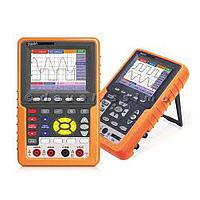
Handheld Oscilloscope Calibration Service
Field troubleshooting, commissioning, and mobile maintenance often depend on handheld oscilloscopes because they combine waveform analysis with portability. In these environments, measurement accuracy matters just as much as convenience. A professional Handheld Oscilloscope Calibration Service helps verify that the instrument is reading correctly, so voltage, time-base, and signal observations remain dependable when decisions need to be made quickly.
Portable oscilloscopes are frequently used in electrical service, industrial maintenance, utilities, and onsite diagnostics, where instruments may be exposed to transport, vibration, and varying operating conditions. Over time, that usage can affect measurement confidence. Regular calibration supports quality control, improves traceability, and helps reduce uncertainty in maintenance and test workflows.

Why calibration is important for handheld oscilloscopes
A handheld oscilloscope is often selected for jobs where a bench instrument is not practical, but the need for reliable readings does not change. When technicians check waveform shape, amplitude, frequency behavior, or transient events in the field, they rely on the instrument to reflect the real signal as accurately as possible. Calibration helps confirm that the device remains within expected performance over time.
This is especially relevant in environments where instruments are used across multiple sites or shared among teams. A documented calibration service supports maintenance programs, audit readiness, and internal quality systems. It also helps users distinguish between a real process issue and an error caused by measurement drift.
What this service category typically supports
This category focuses on calibration services for portable and battery-powered oscilloscopes used outside the traditional bench setup. These instruments are commonly chosen for onsite electrical diagnostics, control panel work, service engineering, and troubleshooting in production or facility environments.
Depending on operational needs, companies may calibrate handheld units as part of a broader oscilloscope maintenance plan. If your organization also uses fixed instruments in laboratories or production test stations, you may also want to review digital oscilloscope calibration services for benchtop systems with different usage profiles.
Common situations where recalibration is needed
Calibration intervals are often based on internal quality procedures, asset criticality, frequency of use, and operating conditions. Portable instruments may require closer attention when they are used heavily in field service, transported frequently, or assigned to demanding industrial environments. Even when no obvious fault is visible, periodic verification is a practical way to maintain confidence in results.
Recalibration is also often considered after repair, after an impact event, or before important inspection and validation work. For organizations managing mixed oscilloscope fleets, service planning may differ by form factor. In some cases, handheld units are calibrated alongside analog oscilloscope calibration services or other instrument types to keep maintenance records consistent across the test environment.
Supported brands and example service options
This category includes service options associated with widely used handheld oscilloscope brands in industrial and electronic test applications. Examples in this range include services for FLUKE, KEYSIGHT, Rohde & Schwarz, BKPRECISION, EXTECH, and METRIX. Mentioning these brands is useful not as a checklist, but because service requirements are often tied to the installed base already used by maintenance and engineering teams.
Representative offerings include FLUKE Handheld Oscilloscope Calibration Service, KEYSIGHT Handheld Oscilloscope Calibration Service, Rohde & Schwarz Handheld Oscilloscope Calibration Service, EXTECH Handheld Oscilloscope Calibration Service, METRIX Handheld Oscilloscope Calibration Service, and BKPRECISION Handheld Oscilloscope Calibration Service. These examples help illustrate the scope of the category for users searching by manufacturer or by existing instrument fleet.
How to choose the right service for your equipment
The most practical starting point is the exact instrument type and how it is used in your operation. A handheld oscilloscope used for routine field checks may have different service priorities than one used in regulated test documentation or high-value maintenance work. Before selecting a service, it is helpful to confirm the brand, the device category, and whether the instrument belongs to a broader calibration schedule.
It is also useful to consider whether your team uses other oscilloscope formats that need separate support paths. For example, compact computer-connected instruments may fall under PC oscilloscope calibration service, while highly portable specialty formats may be managed differently. Matching the service category to the actual instrument type helps avoid delays and keeps asset records cleaner.
Benefits for maintenance, quality, and asset management
For B2B users, calibration is not only about technical performance. It also supports broader objectives such as traceability, preventive maintenance planning, and better control of measurement assets across teams and locations. When handheld oscilloscopes are part of routine troubleshooting or acceptance testing, keeping them calibrated can strengthen confidence in work orders, service reports, and inspection results.
From an asset management perspective, calibration records make it easier to track service history and identify instruments that may need closer review. This is valuable for organizations operating mixed-brand fleets, especially when portable devices are deployed across multiple technicians or sites. A structured approach to measurement reliability helps reduce rework and supports more consistent technical decisions.
Finding the right fit within your oscilloscope service program
Not every oscilloscope in a facility is used the same way, and service planning should reflect that. Handheld units are designed for mobility and convenience, but they still need the same disciplined attention to accuracy as other test instruments. Building the right calibration plan means aligning the service category with actual usage, internal procedures, and the role the instrument plays in troubleshooting or verification.
If your operation depends on portable waveform analysis in the field, this category provides a focused path for maintaining those instruments with appropriate calibration support. Reviewing service options by brand and application can help you choose a practical solution for FLUKE, KEYSIGHT, Rohde & Schwarz, BKPRECISION, EXTECH, or METRIX handheld oscilloscopes while keeping your broader test equipment program organized and consistent.
Get exclusive volume discounts, bulk pricing updates, and new product alerts delivered directly to your inbox.
By subscribing, you agree to our Terms of Service and Privacy Policy.
Direct access to our certified experts