Bending machines Repair Service
Unexpected downtime in a bending line can quickly affect production schedules, part quality, and operator efficiency. When a machine starts showing inconsistent angles, unstable motion, abnormal noise, or control-related faults, a focused Bending machines Repair Service helps restore performance while reducing the risk of extended stoppages.
This category is intended for businesses that need practical support for industrial bending equipment used in fabrication and metalworking environments. Whether the issue comes from wear in mechanical assemblies, hydraulic behavior, control response, or alignment problems, repair work should be approached with attention to both machine condition and the actual process requirements on the shop floor.
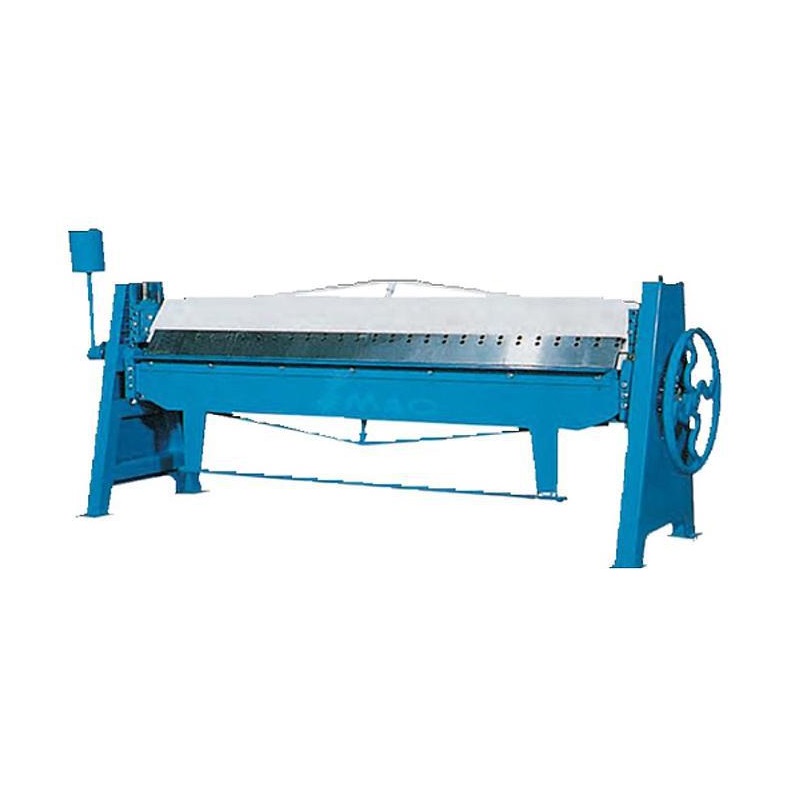
Why repair quality matters for bending equipment
Bending machines operate under repeated load cycles and depend on stable movement, accurate positioning, and consistent force transmission. Even relatively small faults can lead to angle variation, poor repeatability, material marking, or slower production. In many cases, the visible symptom is only part of the problem, so repair work needs to consider the machine as a complete system rather than a single failed component.
A well-planned repair process is especially important in operations where dimensional accuracy and repeatable forming are critical. Corrective work may involve identifying wear points, checking motion behavior, verifying control response, and restoring the machine to a condition that supports reliable day-to-day use.
Common issues seen in bending machine service work
Repair needs can appear in several ways depending on the machine design, workload, and maintenance history. Some users first notice a drop in forming consistency, while others encounter intermittent stoppages, hydraulic instability, or control faults that interrupt production. These symptoms often indicate a deeper issue related to mechanical wear, actuation, sensing, or machine setup.
In practical terms, service work often starts with a structured review of machine behavior under operating conditions. That may include checking movement smoothness, evaluating response during the bending cycle, inspecting high-stress assemblies, and confirming that the machine can return to repeatable operation after repair.
- Inconsistent bending results that affect product quality or repeatability
- Mechanical wear in moving sections exposed to continuous production loads
- Hydraulic or motion-related problems that reduce control stability
- Operational faults that interrupt normal cycle performance
Repair support in metalworking and fabrication environments
Bending equipment is often part of a larger process chain that includes cutting, shearing, stamping, and downstream assembly. Because of that, repair requirements are rarely isolated from the surrounding production system. A machine may need service not only because it has failed completely, but because it no longer matches the throughput, accuracy, or timing expected in the line.
For companies working across multiple fabrication processes, it can also be useful to review related service categories such as cutting machine repair service or shear machine repair service. This helps maintenance teams align repair planning with the full production workflow rather than treating each machine in isolation.
Service scope and equipment context
This category supports businesses looking for repair solutions for industrial bending machines, including applications connected to cutting and bending operations. One representative offering in this area is the METALEX Cutting - Bending industry machine Repair service, which reflects the practical overlap between these two process groups in fabrication environments.
Where manufacturer-specific context is useful, METALEX may be relevant for operations that already work with equipment or service requirements tied to this brand. In repair planning, however, the more important consideration is usually the machine condition, production role, and type of fault rather than brand name alone.
How to evaluate the right repair approach
Selecting the right repair service starts with a clear understanding of the production impact. If the machine still runs but produces unstable results, the priority may be restoring repeatability and process control. If the equipment is fully down, the focus often shifts to fault isolation, replacement of damaged elements where necessary, and safe return to operation.
It is also useful to document the actual operating symptoms before requesting service. Information such as error behavior, changes in forming quality, unusual vibration, timing irregularities, and recent maintenance history can make diagnosis more efficient. For industrial users, this helps reduce unnecessary downtime and supports a more targeted repair process.
When related machinery services may also be relevant
In some facilities, a bending machine issue appears alongside problems in other forming or pressing equipment. If the production environment includes nearby press-based processes, users may also want to review options such as hydraulic stamping machine repair service. This can be useful when similar wear patterns, control concerns, or maintenance constraints affect more than one machine type.
Looking at related services does not replace specialized repair for bending equipment, but it can help maintenance and procurement teams coordinate service decisions across the workshop. This is particularly valuable in plants where machine uptime, process continuity, and repair scheduling must be managed together.
What businesses typically expect from bending machine repair
For most industrial users, the goal is not simply to restart the machine, but to restore stable and usable performance in real production conditions. That usually means attention to machine reliability, process consistency, and operating safety after the repair is completed. A repair outcome should support normal throughput and reduce the chance of recurring faults caused by unresolved root issues.
Because bending machines are used in demanding production settings, repair service should be approached as part of overall equipment lifecycle management. Clear diagnosis, appropriate corrective action, and practical understanding of fabrication processes all contribute to more dependable results over time.
Choosing a suitable service path
When evaluating options in this category, it helps to consider the type of bending work performed, the production criticality of the machine, and whether the issue is mechanical, hydraulic, or control-related. A structured service approach can make it easier to prioritize urgent faults while also addressing underlying causes that affect long-term operation.
If your business depends on forming accuracy and stable machine availability, this category provides a relevant starting point for identifying industrial repair support for bending equipment. The right service decision should fit your application, your production environment, and the level of reliability needed after the machine returns to work.
Get exclusive volume discounts, bulk pricing updates, and new product alerts delivered directly to your inbox.
By subscribing, you agree to our Terms of Service and Privacy Policy.
Direct access to our certified experts