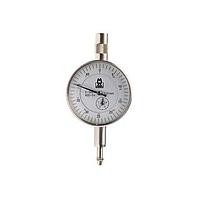
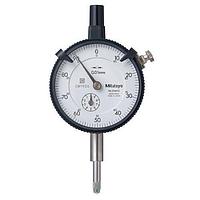
Dial Indicators Repair Service
When a dial indicator starts showing inconsistent readings, sticking during travel, or failing to return smoothly to zero, measurement reliability can quickly become a problem on the shop floor, in inspection rooms, and across maintenance workflows. A professional Dial Indicators Repair Service helps restore the instrument’s mechanical performance so it can continue supporting dimensional checks, setup alignment, and comparative measurement tasks with better confidence.
Because dial indicators are precision mechanical instruments, even minor wear, impact, contamination, or internal backlash can affect repeatability. Repair work is therefore not just about fixing visible damage; it is also about checking the movement, pointer response, contact components, and overall operating condition of the gauge in real use.
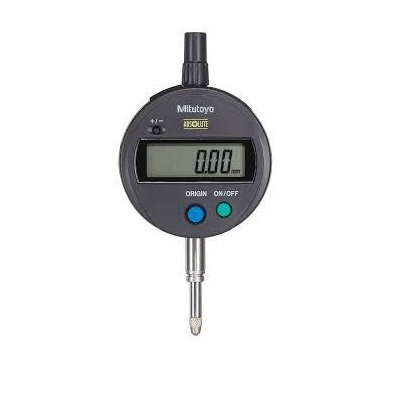
Why dial indicator repair matters in precision measurement
Dial indicators are widely used for runout checks, flatness comparison, fixture setup, machine alignment, and dimensional verification. In these applications, users depend on smooth spindle movement, stable indication, and predictable response over repeated cycles. If the mechanism becomes stiff or unstable, the instrument may still appear usable while producing unreliable measurement results.
Repair service is especially relevant when a gauge has been dropped, exposed to dust or coolant, stored improperly, or simply worn through long-term use. Instead of replacing every unit immediately, many companies choose repair as a practical way to extend service life for instruments that remain valuable in inspection and production environments.
Common issues addressed by a repair service
Mechanical measuring instruments can develop faults gradually or suddenly. In dial indicators, typical problems include pointer fluctuation, poor zero return, inconsistent contact feel, damaged stems, loose bezels, and internal movement wear. These issues may affect both operator usability and measurement repeatability.
A proper service process generally focuses on identifying the source of the fault, evaluating the condition of moving parts, and restoring function where feasible. This is important for maintenance teams that need instruments back in working order without unnecessary downtime, especially when the gauge is part of a routine inspection setup.
For facilities managing a wider set of handheld and bench inspection tools, related support may also be relevant for caliper repair service or micrometer repair service, depending on the types of instruments used in the same quality process.
Supported brands and service examples
This category includes repair options for widely used brands in industrial metrology. Examples include MITUTOYO, Mahr, MOORE & WRIGHT, TECLOCK, and METROLOGY. Mentioning the brand matters because dial indicator construction, component layout, and service approach can vary across manufacturers and product generations.
Representative services in this category include MITUTOYO Dial Indicators Repair Service, Mahr Dial Indicators Repair Service, MOORE & WRIGHT Dial Indicators Repair Service, TECLOCK Dial Indicators Repair Service, and METROLOGY Dial Indicators Repair Service. These listings help buyers and maintenance teams quickly identify a relevant repair path based on the brand already in use at their site.
How to decide whether repair is the right option
Choosing repair often depends on the instrument’s condition, the required measurement role, and how critical the gauge is to daily operations. If the indicator has a sound body and the issue appears related to movement performance, pointer behavior, or contact wear, repair may be a sensible route. If the instrument has severe structural damage, the decision may require a closer cost and condition review.
For many B2B users, the practical question is not only whether the indicator can be repaired, but whether it can return to service in a way that supports the intended inspection task. Instruments used for setup checks may have different acceptance expectations than those used in formal quality control. A clear repair evaluation helps determine the most suitable next step.
Where repaired dial indicators are commonly used
Once restored to proper working condition, dial indicators continue to serve in a broad range of industrial applications. Common use cases include checking concentricity and runout on rotating parts, setting machine positions, verifying relative displacement, and comparing part variation during in-process inspection.
They are also frequently used alongside other mechanical measuring tools in workshops, tool rooms, maintenance departments, and quality laboratories. In environments that rely on multiple contact-based gauges, related service support such as thickness gauge repair service or depth gauge repair service may also help keep the wider inspection system operational.
What to prepare before sending an indicator for repair
Before arranging service, it is useful to record the brand, model reference if available, visible symptoms, and the measurement issue observed in actual use. Information such as whether the pointer sticks, the plunger feels rough, or the bezel no longer adjusts correctly can help speed up the initial assessment.
If the indicator is part of a fixture or dedicated inspection station, it can also be helpful to note how the instrument is used in production. This gives better context for evaluating whether the repaired unit will meet the practical demands of the application. For organizations with several similar gauges, grouping service requests by brand or instrument type may also simplify maintenance planning.
A practical service category for ongoing instrument maintenance
Repair support for dial indicators is an important part of maintaining precision measurement capability without unnecessary replacement. Whether the issue involves wear, impact-related damage, or degraded movement quality, a focused service process helps users assess the condition of the instrument and restore function where appropriate.
For companies that depend on mechanical gauges in daily inspection work, this category offers a practical starting point for handling faults across commonly used brands and keeping essential measurement tools in circulation. Selecting the appropriate repair listing based on manufacturer and instrument type can make the service process more efficient and easier to manage.
Get exclusive volume discounts, bulk pricing updates, and new product alerts delivered directly to your inbox.
By subscribing, you agree to our Terms of Service and Privacy Policy.
Direct access to our certified experts