Fetal Sex Determination in Cows: An Ultrasound-Based Approach
A veterinary ultrasound scanner that can determine fetal sex is valuable for reproductive management and herd development planning. Knowing whether a fetus is male or female at an early stage gives farmers additional information for planning herd replacement, selecting breeding stock, and organizing reproductive strategies according to the production goals of dairy or beef cattle farms.
Fetal sex determination in cows is a useful part of reproductive and herd-management planning. For dairy and beef operations, knowing the expected sex of a calf during pregnancy can help inform selection, replacement planning, and broader breeding decisions. It may also support decisions related to the use of sexed semen and the future sale or retention of animals.
Veterinary ultrasonography is commonly used for this purpose. It enables a non-invasive assessment of the developing fetus and its anatomical structures. Reliable interpretation, however, depends on the stage of pregnancy, image quality, fetal position, and the examiner’s ability to interpret the ultrasound image.
When Is the Best Time to Determine Fetal Sex?
The optimal period for fetal sex determination in cows is generally between days 55 and 70 of pregnancy. During this interval, the principal structure assessed is the genital tubercle, also known as tuberculum genitale. Its position changes in a characteristic way as fetal development progresses.
Timing matters because the relevant anatomy must be sufficiently visible while remaining accessible to ultrasound examination. Before this window, the structures used for assessment may be less suitable for clear interpretation. At later stages, more developed external genital features may be visible, but examining the fetus can become more difficult.
How Ultrasound Identifies Fetal Sex
During the day 55 to 70 period, the position of the genital tubercle is the key diagnostic landmark. In male fetuses, it shifts toward the umbilicus and the area of the future penis. In female fetuses, it is located closer to the tail, in the area of the future vulva.
This assessment requires more than locating a single feature. The operator must obtain a suitable view of the fetus and correctly identify the anatomical orientation. Small changes in fetal position can affect the image and make interpretation less straightforward. For that reason, a precise ultrasound device and practical experience in ultrasonographic interpretation are important components of the procedure.
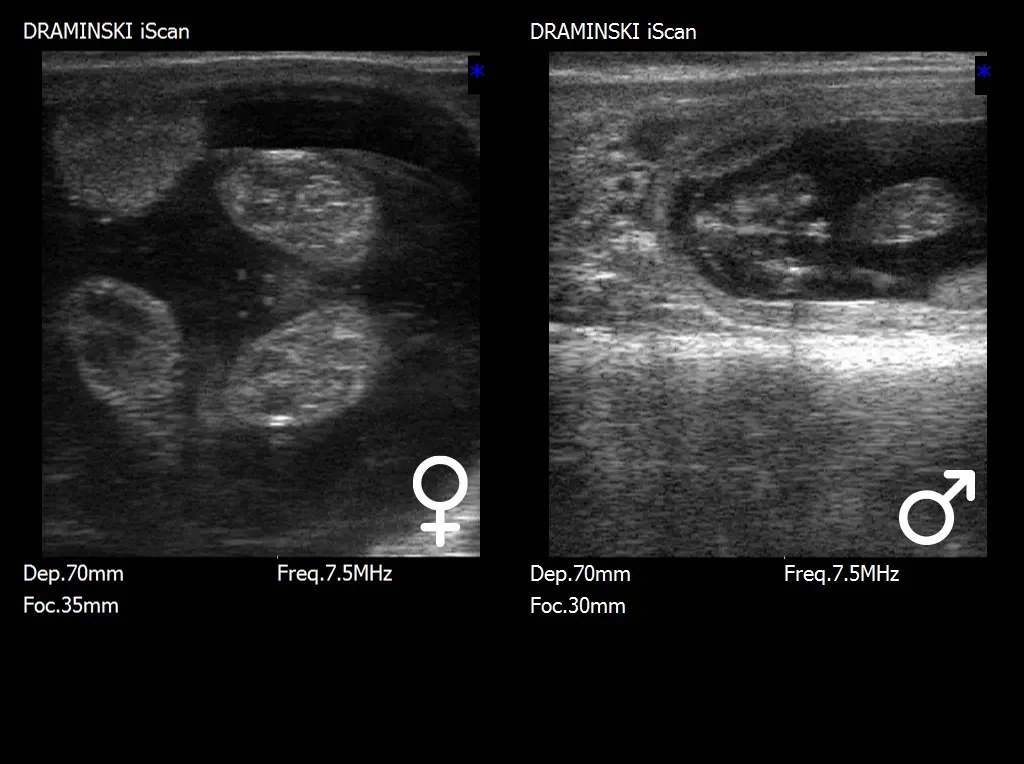
Image from Draminski Iscan
Sexing Cattle Fetuses Later in Pregnancy
After approximately days 70 to 80 of pregnancy, more developed external genital organs may be identified. Examples include the scrotum in male fetuses and vulvar structures in female fetuses. These features can be more apparent than the earlier genital tubercle landmark.
However, later pregnancy does not necessarily make the examination easier. As the fetus grows, it may be positioned deeper within the uterine cavity. The increased fetal size and reduced ability to maneuver the ultrasound probe can limit the available views. Therefore, visibility of more developed anatomy must be considered alongside the practical challenges of scanning at this stage.
Why Fetal Sex Determination Matters for Herd Planning
Fetal sex determination in cows can provide information for planning the future structure of a herd. In dairy or beef production systems, anticipated calf sex may be considered alongside breeding objectives, replacement requirements, and genetic selection plans.
The result can also help managers organize reproductive strategies more effectively. For example, it may contribute to decisions involving sexed semen, the retention of future breeding animals, or the sale of animals. These decisions remain specific to each operation, but earlier access to fetal sex information can make planning more informed.
Factors That Support a Reliable Examination
A useful ultrasound examination relies on appropriate pregnancy timing and clear imaging of the relevant fetal structures. Operator skill is equally important, since fetal orientation and subtle anatomical differences can influence the assessment.
Fetal sexing should therefore be approached as an ultrasound interpretation procedure rather than a simple visual check. Careful scanning technique, a precise device, and a solid understanding of bovine fetal anatomy help support a well-founded evaluation.
Ultrasound offers a non-invasive method for fetal sex determination in cows. The period between days 55 and 70 of pregnancy is especially important because the genital tubercle can be assessed by its position. Later, around days 70 to 80, external genital structures may be visible, although examination can become more challenging. When incorporated into a broader reproductive program, this information can support herd planning and breeding decisions.
Applications in Reproductive and Cattle Herd Management
A bovine pregnancy ultrasound scanner can support future herd structure planning, breeding selection, and reproductive management. For cattle farms, having this information in advance provides a more solid basis for preparing herd replacement plans and considering appropriate management strategies for newborn calves.
However, this process requires accurate ultrasound equipment, proper scanning techniques, and the ability to interpret ultrasound images. Combining examinations at the appropriate stage of pregnancy with professional assessment is essential for turning information about fetal sex into useful data for livestock management.