Why Hay Moisture and Temperature Matter
Harvesting hay at the right time helps provide quality forage for livestock. However, the process does not end with cutting and baling. The moisture content remaining in the hay, together with storage conditions, directly affects the risk of spoilage, fermentation, and temperature buildup inside the bales. Therefore, measuring hay moisture is an important quality control step before storing it.
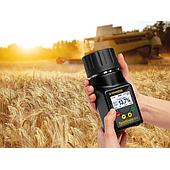
Sunny and dry weather helps hay dry more quickly after cutting. When drying conditions are favorable, hay can also be collected more easily, while the risk of moisture-related spoilage can be reduced. However, moisture should not be assessed by appearance or feel alone. A hay and dry straw moisture meter provides operators with additional information to determine the appropriate time for baling and storage
Plan Cutting Around Hay Quality
For forage quality, the source guidance recommends cutting grass at the early heading stage, before grasses begin to lose energy content. Dry, sunny weather is also important because it helps the crop dry more quickly after cutting. When there have been several rain-free days, drying can be more efficient, collection can be easier, and the chance of spoilage is reduced.
Weather conditions can change, so harvesting decisions should not rely on the calendar alone. A June cut may offer favorable drying conditions, yet the actual moisture level of the hay remains the key factor before baling. Allowing hay sufficient time in the field can be preferable to storing material that has not dried adequately.
Check Moisture Before Baling and Storage
The referenced target moisture content for collecting hay is approximately 15–17%. At this range, hay is better positioned for storage than hay that remains too wet. Measuring moisture before baling and again as part of storage preparation provides a practical basis for deciding whether the crop is ready to move.
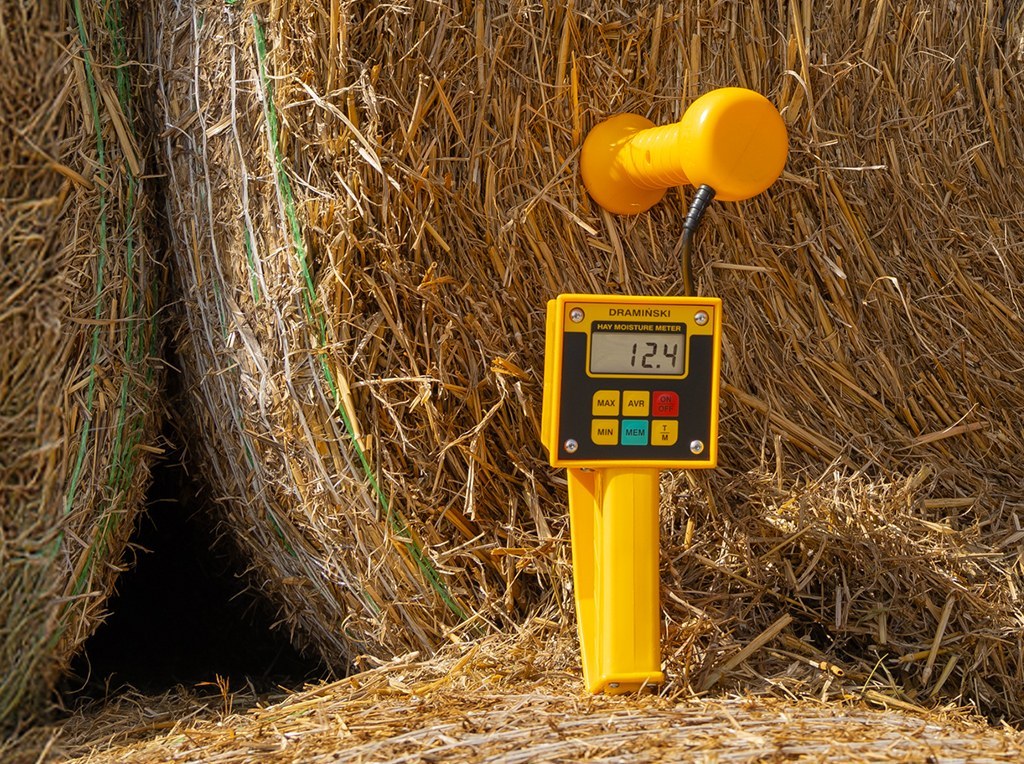
A hay moisture meter can support this step by giving the operator a direct moisture check rather than relying only on appearance or touch. The Dramiński HMM Hay Moisture Meter is identified in the source as a tool for controlling hay moisture. Its role fits into a simple process: check the crop, assess whether it has dried sufficiently, and avoid rushing hay into enclosed storage when the moisture result indicates more drying time is needed.
Understand the Risk of Heating in Bales
Hay that is baled and stored before it has dried sufficiently can undergo fermentation inside the bale. This process can cause the temperature to rise. When the temperature exceeds 70°C, the risk of spontaneous combustion becomes significant, especially in enclosed storage areas or barns.
During the first few days after storage, a contact thermometer should be used to monitor the temperature of the hay bales. Temperatures above 40°C should be treated as a warning sign. Detecting a temperature increase early allows operators to promptly check ventilation, hay moisture content, and storage arrangements. This step should not be overlooked simply because the outer surface of the bales appears dry.
Practical Hay Storage Safety Steps
Measure before making the bale
Check hay moisture before baling and before storage. If hay is not sufficiently dry, leave it in the field longer rather than assuming it will finish drying safely after it is stored.
Monitor during the first days of storage
Pay attention to bale temperatures in the early storage period. Temperature monitoring helps identify potentially unsafe heating while action can still be taken.
Store in dry, ventilated conditions
Keep hay in a dry, well-aerated location. Storing bales off the ground and away from moisture helps support better storage conditions and reduces exposure to dampness.
Make quality and safety part of one process
Harvesting, drying, moisture control, temperature observation, and ventilation should be treated as connected steps. High-quality forage is not only about the crop at cutting; it also depends on maintaining suitable conditions until the hay is used.
Do Not Rush the Drying Process
When hay has not dried sufficiently, it should not be baled prematurely just to speed up the harvesting process. Allowing additional drying time under suitable conditions can help reduce problems that may occur later during storage.
During harvesting and storage, a hay moisture meter can be used as a tool to check moisture content before baling and storage. Combining moisture measurements with temperature monitoring, ventilation, and proper storage conditions can improve quality control of dry hay.
Each hay bale should be handled carefully because feed quality and storage safety are closely connected. Checking moisture at the right time, avoiding premature baling, and monitoring bale temperature after storage are practical steps to help reduce the risks of mold growth, fermentation, and overheating.