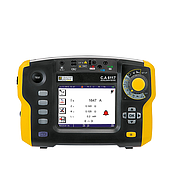
If you've observed electronics labs in recent years, you'll see that the way people choose pulse generators has changed considerably. Previously, most attention was focused on specifications. The higher the MHz, the more waveforms, or the larger the screen, the more likely the device was to be preferred because it gave the impression of being reliable and not becoming obsolete over time
However, in recent times, especially in work environments requiring daily testing, users have started to view devices more practically. A model might look great in a brochure, but if it's slow to operate, has a confusing menu, or is prone to disrupting workflow after a few months, it will gradually be forgotten.
That's why the pulse generator market in 2026 is showing a clear trend: buyers are more interested in the actual operating experience rather than just looking at a few impressive numbers.
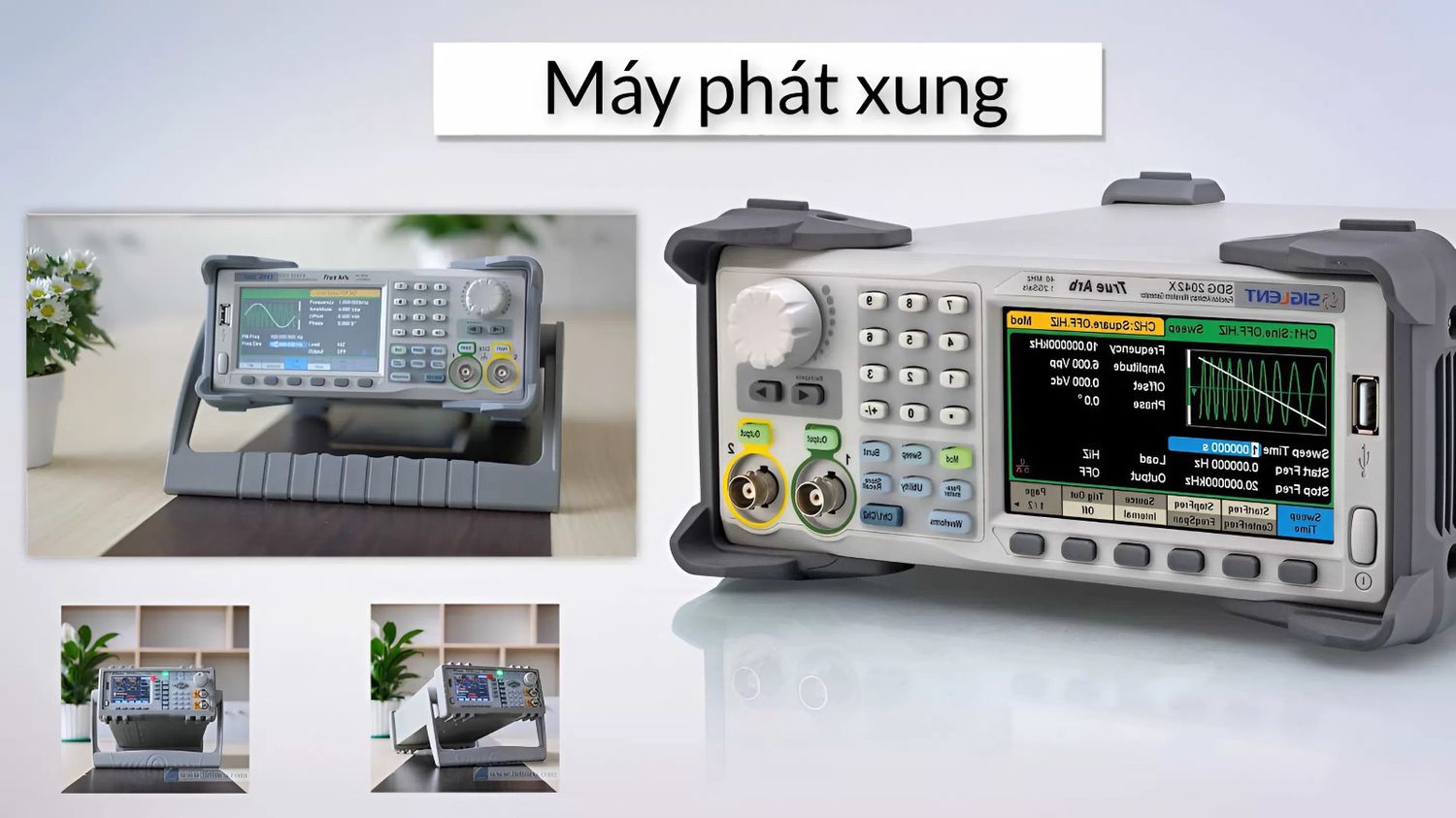
A powerful device isn't necessarily the most frequently used device
Some models boast very high specifications, but in practice, only a small fraction of their capabilities are utilized. Meanwhile, daily tasks such as quickly adjusting signals, saving presets, changing waveforms, or checking circuit feedback directly impact work speed.
Therefore, recently, many labs have prioritized models with intuitive interfaces, fast response times, and smooth operation. A model like the GW INSTEK AFG-2225 is frequently seen in electronics training and research facilities because it performs well in common tests without becoming overly complicated during prolonged use.
This has also led to a shift in equipment selection trends. Buyers are no longer solely focused on how powerful the machine is, but rather on its convenience for everyday use.
Pulse generators are now found in more applications than before
Previously, many people only thought of pulse generators as devices that generate sine or square waves for basic circuit testing. However, their applications have now broadened considerably.
In R&D labs, pulse generators can be used to simulate sensor signals, test motor responses, emulate encoder data, or test embedded systems. Some power research areas require continuously changing signal types to test the responsiveness of power circuits.
The expanding workload has led to a change in equipment selection needs. Users now prioritize models that are flexible and adaptable to various test scenarios.
That's why models like the OWON AG1022 are gaining considerable attention in smaller research labs. Their compact size, ability to meet many common needs, and minimal lab space requirements make them much more practical for daily operation.
Read more:
Features often overlooked when choosing a pulse generator
How does switching power supply affect the pulse signal?
Compact size and intuitive interface are clearly being prioritized
Looking at the workbenches of modern electronics labs, you'll see that space is increasingly cramped. Oscilloscopes, DC power supplies, laptops, test boards, and all sorts of components almost completely fill the workspace.
Therefore, many places are starting to prioritize models with more compact designs, easier portability, and a less cumbersome feel when setting up a test system. This is also why many mid-range models are receiving considerable attention despite not having overly flashy specifications.
Besides size, the display interface also significantly impacts the user experience. Models with easy-to-read layouts, quick parameter adjustments, or intuitive displays often save a lot of time during debugging and signal testing.
Signal quality is now being scrutinized more closely beyond just looking at the frequency
There are cases where the signal appears perfectly normal at first glance, but the system still responds abnormally after multiple rounds of testing. Ultimately, the cause is found to be background noise or insufficiently clean pulse edges.
As circuit boards become smaller and processing speeds increase, these small deviations become much more apparent. This is why users today are quite concerned about signal cleanliness, the ability to maintain stable amplitude, and noise levels during continuous pulse generation.
Some models, such as the UNI-T UTG962E, are highly sought after due to their suitability for both repair and basic electronics research environments, especially in tests requiring fast operation and frequent signal checks.
Connectivity is becoming a common feature in modern labs
Previously, many devices operated completely independently. Users primarily interacted directly with the machine and paid little attention to data storage or system synchronization.
However, workflows in many labs have changed significantly. The need to save presets, run repetitive tests, manage measurement data, or control devices from a computer is becoming more frequent.
This change has made connectivity a key criterion when choosing pulse generators in 2026. This isn't because users prefer more features, but because current workflows require devices to integrate into a common system rather than operate independently as before.
See the full range of equipment at Pulse Generators distributed by EMIN
The trend in choosing pulse generators is becoming much more practical
Over time, users increasingly prioritize devices that make work run smoothly and save time each day. A suitable model today doesn't necessarily have the highest specifications, but it needs to operate stably, be easy to use, and meet the specific needs of the work being performed