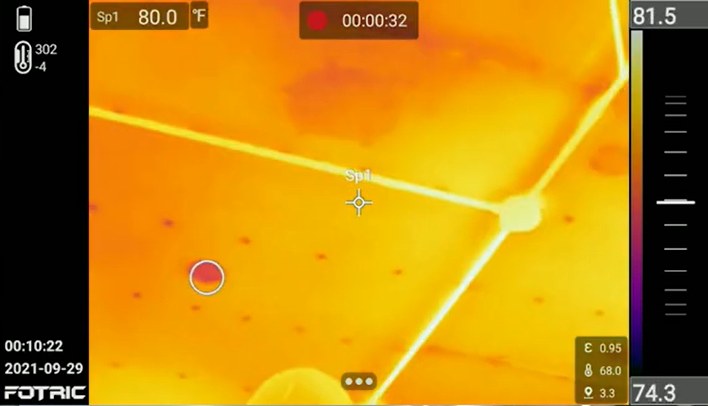
Thermal cameras for building inspections help inspectors identify abnormal temperature patterns that can be associated with heat loss, air leakage, moisture accumulation, and some building-envelope defects. They can be used on exterior surfaces and inside buildings to direct further investigation toward areas that need attention.
For building and facility management, a thermal image does not by itself establish the cause of a defect. It provides a visual indication of temperature differences, helping an inspector locate suspected areas more efficiently.
Summary: Thermal cameras can reveal patterns linked to thermal bridges, air leakage, and moisture. They may help identify early tile buckling on exterior walls. Fotric 347/348A-L25 cameras are described as having less than 1 MRAD IFOV for inspecting hard-to-access tall buildings.
What can thermal cameras reveal during a building inspection?
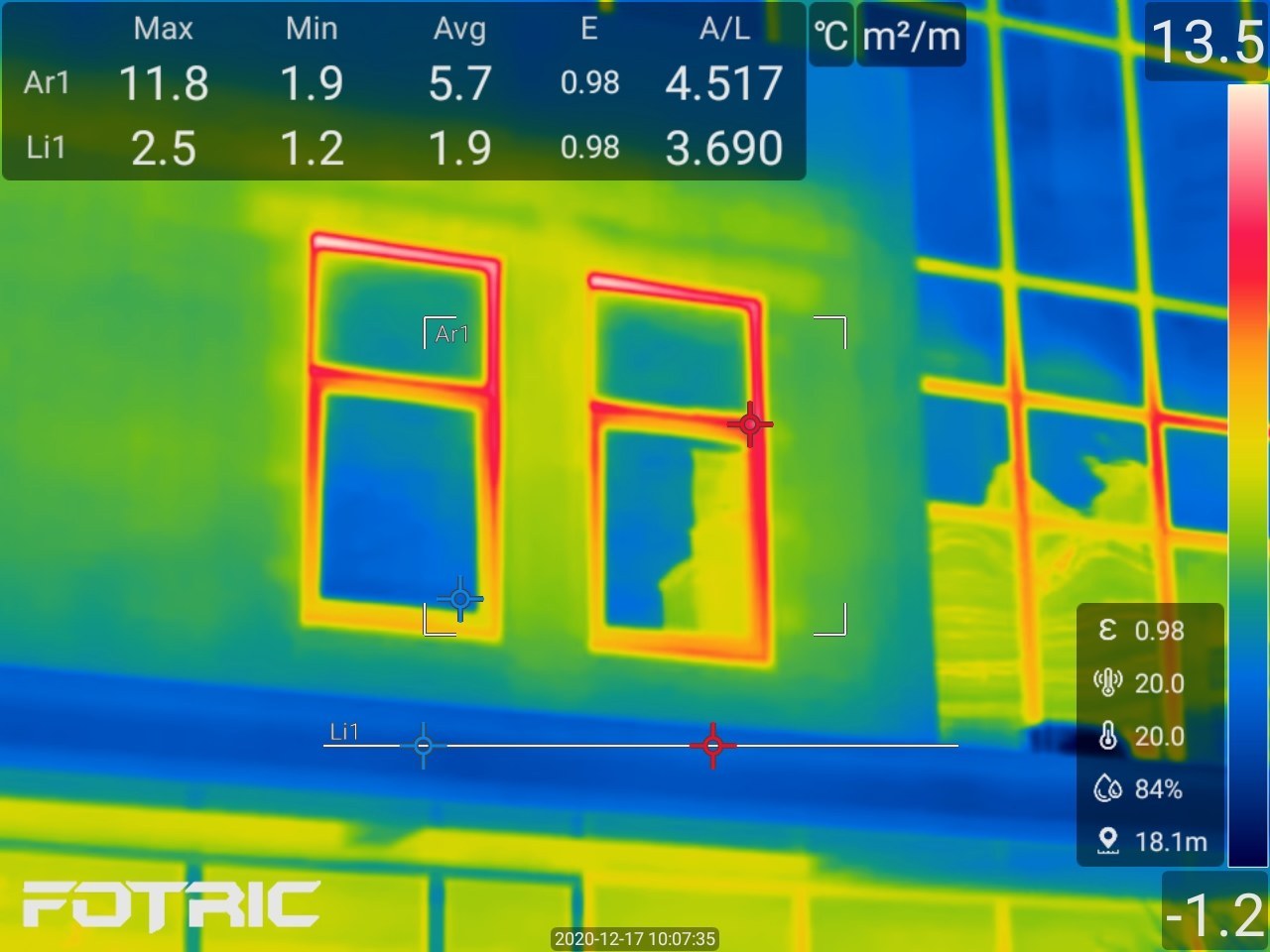
Thermal cameras can reveal temperature irregularities associated with thermal bridges, moisture accumulation, and air leakage. These irregularities are relevant when assessing the building envelope and its thermal performance.
A thermal bridge is an area of construction with substantially higher thermal conductivity than the surrounding area. Heat can dissipate more rapidly through that location, potentially reducing the effectiveness of the building’s overall insulation and increasing energy costs for property owners.
Why are thermal bridges difficult to find without thermal imaging?
Thermal bridges can be difficult to locate because they may not be obvious through a visual inspection alone. A thermal camera can make their different thermal behavior visible as an abnormal temperature pattern.
This supports targeted inspection of locations where the building envelope may be losing heat more quickly. The cited building energy-efficiency inspection standard DG/TJ 08-2038-2021 includes a thermal imager as a tool for detecting thermal irregularities such as thermal bridges, moisture accumulation, and air leakage.
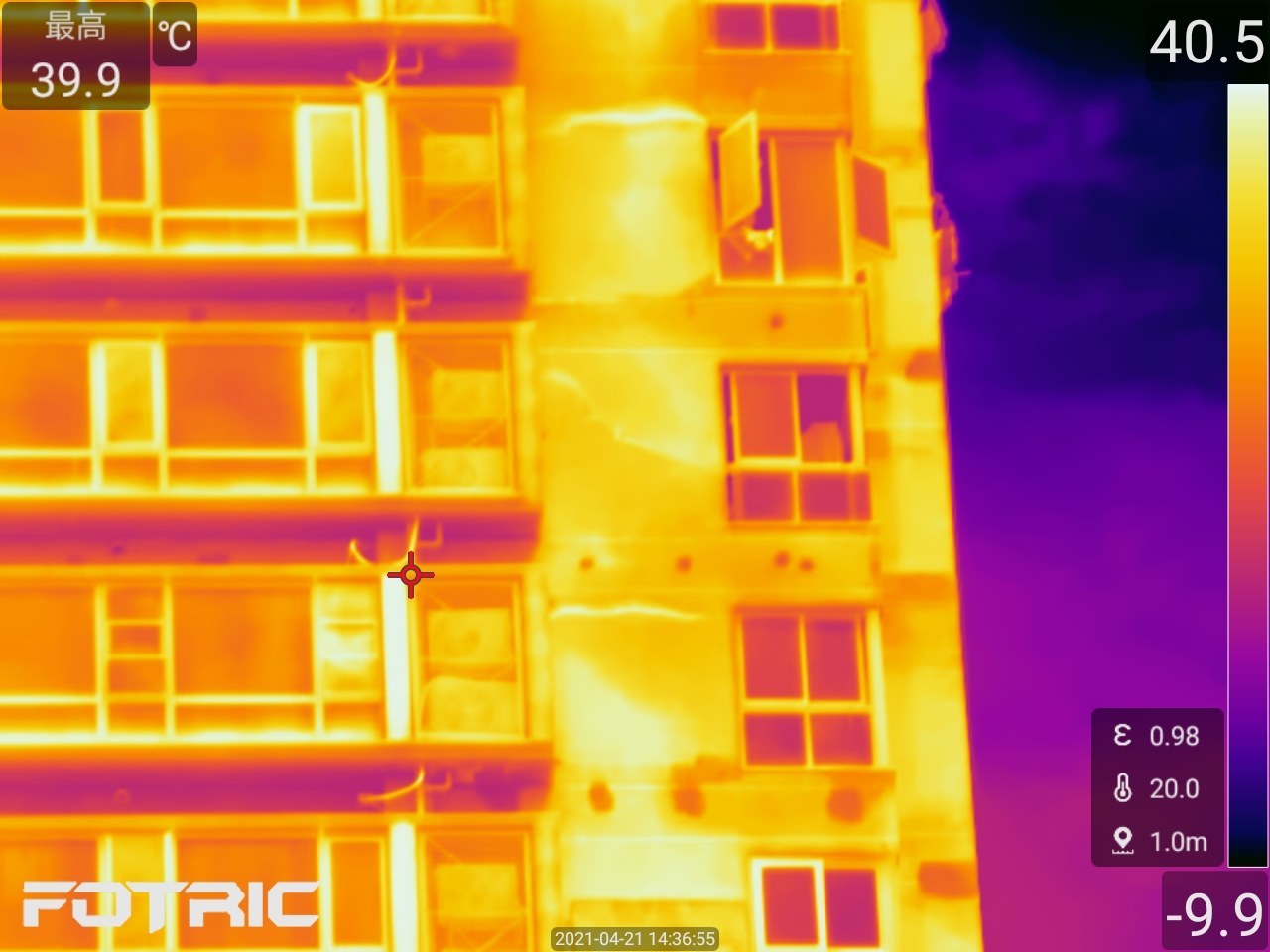
How can thermal imaging help identify tile buckling?
Thermal imaging can help identify temperature differences caused by an air layer between exterior tiles and the building body. This air layer is associated with tile buckling and can act as insulation relative to the surrounding wall structure.
When the issue progresses, the air layer may expand and the wall covering can deteriorate, potentially leading to fractures or peeling. Detecting a suspected temperature difference early can help prioritize a closer assessment before damage becomes more extensive.
| Inspection concern | Temperature-related indication described | Potential building implication |
|---|---|---|
| Thermal bridge | Abnormal thermal conductivity compared with nearby construction | Rapid heat dissipation and reduced insulation continuity |
| Tile buckling | Temperature difference from an insulating air layer behind tiles | Possible deterioration, fracture, or peeling of wall covering |
| Water-related interior issue | Subtle moisture accumulation | Area requiring further investigation for water damage |
Can a thermal camera help inspect moisture-related interior problems?
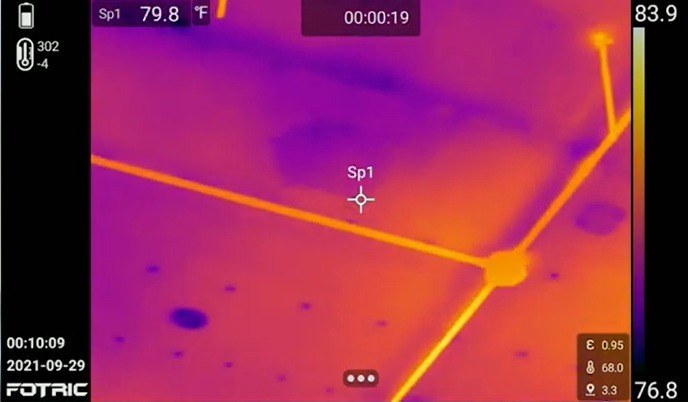
Yes. Thermal camera can help identify subtle moisture accumulation associated with water damage inside a building. Water damage is described as a common underlying factor in mold, mildew, and rotting.
Thermal imaging is useful for locating suspected moisture-affected areas that may otherwise be difficult to distinguish during a routine visual check. The thermal pattern should be treated as an inspection cue and assessed alongside other relevant site observations.
How should a thermal camera finding be used in facility management?
A thermal camera finding should be used to prioritize follow-up inspection, rather than as the only basis for a diagnosis. Compare the suspected area with nearby surfaces, consider the building condition, and investigate the physical cause of the observed temperature difference.
Note: Temperature patterns can indicate a suspected issue, but the available information does not state that thermal imaging alone confirms the specific defect or its severity.