With a capacity of up to several tens of liters, this device plays an important role in many research and practical applications. So how to operate a rotary vacuum evaporator properly and safely? Let's find out the details with EMIN in the content below.
What is a rotary vacuum evaporator?
Rotary evaporator is an important device in chemical laboratories, used to separate solvents from samples by evaporation under low pressure conditions. This principle helps the process take place at lower temperatures, minimizing the decomposition of heat-sensitive compounds.
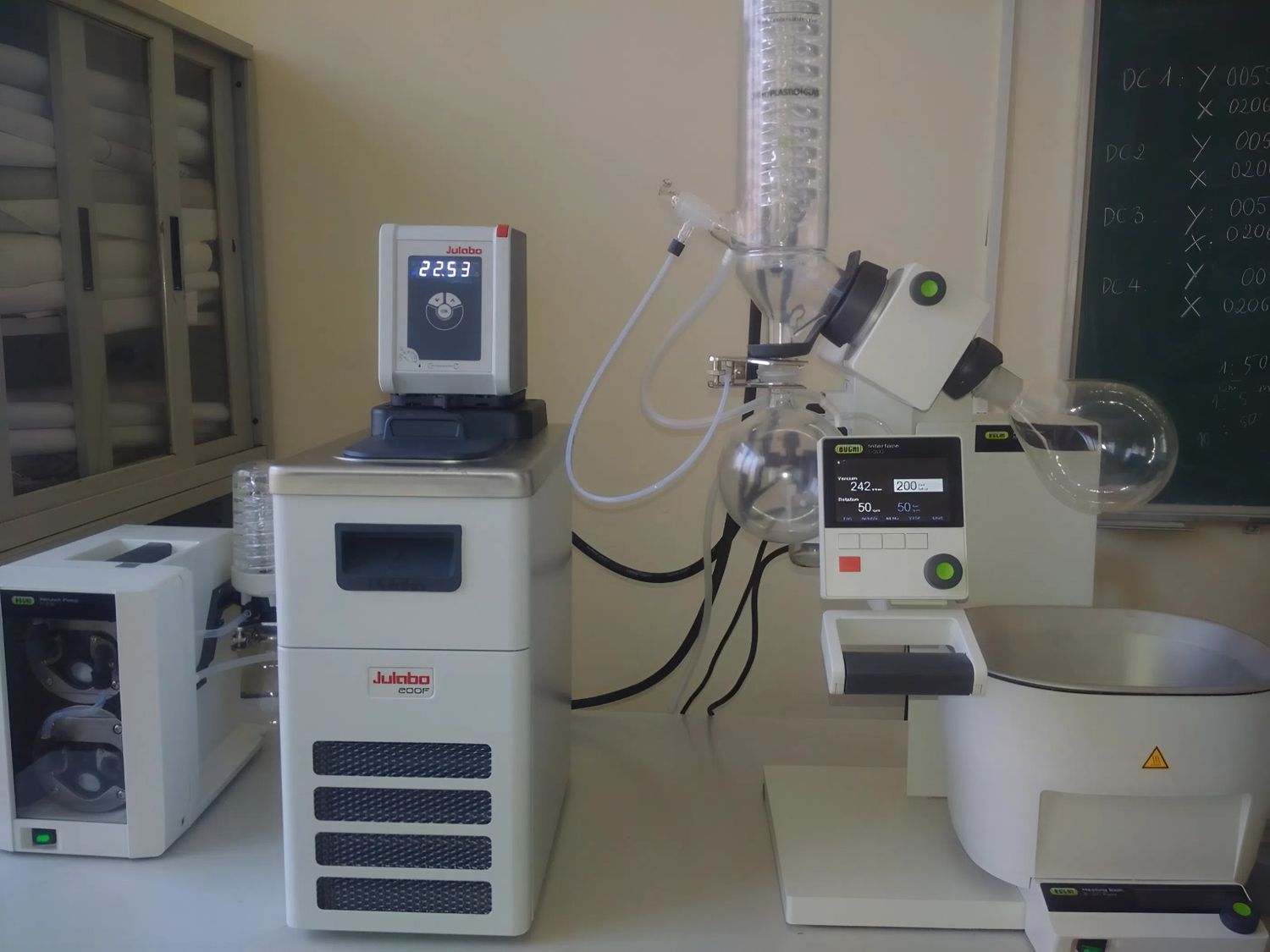
Rotary evaporation technology was invented by scientist Lyman C. Craig and was first commercialized by Buchi (Switzerland) in 1957. The basic structure of the system includes a rotary evaporator attached to a thermostatic tank and a vacuum suction unit, which helps increase the contact surface area, speed up the evaporation process and effectively recover the solvent.
This method is widely applied in many stages such as crystallization, concentration of solutions, drying of samples, extraction or purification of compounds, not only in the research field but also in industrial production with equipment with a capacity of up to several tens of liters.
In addition to the laboratory, the rotary vacuum evaporator is now also applied in modern cuisine, especially in the distillation and extraction steps to create pure flavors and preserve the natural properties of the ingredients.
Products can be found at: Rotary evaporator
Structure of the vacuum rotary evaporator
A complete rotary vacuum evaporation system consists of many components that operate synchronously, each component plays a separate role in the solvent separation process.
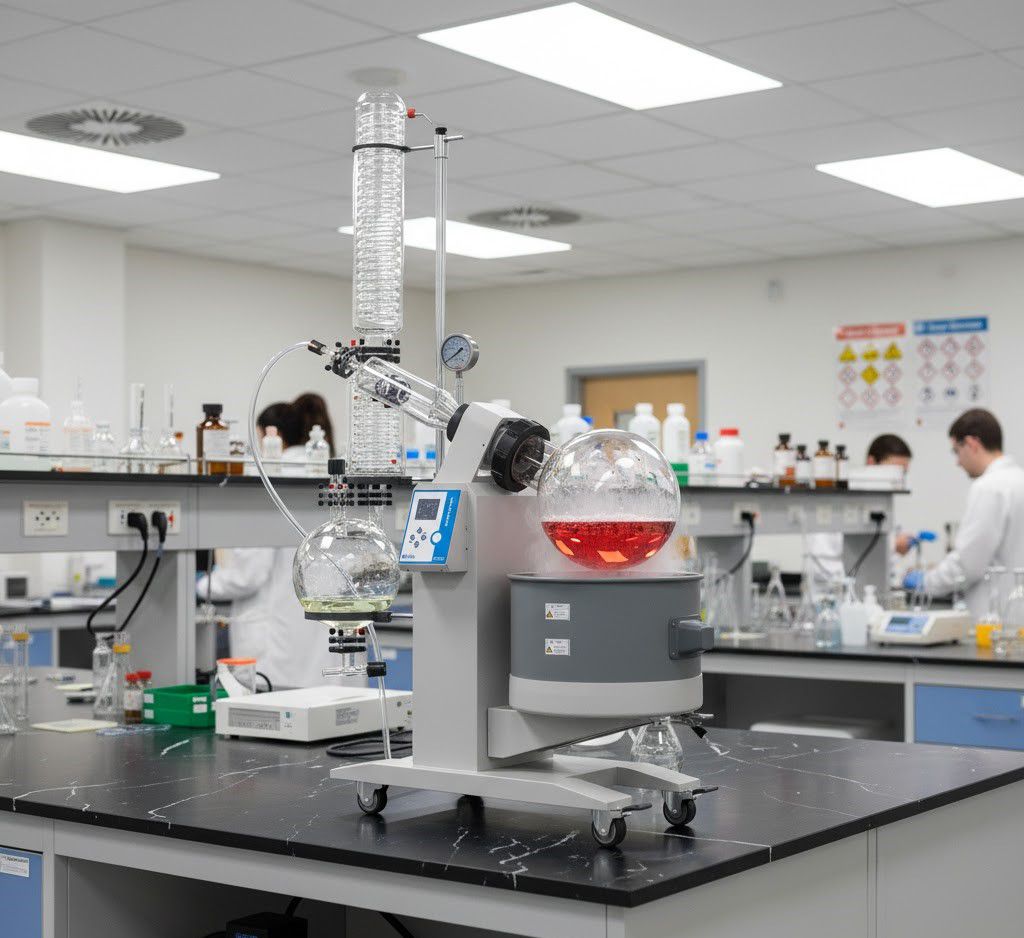
- Motor: Helps the evaporation flask rotate continuously, creating conditions for the solvent to evaporate quickly and evenly on the surface of the solution.
- Vacuum system: Used to reduce the pressure inside the evaporation chamber, thereby causing the solvent to boil at a lower temperature, avoiding damage to heat-sensitive compounds.
- Steam pipe and vacuum pipe: The steam pipe is both the rotating shaft for the solution tank and leads the solvent vapor out to pass through the condenser.
- Heating tank: Designed to fit snugly with the sample flask, can be heated with water or oil. Stable temperature and fast heating speed help the evaporation process take place effectively.
- Sample flask: Is where the solution that needs to be concentrated is stored, usually made of heat-resistant glass to ensure safety during operation.
- Condenser: Has a spiral tube structure, containing a refrigerant such as dry ice or acetone, helping the solvent vapor condense into liquid form.
- Solvent collection tank: Located right below the condenser, with the task of recovering the solvent after being cooled and condensed.
- Vacuum pump: Helps maintain stable low pressure throughout the system, usually designed as a U-shaped tube placed in a cold water tank to increase suction efficiency.
- Warm water pot: Provides stable heat for the sample flask, supporting the evaporation process to take place faster and more evenly.
Thanks to the smooth coordination between these parts, the rotary vacuum evaporator can operate effectively, ensuring the collection of pure products without denaturing the sample.