There are numerous instances where the meter displays a warning of approximately 380V yet the facility operates normally or where there are fluctuating frequency errors or equipment instability. In such cases, the voltage reading itself is not necessarily the root cause; rather, the interpretation and assessment of the data are the deciding factors.
The following article explains the standard voltage levels for 3-phase systems, how to read the cabinet's voltmeter, and the key indicators to monitor during operation.
What 3-phase voltage level is considered normal?
In Vietnam, 3-phase electrical systems typically feature a line-to-line voltage of approximately 380 V and a phase-to-neutral voltage of around 220 V.
The reading on the meter does not need to remain strictly at 380 V. Power supply levels naturally fluctuate based on the load or the time of day, so minor deviations remain within normal operating limits.
The most critical factor is the balance between the three phases. The smaller the discrepancy, the more evenly the current is distributed and the more stable the equipment operation. Conversely, if one phase consistently lags behind the other two, it often leads to load imbalance, motor overheating, or inverter warning alerts.
Is the voltmeter on the electrical panel measuring phase voltage or line voltage?
Many people see a reading of approximately 380 V on the meter and assume this represents the voltage of a single phase.
In reality, most panel-mounted voltmeters are wired to measure the voltage between two phases. Consequently, the panel meter consistently displays a value around 380 V, whereas a handheld meter measuring between a phase and the neutral wire would show approximately 220 V.
Some electrical panels are equipped with a voltage selector switch, allowing the operator to sequentially monitor the voltage between phase pairs (AB, BC, CA) or the voltage between each phase and the neutral wire. By simply turning the selector knob, the operator can quickly assess the power supply status without needing to open the panel or use external measuring equipment.
What does the voltage imbalance between the three phases typically indicate?
The more balanced the power supply, the smoother the motor runs and the higher the efficiency of the electrical equipment. A phase reading that is lower than the others is often associated with uneven load distribution, poor contact at connection points, or fluctuations in the power supply. These initial signs are difficult to detect because the system continues to operate normally; however, over time, the load current becomes unbalanced, motor temperatures rise, and equipment lifespan decreases.
How do analog and digital watches offer different time-viewing experiences?
Analog meters remain widely used on electrical panels due to their intuitive readability. The movement of the needle whether fast or slow reflects changes in the power supply without the need to scrutinize specific numerical values.
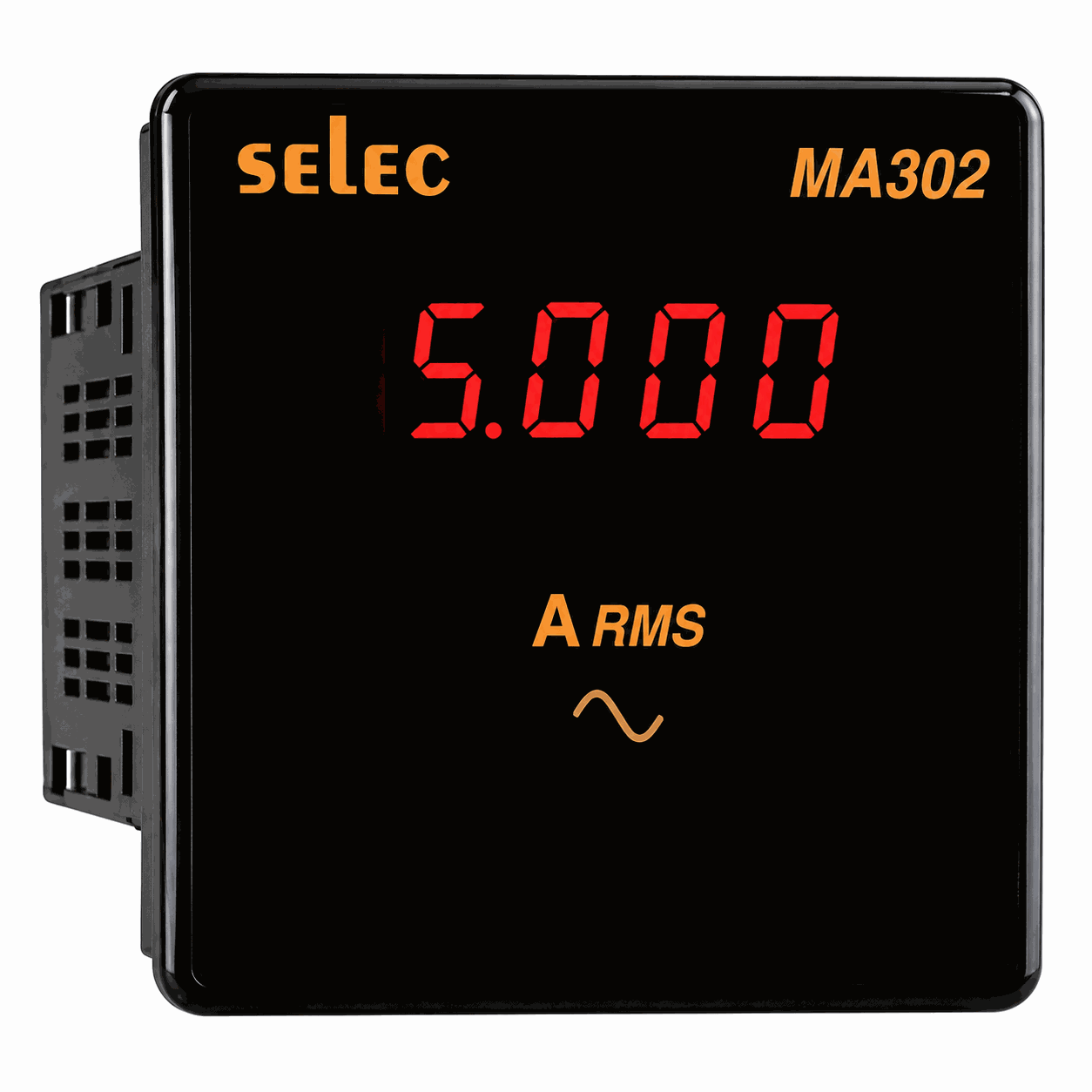
Digital meters, on the other hand, are ideal for systems requiring real-time readings or data logging for operational management. Their clear displays facilitate faster voltage checks, particularly on production lines where multiple electrical panels operate simultaneously.
EMIN currently distributes several popular panel-mount voltmeter models, such as the SEW ST-86, SEW ST-96, and SEW LS-110, as well as the Selec M4392 digital meter. Each series caters to different requirements regarding panel cutout dimensions, display types, and voltage monitoring methods.
The voltmeter is always the first thing to check before inspecting the system
Fluctuations in the power supply often precede equipment failure. A gradual drop in voltage, or abnormal phase-to-phase voltage imbalances or oscillations, can be readily observed on cabinet-mounted voltmeters.
The habit of quickly checking the meters at the start of each shift enables engineers to detect early signs of power supply irregularities. This allows them to proactively inspect loads, connections, or the power distribution system before issues escalate to affect motors, variable frequency drives, or other critical equipment.
Hopefully, the information above has helped you understand what constitutes a normal 3-phase voltage level, how to interpret the readings on the electrical cabinet's voltmeter, and why maintaining balance across the three phases is a top priority for operations engineers.
If you need to select a panel-mount voltmeter for an industrial electrical system, you might consider models such as the SEW ST-86, SEW ST-96, SEW LS-110, or Selec M4392, all of which are distributed by EMIN. These models are widely used in distribution cabinets, control panels, and factory electrical systems.