Reasons why it is necessary to measure welding resistance
Electric cars are becoming more and more popular and to run these cars, the batteries must be very strong. If the battery is strong, the current flowing through it must also be strong. To connect the cells in the battery to each other, welding is used to create paths for electricity to pass through. If a welded area is damaged, a large current flowing through it will cause that area to heat up and heat up, possibly causing a fire or explosion.
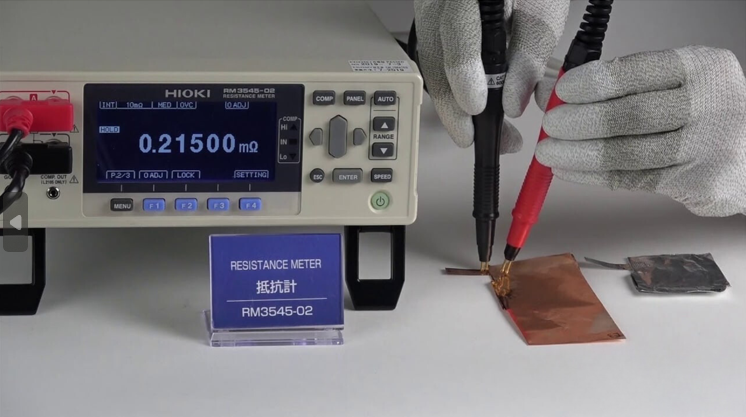
Not only batteries, but also electric vehicle motors need sturdy welds. If not welded carefully, the motor will consume more power and not run as strong. To check if the weld is secure, people often measure the resistance. The lower the resistance, the better the welding area, and the electricity can flow smoothly.
Difficulties encountered in the process of measuring welding resistance
Imagine we are measuring the thickness of a hair, that is very difficult, isn't it? Measuring the resistance of the weld is similar. It's too small, just tiny. To know if the weld is good, we need a super sensitive measuring machine, it must be able to measure even microscopic numbers to be accurate. In addition, when the welding was finished, the weld was still very hot. This constantly changing temperature makes the measurement results inaccurate. Measuring weld resistance accurately is very important, it helps us ensure product quality and avoid unwanted risks.
Situation 1: The resistance value changes when the temperature changes
Imagine we are measuring the length of a rubber band. When it is hot, the rope will lengthen and when it is cold, the rope will shorten. Measuring the resistance of the weld is similar. When measuring a weld, we often encounter difficulties, because this weld is made up of many different types of materials, so it becomes very difficult to accurately determine the influence of temperature on resistance. This makes adjusting the temperature to get accurate measurement results as complicated as finding the secret recipe of a dish.
Solution:
To get the most accurate measurement results, we should wait for the weld to cool completely, that is, reach room temperature. After that, we can change the temperature of the weld and measure it many times to find the law of change of resistance. Accurately determining the temperature coefficient of the weld helps us have more accurate measurement results, thereby ensuring product quality and production processes.
Situation 2: The influence of thermoelectric electromotive force in resistance measurement
Difficulties in measuring resistance accurately are often caused by many factors, of which thermoelectric electromotive force is one of the significant causes. Thermoelectric electromotive force is the potential difference that arises at the junctions between two different metals when there is a temperature difference. This phenomenon often occurs at the contact points between the probe and the measurement sample, or between the measuring leads and the measuring device.
When current flows through the measuring circuit, the thermoelectric electromotive force induces an additional voltage, which changes the measured voltage value. This leads to incorrect resistance value calculation. In particular, when measuring small resistance values, the influence of thermoelectric electromotive force becomes more obvious.
Solution:
Suppose we are measuring the resistance of a Pt100 temperature sensor. This sensor is made of platinum and is connected to the measuring device with a copper wire. Due to the temperature difference between the sensor and the measuring device, a thermoelectric emf will appear at the junction between the platinum and copper. If not compensated, this thermoelectric emf will distort the measured resistance value of the sensor, leading to inaccurate temperature measurement.
Should the RM3545 resistance meter be used?
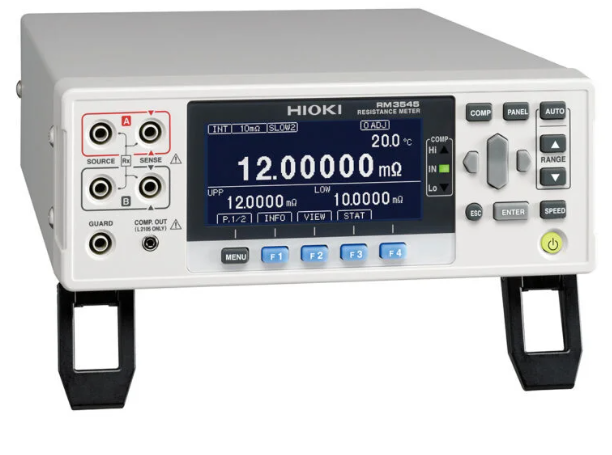
Using the RM3545 resistance meter to check weld quality, especially in environments with large temperature changes, is a very suitable and effective choice. The RM3545 meter is equipped with advanced features, especially the OVC and A-OVC functions, which help accurately overcome the effects of thermoelectric electromotive force - a factor that causes large errors in the electrical measurement process. Welding joints under unstable temperature conditions.
- Thanks to the OVC and A-OVC functions, the meter can automatically compensate for errors caused by thermoelectric electromotive force, ensuring accurate measurement results even when the weld is still hot.
- Not having to wait for the weld to cool helps save time and increase productivity
- Can be used in many different environments, including environments with large temperature changes.
Machine functions:
- Automatically measure and compensate thermal voltage arising from thermoelectric electromotive force
- Provides true resistance value based on two measurements with opposite current directions, effectively eliminating the influence of thermoelectric electromotive force
- Perform OVC measurement twice and calculate based on changes in measured values, helping to increase the accuracy of measurement results.
Conclude:
When using the RM3545 meter, you need to carefully refer to the manufacturer's user manual to maximize the machine's features. In addition, to ensure the accuracy of measurement results, you should regularly calibrate the machine according to regulations. At EMIN, we have full services of calibration - inspection - repair of equipment, serving customers 24/7. If you have any questions, please contact directly via EMIN website or fanpage for advice and answers as soon as possible.