Vortex Mixer
Fast and repeatable sample preparation often depends on one simple step: getting liquids, suspensions, and reagents mixed thoroughly in a tube or small vessel. In many laboratories, that job is handled by a Vortex Mixer, a compact device designed to create a rapid circular motion that helps resuspend pellets, blend small-volume samples, and support routine preparation workflows without taking up much bench space.
These mixers are widely used in research labs, clinical environments, quality control, and general sample handling. Whether the task involves quick tube agitation or more flexible mixing with interchangeable heads and adapters, the right unit can improve consistency, reduce manual effort, and fit more naturally into everyday laboratory routines.

Where vortex mixers fit in the lab
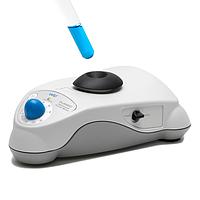
A vortex mixer is typically chosen when operators need efficient mixing for test tubes, microtubes, or small laboratory vessels. Instead of stirring with a paddle or relying on hand shaking, the instrument transfers motion directly to the vessel, producing a vortex inside the liquid. This makes it especially useful for dissolving solids, mixing reagents, or quickly homogenizing a sample before the next processing step.
Compared with broader-purpose mixing systems, vortex mixers are often preferred for small-volume sample handling and rapid spot mixing. For applications that require different motion patterns rather than classic vortex action, users may also compare nearby options such as digital rotators or a roller mixer, depending on vessel type and mixing objective.
Common configurations and use cases
Not every laboratory needs the same mixing setup. Some users only need a compact mixer for single-tube operation, while others benefit from a more configurable platform that can support different heads, cups, or adapters. This is why the category often includes both complete mixer units and supporting accessories that help adapt the instrument to specific sample formats.
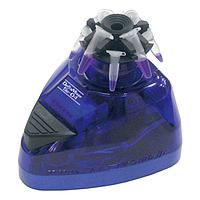
For example, a compact unit such as the DaiHan DH.WVM0100.O Mini Vortex Mixer or DaiHan DH.WVM0100.B Mini Vortex Mixer suits benches where space is limited and quick everyday mixing is the priority. For broader handling needs, the DaiHan DH.WVM00033 and DH.WVM00032 MultifunctionVortex Mixer-set “MaXshake VM30” provide a more versatile approach for laboratories that process a wider range of vessel types or batch formats.
Accessories matter as much as the mixer
In practical lab use, performance is not defined only by motor speed. The contact head, cup, or adapter has a major influence on how samples are held and how efficiently motion is transferred. That is why this category may include parts such as the DaiHan DH.WVM00110 Platform Head Ø76mm and the DH.WVM00210 Pop-off Cup Head, which support different handling styles for tubes and containers.
Tube adapters also play an important role when users need better fit and repeatability across standard tube diameters. Items such as the DaiHan DH.Ada6002, DH.Ada6003, DH.Ada6004, and DH.Ada6005 help align the mixer with common test tube sizes, making the setup more suitable for repeated workflows where stable positioning and consistent agitation are important.
How to choose the right vortex mixer
The best selection process starts with the sample container. Tube size, vessel shape, and how many samples are handled at one time all affect the type of mixer and accessory set that makes sense. A single-tube quick-mix task may call for a compact dedicated instrument, while a lab that processes multiple formats may benefit from a multifunction configuration with interchangeable heads and adapters.
It is also worth considering operating style. Some laboratories prefer simple touch-based mixing for fast manual work, while others need more controlled and repeatable operation for standardized preparation. If temperature control or more advanced shaking functions are required as part of the workflow, a dedicated system such as the Eppendorf ThermoMixer C may be more appropriate than a conventional vortex-only device, especially where mixing must be combined with thermal processing.
Representative brands in this category
This category includes products from manufacturers recognized in laboratory mixing and sample preparation. DaiHan appears prominently with compact vortex mixers, multifunction sets, and practical accessories that support daily bench work. This makes the range useful for buyers looking not only for a mixer body, but also for the supporting heads and adapters needed to build a workable setup.
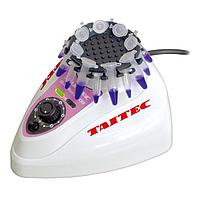
Major Science is also relevant in the wider mixing ecosystem, illustrated by the MS-3D-RM 3D Rotating Mixer with adjustable speed. Although a rotating mixer serves a different motion profile than a vortex mixer, it highlights an important purchasing point: laboratories should match the mixing principle to the sample behavior, sensitivity, and vessel format rather than choosing only by footprint or price.
When a vortex mixer is the better option
A vortex mixer is often the right choice when the main requirement is rapid tube agitation for routine preparation steps. It is particularly effective for re-mixing settled samples, blending reagents just before use, and preparing small batches without adding setup complexity. In these situations, the straightforward operating concept can save time and support a more consistent workflow across users.
However, not every sample responds best to vortex motion. Some applications benefit from gentler rolling or continuous end-over-end movement, especially when working with more delicate materials or different container geometries. In those cases, related categories such as roller culture apparatus may provide a better fit for the process.
Key evaluation points for B2B buyers
For procurement teams, lab managers, and technical users, selection should go beyond a basic product title. Useful evaluation points include compatibility with existing tube formats, whether accessories are available for future expansion, the intended duty pattern, and how easily the unit can be integrated into daily operating procedures. A compact mixer may be enough for decentralized benches, while a more configurable solution can simplify standardization across multiple users.
It is also sensible to review whether the requirement is for the main instrument or for a supporting component such as a platform head, cup head, or tube adapter. In many cases, replacing or adding the right accessory can improve utility without changing the core mixer. This category therefore supports both first-time equipment selection and incremental expansion of an existing sample mixing workflow.
Find a setup that matches your lab routine
Choosing among vortex mixers is usually less about finding one universal solution and more about matching the device to the vessels, handling frequency, and level of flexibility your lab actually needs. Compact mixers, multifunction sets, and purpose-built accessories each serve a different role, and the right combination can make routine sample preparation faster and easier to standardize.
If you are comparing options in this category, focus on the practical details of operation: what you mix, how often you mix it, and whether future accessory compatibility matters. That approach will usually lead to a more suitable vortex mixing setup than choosing by appearance alone.
Get exclusive volume discounts, bulk pricing updates, and new product alerts delivered directly to your inbox.
By subscribing, you agree to our Terms of Service and Privacy Policy.
Direct access to our certified experts