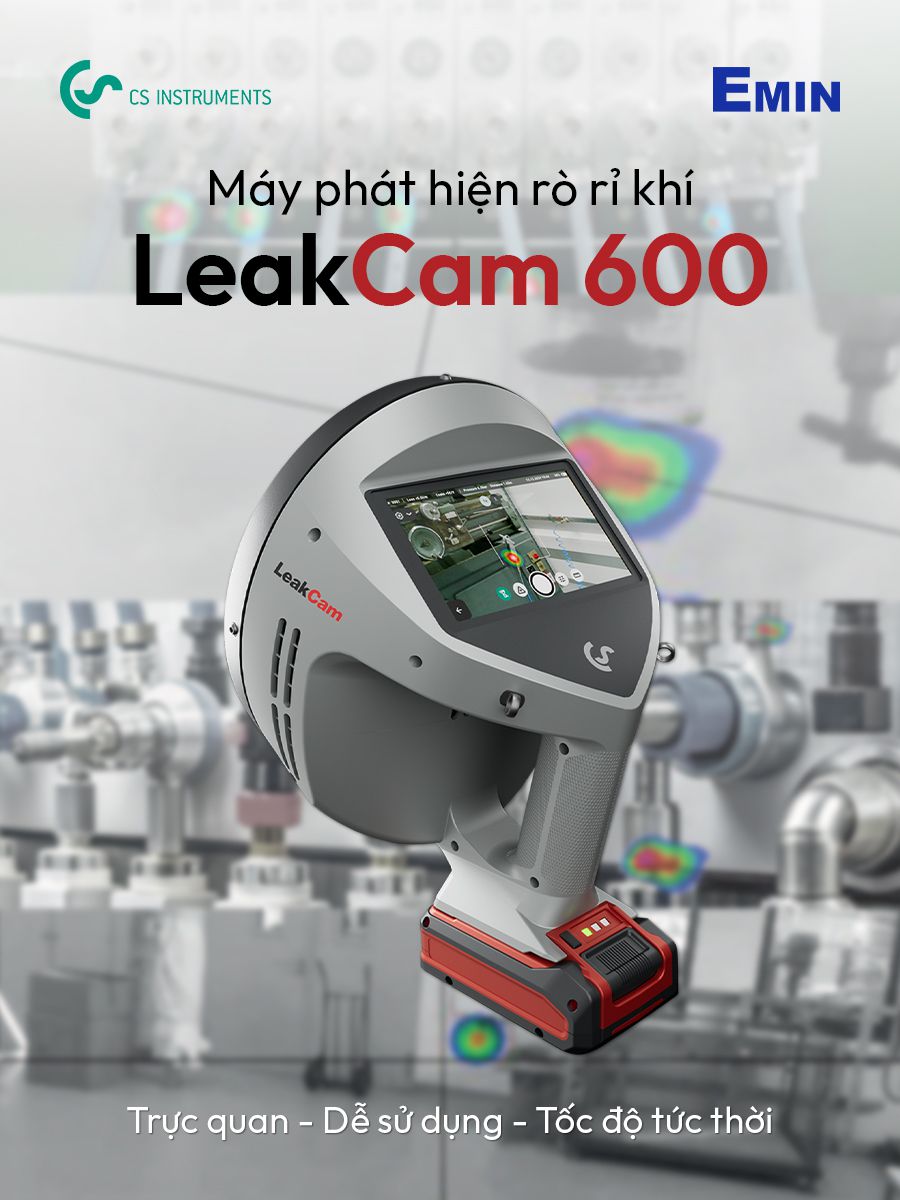
The device incorporates 64 MEMS ultrasonic microphones and a Power Beam Forming algorithm. This allows it to display multiple leak locations simultaneously and identify them from a distance. This observation method is more intuitive than manual listening.
Key features of LeakCam 600
The LeakCam 600 focuses on clear visibility and rapid leak detection.
Sixty-four MEMS ultrasonic microphones are strategically placed to detect leaks from distances up to 20 meters. The frequency range of 2 to 80 kHz allows for accurate detection of the characteristic sound of gas leaks, even in noisy environments.
The 5-inch HD screen combined with a 13 MP camera provides clear images. Leak locations are displayed directly on the screen for easy observation. The user-friendly interface requires minimal time to get used to.
The LeakCam 600 can also estimate leak volume and cost of loss. This allows for a clear visualization of the impact of each leak point.
Level of compressed air loss and its practical impact
Compressed air consumes a significant amount of electricity. However, leaks are quite common if not regularly inspected.
Leakage rates can range from 20 to 40 percent, and in many cases even higher. This increases electricity costs and affects the efficiency of the air compressor.
When leaks are detected early, energy consumption is significantly reduced, and the strain on the operating process is also lessened.
How LeakCam 600 works
The LeakCam 600 receives ultrasonic signals emitted from leak points. The Power Beam Forming algorithm processes data from 64 microphones to accurately pinpoint the location of the sound source.
The processed sound is then displayed overlaid on the camera image, allowing for direct identification on the screen. Excellent noise filtering ensures clear results even in noisy environments.
The wide dynamic range allows for simultaneous detection of both large and small leaks, minimizing missed detections during inspection.
Data storage and report generation
Leak information is recorded at the time of inspection. This includes location, images, and estimated loss data.
Data can be synchronized with Leak Reporter V2 or a cloud platform. Reports can then be exported as PDF or CSV files for tracking purposes.
Ability to detect multiple types of gases
The LeakCam 600 isn't just for compressed air. It can detect many other gases such as nitrogen, argon, methane, and CO₂. It can also perform tests in vacuum environments.
In confined spaces, an ultrasonic detector can be added to enhance detection capabilities.
The LeakCam 600 is designed to be worn over the shoulder with a cross-shaped strap. This arrangement helps secure it in front of the body and reduces pressure during prolonged use.
The removable battery allows for flexible replacement. Continuous use is possible by alternating the battery and external charger. This is ideal when inspecting multiple areas consecutively.
The LeakCam 600 provides a visual way to identify gas leaks. Clear images combined with remote detection capabilities make the inspection process faster and easier to follow.