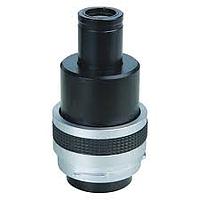
Profile Projector
When dimensional inspection depends on clear edge definition, enlarged image comparison, and fast operator judgement, a Profile Projector remains a practical tool on the shop floor and in quality labs. It is widely used for checking contours, angles, radii, pitch, hole position, and other geometric features that are difficult to verify quickly with contact gauges alone.
For manufacturers working with machined parts, stamped components, molded products, and small precision items, this category supports routine inspection as well as first-article verification. Compared with basic handheld tools, profile projection gives a much clearer view of part geometry, helping users detect deviation early and maintain drawing compliance more consistently.
Where profile projectors fit in dimensional inspection
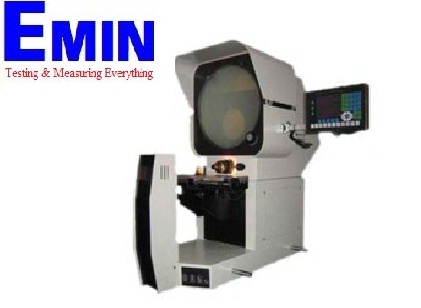
A profile projector enlarges the silhouette or illuminated surface of a part onto a screen so the operator can inspect geometry with better visibility. This makes it especially useful for features such as edges, grooves, chamfers, slots, threads, and formed contours, where visual interpretation and measurement often need to work together.
In many plants, profile projection is used alongside tools such as callipers and dial indicators. Those instruments are efficient for direct linear checks, while a projector adds value when the shape itself needs to be examined in a magnified and easier-to-read format.
Typical applications in manufacturing and QA
This type of equipment is commonly selected for industries where contour inspection and dimensional consistency matter. Examples include precision machining, mold and die work, electronics components, automotive parts, and general metalworking. It is also useful during incoming inspection, in-process control, and final quality verification.
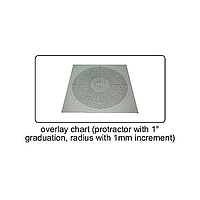
The main advantage is not only measurement capability but also the ability to review the part profile visually. Operators can compare the projected image with standards, overlays, or digital references and identify burrs, form deviation, and edge irregularities before those issues affect assembly or downstream operations.
Vertical profile projector configurations
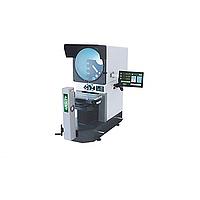
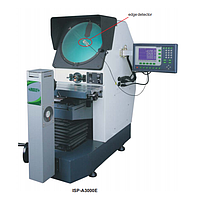
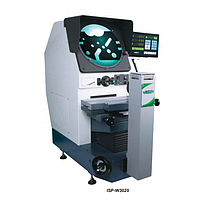
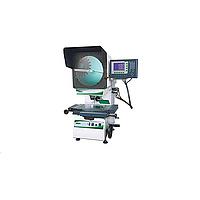
Among the representative products in this category, Sobekk vertical systems show the typical format used for small to medium parts. The Sobekk SP-3015B Vertical Profile Projector and Sobekk SP-3020B Vertical Profile Projector both use a 300 mm screen, 360° screen rotation, and digital X-Y readout, making them suitable for everyday 2D measurement tasks where operators need a balance of visibility and practical bench use.
These models also illustrate common selection points such as stage size, travel range, available magnification, and angle resolution. For example, users comparing parts with different footprints may look closely at stage dimensions and X-Y travel first, while applications involving angular features may place more emphasis on screen rotation and angular reading resolution. If you are comparing manufacturers, the Sobekk range is one practical reference within this category.
What to consider when choosing a profile projector
The right system depends on the size of the workpiece, the type of features being inspected, and how the equipment will be used in the workflow. Small precision parts often benefit from compact vertical machines, while larger or more awkward components may require a different layout or a broader measuring envelope.
Key selection criteria usually include:
- Screen diameter and image clarity for easier profile interpretation
- Stage size and axis travel to match the part dimensions
- Available magnification options for the level of detail required
- Digital readout or software support for faster reporting
- Lighting method for profile and surface inspection
- Required accuracy in relation to drawing tolerance
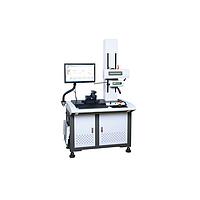
It is also worth considering whether the inspection task is primarily comparative, routine dimensional checking, or part of a more traceable quality process. In some environments, a projector complements other devices such as a roundness measuring machine when the inspection scope expands beyond 2D outline measurement.
Examples of systems in this category
Product examples help show the range of measurement approaches available around profile and contour evaluation. The Sobekk SP-3015B and SP-3020B represent classic optical profile projection for dimensional and angular inspection of smaller components. Their standard and optional objective magnifications support different viewing scales, while the rotary screen helps with angle-related checks.
The SM Metrology PGS100 Profilometer, although not a traditional projection screen system, reflects the broader need for profile and contour analysis in precision metrology. Its fine sampling and PC connectivity show how some users may move from visual profile inspection toward more software-assisted profile measurement when applications require deeper surface or form evaluation. For businesses reviewing supplier ecosystems, SM Metrology is another relevant brand page to explore.
Optical inspection versus contact and advanced contour measurement
A profile projector is often chosen because it offers a fast and intuitive way to inspect visible geometry without relying entirely on contact methods. This is helpful for delicate parts, repetitive operator checks, and tasks where edge shape matters as much as numerical size. It can reduce inspection time while improving confidence in shape-related decisions.
At the same time, some applications go beyond optical outline checking. Solutions from Taylor Hobson, such as Talysurf PRO, WRi PRO, PGI NOVUS, and CNC contour systems, are more aligned with advanced surface, form, contour, and waviness analysis. These examples are useful for understanding the broader metrology landscape: profile projectors are strong for routine visual and 2D dimensional inspection, while higher-end contour systems may be needed for complex surface characterization or automated measurement workflows.
Why profile projectors remain relevant in production
Even with the growth of digital metrology, profile projection remains relevant because it is straightforward, efficient, and easy to integrate into production support. Operators can inspect part geometry quickly, engineers can review contour-related issues more clearly, and QA teams can use the magnified image to support acceptance decisions without overcomplicating routine inspection.
For many manufacturers, the value lies in combining speed, visibility, and adequate accuracy for a wide range of parts. That makes this category suitable for workshops seeking dependable optical inspection, as well as quality departments building a practical measurement setup around mechanical measuring instruments and complementary metrology tools.
Final considerations
Choosing a profile projector is ultimately about matching the equipment to the part, the tolerance, and the inspection workflow. Screen size, travel range, magnification, readout capability, and ease of operation all influence how efficiently the system performs in daily use.
Whether you are evaluating a compact vertical model such as the Sobekk SP-3015B, a larger-travel option such as the SP-3020B, or reviewing broader profile-measurement solutions from SM Metrology or Taylor Hobson, this category provides a solid starting point for comparing equipment that supports accurate contour and dimensional inspection in industrial environments.
Get exclusive volume discounts, bulk pricing updates, and new product alerts delivered directly to your inbox.
By subscribing, you agree to our Terms of Service and Privacy Policy.
Direct access to our certified experts