STANDARDS AND GAGE BLOCKS
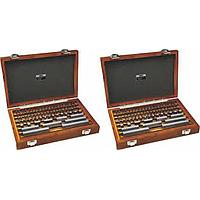
Accurate inspection starts with a reliable reference. In machining, toolroom work, assembly, and quality control, operators often need simple but dependable physical standards to verify dimensions, angles, pitch, radius, or clearance without adding unnecessary complexity to the measurement process. That is where STANDARDS AND GAGE BLOCKS play an important role across day-to-day industrial measurement tasks.
This category brings together practical gauging tools used to compare, check, and confirm dimensional conditions directly at the bench or on the production floor. These instruments are especially useful when fast go/no-go style checks, setup verification, or repeatable reference measurements are needed alongside other tools such as callipers and dial indicators.
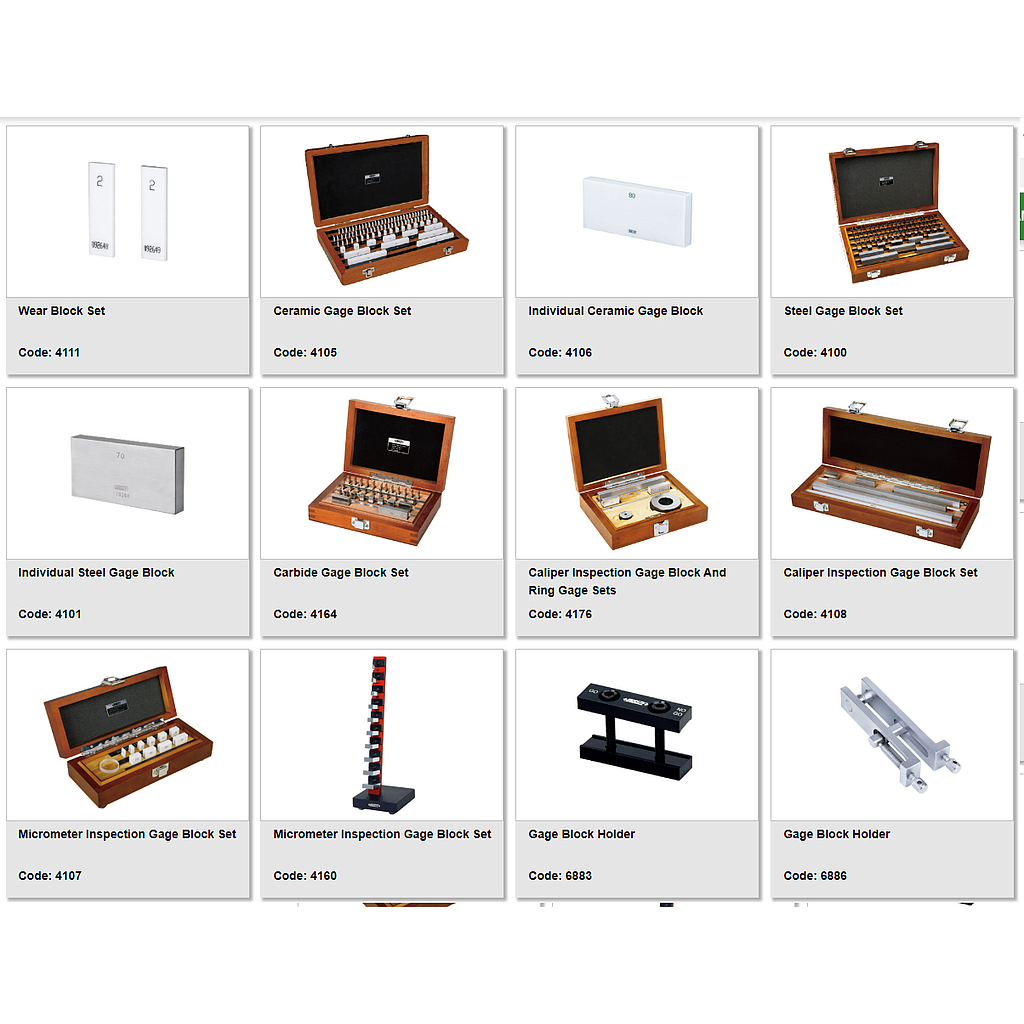
Where these gauging tools fit in industrial measurement
Unlike general-purpose measuring tools that provide a broad range of readings, standards and gauge-related products are typically chosen for a more specific purpose. They help verify a known dimension, inspect a feature profile, compare a gap, or confirm whether a part or setup falls within an expected range. This makes them highly relevant in metalworking, maintenance, fixture setup, and incoming inspection.
In many workflows, these tools are used as part of a wider inspection chain. For example, an operator may check a slot or bore condition with a gauge, then confirm supporting dimensions with a micrometer or compare movement and runout with a dial indicator. For applications involving material thickness checks, related solutions in thickness meter categories may also be useful depending on the measurement method required.
Typical product groups within standards and gage blocks
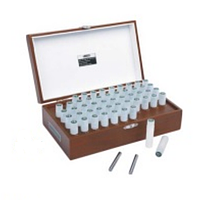
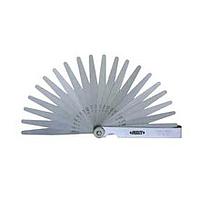
This category covers several types of reference and comparison tools rather than one single instrument family. Common examples include feeler gauges for gap measurement, pitch and screw-cutting gauges for thread identification, radius gauges for contour checking, angle gauges for setup and verification, and pin gauges used to assess hole size or small internal features.
Each type supports a different inspection need. Feeler gauges are often selected for checking clearances between mating parts, while pitch gauges help identify thread forms and spacing during maintenance or reverse engineering. Radius and angle gauges are useful when setting cutting tools or validating edge geometry, and steel pin gauges support accurate checking of small diameters where direct reading tools may be less convenient.
Examples from leading manufacturers
Among the brands commonly associated with precision mechanical measurement, MOORE & WRIGHT and Niigata Seiki are well represented in this range. Their products illustrate how these tools are used in real inspection environments, from workshop verification to controlled quality checks.
Examples include the MOORE & WRIGHT 800 Screw Pitch Gauges for Whitworth thread checking, the MOORE & WRIGHT MW200 Screw Cutting Gauges for identifying common thread forms and angles, and the MOORE & WRIGHT 206MA Radius Gauges for profile inspection. On the Niigata Seiki side, practical options include the 100MR Thickness gauge, AG-22 Angle Gauge, TPG-700T Taper gauge, FG-03-1 and FG-07-1 feeler gauge variants, and AA series steel pin gauges such as 0.10 mm, 0.200 mm, 0.300 mm, and 1.000 mm sizes.
How to choose the right gauge for the job
The best choice depends first on what feature you need to verify. If the task is checking a gap or clearance, a feeler gauge is usually the logical starting point. If the need is to identify an unknown thread or confirm thread pitch during setup, a pitch or screw-cutting gauge is more appropriate. For small bores and precision hole verification, pin gauges are often preferred because they provide a direct physical reference.
It is also important to consider the required measuring range, increment or blade arrangement, and the working environment. A maintenance team may prioritize versatility and portability, while a quality department may focus more on repeatability and controlled reference values. For comparative dimensional work on external features, some users may also combine these gauges with micrometers to build a more complete inspection routine.
Why physical reference gauges remain relevant
Digital measurement systems continue to expand, but physical gauges and standards remain essential because they are fast, intuitive, and reliable in hands-on production settings. A well-chosen gauge can help reduce setup time, support operator consistency, and make routine inspection more efficient without requiring a complex interface or power source.
They are also valuable for training and troubleshooting. When an operator needs to compare an actual feature against a known profile, angle, or thickness, a physical gauge often provides immediate feedback. This makes the category especially useful in workshops where speed and repeatability matter just as much as numerical measurement.
Common application areas
Standards and gauge blocks are used in a wide range of industrial tasks, including machine setup, thread inspection, maintenance checks, mold and die work, and general quality assurance. Feeler gauges are commonly applied to clearance checks in assemblies, while angle and radius gauges help confirm tooling geometry and machined form details.
Pin gauges and thickness-related gauges are especially useful when dealing with fine tolerances, narrow openings, and small internal dimensions. In production environments where multiple measurement methods are used together, these tools complement rather than replace direct-reading instruments. They help create a practical bridge between reference verification and full dimensional inspection.
What to consider before ordering
Before selecting from this category, it helps to define the inspection method clearly: comparison check, setup reference, gap verification, or feature identification. Buyers should also think about the unit system in use, the target dimensional range, the required accuracy level, and whether the tool will be used in routine workshop conditions or more controlled inspection work.
If your process involves recurring checks on specific dimensions or profiles, choosing the right gauge format can improve consistency and reduce operator variation. A focused selection of standards and gage tools often delivers better long-term value than relying on a general tool for every measurement task.
Supporting more consistent inspection work
When repeatable verification matters, this category provides the core reference tools needed for practical, workshop-ready measurement. From thread and radius checking to fine clearance inspection and hole verification, these products support a more disciplined approach to quality control without overcomplicating the process.
Whether you are equipping a machine shop, maintenance team, or inspection bench, selecting the right standards and gauging tools helps build a measurement system that is both efficient and dependable. Explore the available range to match the gauge type to your application, tolerance expectations, and workflow requirements.
Get exclusive volume discounts, bulk pricing updates, and new product alerts delivered directly to your inbox.
By subscribing, you agree to our Terms of Service and Privacy Policy.
Direct access to our certified experts